
Nursing practice questions with comprehensive rationales
NurseDive Free Nursing Practice Question
A nurse is caring for a client who has signed an informed consent form to receive electroconvulsive therapy (ECT). The client states to the nurse, "I'm not sure about this now. I'm afraid it's too risky." Which of the following responses should the nurse make?
A. "Perhaps you think the ECT is dangerous, but I've seen it have good results."
This response is dismissive of the client's concerns and implies that the nurse knows better than the client.
B. "You have the right to change your mind about this procedure at any time."
This response respects the client's autonomy and informs them of their rights.
C. "Everyone gets a little nervous about this procedure as the time for it approaches."
This response minimizes the client's feelings and assumes that they are experiencing normal anxiety.
D. "Your doctor wouldn't have suggested ECT if they didn't think it would help you."
Your doctor wouldn't have suggested ECT if they didn't think it would help you." This response shifts the responsibility to the doctor and does not address the client's fears.
This question is an excerpt from Nurse Dive's nursing test bank - RN Comprehensive Online Practice 2019 B with NGN Proctored Exam. Take the full exam now
Full Explanation
You have the right to change your mind about this procedure at any time.
Rationale:
- A. "Perhaps you think the ECT is dangerous, but I've seen it have good results." This response is dismissive of the client's concerns and implies that the nurse knows better than the client.
- B. "You have the right to change your mind about this procedure at any time." This response respects the client's autonomy and informs them of their rights.
- C. "Everyone gets a little nervous about this procedure as the time for it approaches." This response minimizes the client's feelings and assumes that they are experiencing normal anxiety.
- D. "Your doctor wouldn't have suggested ECT if they didn't think it would help you." This response shifts the responsibility to the doctor and does not address the client's fears.
Similar Questions
A nurse is preparing to administer a blood transfusion to a client. Which of the following procedures should the nurse follow to ensure proper client identification?
A. Check the client's blood type and crossmatch it against the provider's orders
This is not a correct procedure for client identification, but rather for blood compatibility. The nurse should check the client's blood type and crossmatch it against the blood product label, not the provider's orders.
B. Ask the client to state their blood type prior to beginning blood administration
This is not a reliable method of client identification, as the client may not know or remember their blood type correctly. The nurse should use two identifiers, such as name and date of birth, to confirm the client's identity.
C. Compare information on the blood product to the informed consent form
This is not a relevant step for client identification, but rather for informed consent. The nurse should ensure that the client has signed an informed consent form before administering blood, but this does not verify that the blood product matches the client.
D. Verify the client and blood product information with another licensed nurse
This is the correct procedure for client identification, as it involves two licensed nurses who independently check and confirm the client's identity and the blood product information, such as blood type, Rh factor, expiration date, and serial number.
Full Explanation
Verify the client and blood product information with another licensed nurse.
Rationale:
- A - This is not a correct procedure for client identification, but rather for blood compatibility. The nurse should check the client's blood type and crossmatch it against the blood product label, not the provider's orders.
- B - This is not a reliable method of client identification, as the client may not know or remember their blood type correctly. The nurse should use two identifiers, such as name and date of birth, to confirm the client's identity.
- C - This is not a relevant step for client identification, but rather for informed consent. The nurse should ensure that the client has signed an informed consent form before administering blood, but this does not verify that the blood product matches the client.
- D - This is the correct procedure for client identification, as it involves two licensed nurses who independently check and confirm the client's identity and the blood product information, such as blood type, Rh factor, expiration date, and serial number.
A nurse is teaching a client who has a new prescription for total parenteral nutrition through a central line. Which of the following information should the nurse include in the teaching?
A. "I will change your IV tubing once every 48 hours."
IV tubing for total parenteral nutrition should be changed every 24 hours to prevent infection.
B. "Abdominal distention is an expected effect of this therapy."
Abdominal distention is not an expected effect of total parenteral nutrition. It could indicate a complication such as fluid overload or bowel obstruction.
C. "I will need to check your gastric residual before administering feedings."
Gastric residual is not relevant for total parenteral nutrition, which bypasses the gastrointestinal tract.
D. "I will need to measure your weight daily."
Weight measurement is an important indicator of fluid balance and nutritional status for clients receiving total parenteral nutrition.
Full Explanation
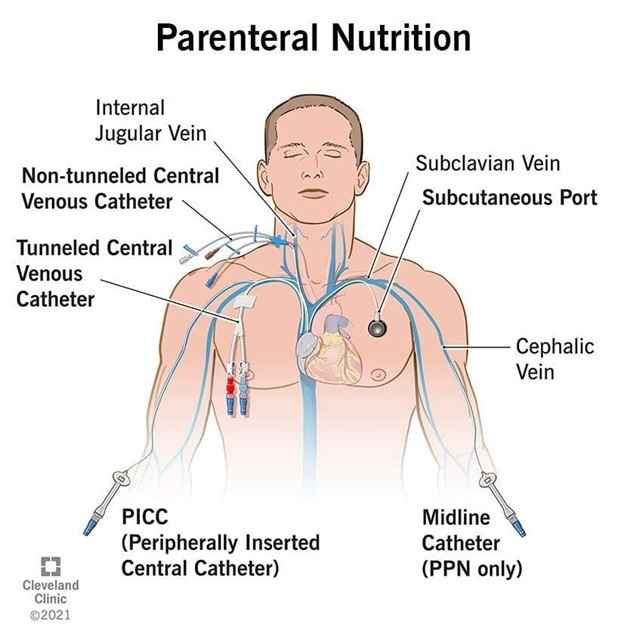
- A is incorrect because IV tubing for total parenteral nutrition should be changed every 24 hours to prevent infection.
- B is incorrect because abdominal distention is not an expected effect of total parenteral nutrition. It could indicate a complication such as fluid overload or bowel obstruction.
- C is incorrect because gastric residual is not relevant for total parenteral nutrition, which bypasses the gastrointestinal tract.
- D is correct because weight measurement is an important indicator of fluid balance and nutritional status for clients receiving total parenteral nutrition.
A nurse in an emergency department is caring for a child who has a fever and fluid-filled vesicles on the trunk and extremities. Which of the following interventions should the nurse identify as the priority?
A. Apply topical calamine lotion.
Applying topical calamine lotion may help soothe the itching and discomfort caused by the vesicles, but it is not the priority intervention, as it does not prevent infection transmission or treat the underlying cause of the fever.
B. Encourage oral fluids.
Encouraging oral fluids is an important intervention for a child who has a fever, as it helps prevent dehydration and electrolyte imbalance. However, it is not the priority intervention, as it does not address the risk of infection transmission to other clients or staff.
C. Administer acetaminophen as an antipyretic
Administering acetaminophen as an antipyretic may help reduce the fever and provide symptomatic relief for the child, but it is not the priority intervention, as it does not prevent infection transmission or treat the underlying cause of the fever.
D. Initiate transmission-based precautions
Initiating transmission-based precautions is the priority intervention, as it protects other clients and staff from exposure to the infectious agent that causes the vesicles and fever. The nurse should wear gloves, gown, mask, and eye protection when caring for the child, and place them in a private room or cohort them with other clients who have similar symptoms.
Full Explanation
Initiate transmission-based precautions.
Rationale:
- B- Encouraging oral fluids is an important intervention for a child who has a fever, as it helps prevent dehydration and electrolyte imbalance. However, it is not the priority intervention, as it does not address the risk of infection transmission to other clients or staff.
- A - Applying topical calamine lotion may help soothe the itching and discomfort caused by the vesicles, but it is not the priority intervention, as it does not prevent infection transmission or treat the underlying cause of the fever.
- C - Administering acetaminophen as an antipyretic may help reduce the fever and provide symptomatic relief for the child, but it is not the priority intervention, as it does not prevent infection transmission or treat the underlying cause of the fever.
- D - Initiating transmission-based precautions is the priority intervention, as it protects other clients and staff from exposure to the infectious agent that causes the vesicles and fever. The nurse should wear gloves, gown, mask, and eye protection when caring for the child, and place them in a private room or cohort them with other clients who have similar symptoms.