
Nursing practice questions with comprehensive rationales
NurseDive Free Nursing Practice Question
A nurse is caring for a client who has the following arterial blood gas results: HCO3-, 18 mEq, PaCO, 28 mm Hg and pH 7.30. The nurse recognizes the client is experiencing which of the following acid base imbalances?
A. Respiratory acidosis
Respiratory acidosis would typically involve an elevated PaCO2, which is not seen in this case.
B. Metabolic alkalosis
Metabolic alkalosis is characterized by an elevated bicarbonate level, which is not present in this scenario.
C. Respiratory alkalosis
Respiratory alkalosis would present with a low PaCO2 and an elevated pH, which is not the case here.
D. Metabolic acidosis
The low bicarbonate level (HCO3) 18mEq/L (normal range of 22-26 mEq/L), and low pH 7.30 (normal range of 7.35-7.45), indicate metabolic acidosis. suggesting acidemia. The PaCO2 is also low at 28 mm Hg, indicating a respiratory compensation for the metabolic acidosis.
This question is an excerpt from Nurse Dive's nursing test bank - Ati Med Surg Proctored Exam 8. Take the full exam now
Full Explanation
A. Respiratory acidosis would typically involve an elevated PaCO2, which is not seen in this case.
B. Metabolic alkalosis is characterized by an elevated bicarbonate level, which is not present in this scenario.
C. Respiratory alkalosis would present with a low PaCO2 and an elevated pH, which is not the case here.
D. The low bicarbonate level (HCO3) 18mEq/L (normal range of 22-26 mEq/L), and low pH 7.30 (normal range of 7.35-7.45), indicate metabolic acidosis. suggesting acidemia. The PaCO2 is also low at 28 mm Hg, indicating a respiratory compensation for the metabolic acidosis.
Similar Questions
A nurse is reviewing the arterial blood gas values of a client who has chronic kidney disease.
Which of the following sets of values should the nurse expect?
A. pH 7.55, HCO 30 mEq/L PaCO 31 mm Hg
The pH is alkalotic, and the PaCO2 is within the normal range, indicating respiratory alkalosis, which is not typically seen in chronic kidney disease.
B. pH 7.50, HCO 20 mEq/L, PaCO2 32 mm Hg
The pH is alkalotic, and the HCO3 level is lower than normal, indicating metabolic acidosis, which can occur in chronic kidney disease, but the PaCO2 is not typically decreased in metabolic acidosis.
C. pH 7.25, HCO 19 mEq/L. PaCO, 30 mm Hg
This choice fits the pattern of metabolic acidosis commonly seen in CKD patients. In patients with chronic kidney disease (CKD), the kidneys are less able to excrete acid, leading to metabolic acidosis. Therefore, the expected arterial blood gas values would show a lower pH indicating acidemia, a decreased bicarbonate (HCO3-) level, and a normal or low partial pressure of carbon dioxide (PaCO2) as the lungs try to compensate by blowing off CO2.
D. pH 7.30, HCO: 26 mEq/L, PaCO, 50 mm Hg
The pH is acidic, and the HCO3 level is within the normal range, indicating respiratory acidosis, which is not typically seen in chronic kidney disease.
Full Explanation
A. The pH is alkalotic, and the PaCO2 is within the normal range, indicating respiratory alkalosis, which is not typically seen in chronic kidney disease.
B. The pH is alkalotic, and the HCO3 level is lower than normal, indicating metabolic acidosis, which can occur in chronic kidney disease, but the PaCO2 is not typically decreased in metabolic acidosis.
C. This choice fits the pattern of metabolic acidosis commonly seen in CKD patients. In patients with chronic kidney disease (CKD), the kidneys are less able to excrete acid, leading to metabolic acidosis. Therefore, the expected arterial blood gas values would show a lower pH indicating acidemia, a decreased bicarbonate (HCO3-) level, and a normal or low partial pressure of carbon dioxide (PaCO2) as the lungs try to compensate by blowing off CO2.
D. The pH is acidic, and the HCO3 level is within the normal range, indicating respiratory acidosis, which is not typically seen in chronic kidney disease.
A nurse is talking to a client who is taking a calcium supplement for osteoporosis. The client tells the nurse she is experiencing flank pain.
Which of the following adverse effects should the nurse suspect?
A. Peptic ulcer fracture
Calcium supplements are not associated with peptic ulcer formation.
B. Renal stones
Flank pain can be a symptom of kidney stones, which can occur due to excessive calcium supplementation.
C. Pancreatitis
Pancreatitis is not typically associated with calcium supplementation.
D. Hepatitis
Hepatitis is not typically associated with calcium supplementation.
Full Explanation
A. Calcium supplements are not associated with peptic ulcer formation.
B. Flank pain can be a symptom of kidney stones, which can occur due to excessive calcium supplementation.
C. Pancreatitis is not typically associated with calcium supplementation.
D. Hepatitis is not typically associated with calcium supplementation.
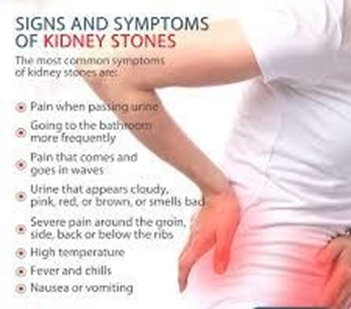
A nurse is caring for a client who has polycystic kidney disease (PKD). Which of the following findings should the nurse expect?
A. Confusion
Confusion is not a typical finding in polycystic kidney disease.
B. Flank pain
Flank pain is a common symptom of polycystic kidney disease due to the enlargement of the kidneys from cyst formation.
C. Urinary retention
Urinary retention is not typically associated with polycystic kidney disease.
D. Hypotension
Hypotension is not a typical finding in polycystic kidney disease unless there are complications such as renal failure.
Full Explanation
A. Confusion is not a typical finding in polycystic kidney disease.
B. Flank pain is a common symptom of polycystic kidney disease due to the enlargement of the kidneys from cyst formation.
C. Urinary retention is not typically associated with polycystic kidney disease.
D. Hypotension is not a typical finding in polycystic kidney disease unless there are complications such as renal failure.