
Nursing practice questions with comprehensive rationales
NurseDive Free Nursing Practice Question
A nurse is caring for a client who is 6 hours postoperative following the application of an external fixator for a tibial fracture.
Which of the following actions should the nurse take?
A. Wrap sterile gauze on the sharp point of the pins.
Choice A, wrapping sterile gauze on the sharp point of the pins, is not an answer because it is not mentioned in the search results as an intervention for a client with an external fixator for a tibial fracture.
B. Adjust the clamps on the fixator frame.
Choice B, adjusting the clamps on the fixator frame, is not an answer because it is not mentioned in the search results as an intervention for a client with an external fixator for a tibial fracture.
C. Maintain the affected extremity in a dependent position.
Choice C, maintaining the affected extremity in a dependent position, is not an answer because it is not mentioned in the search results as an intervention for a client with an external fixator for a tibial fracture.
D. Palpate the dorsalis pedis pulse.
The nurse should palpate the dorsalis pedis pulse. This is to assess for peripheral neurovascular dysfunction, which is a potential complication of a tibial fracture.
This question is an excerpt from Nurse Dive's nursing test bank - ATI Adult Medical Surgical 2019 Proctored Exam. Take the full exam now
Full Explanation
The nurse should palpate the dorsalis pedis pulse.
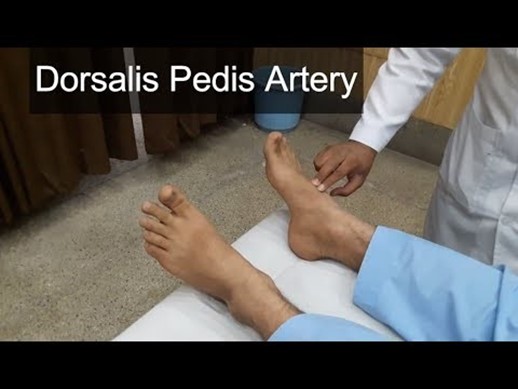
This is to assess for peripheral neurovascular dysfunction, which is a potential complication of a tibial fracture.
Choice A, wrapping sterile gauze on the sharp point of the pins, is not an answer because it is not mentioned in the search results as an intervention for a client with an external fixator for a tibial fracture.
Choice B, adjusting the clamps on the fixator frame, is not an answer because it is not mentioned in the search results as an intervention for a client with an external fixator for a tibial fracture.
Choice C, maintaining the affected extremity in a dependent position, is not an answer because it is not mentioned in the search results as an intervention for a client with an external fixator for a tibial fracture.
Similar Questions
A nurse in the PACU is caring for a client.
Which of the following assessments is the nurse's priority?
A. Respiratory status.
The nurse’s priority assessment in the PACU (Post-Anesthesia Care Unit) should be the client’s respiratory status. This is because the client is recovering from anesthesia and may have an altered respiratory function.
B. Surgical site.
Choice B, assessing the surgical site, is not an answer because it is not the priority assessment for a client in the PACU.
C. Level of consciousness.
Choice C, assessing the level of consciousness, is not an answer because it is not the priority assessment for a client in the PACU.
D. Pain level.
Choice D, assessing the pain level, is not an answer because it is not the priority assessment for a client in the PACU.
Full Explanation
The nurse’s priority assessment in the PACU (Post-Anesthesia Care Unit) should be the client’s respiratory status.

This is because the client is recovering from anesthesia and may have an altered respiratory function.
Choice B, assessing the surgical site, is not an answer because it is not the priority assessment for a client in the PACU.
Choice C, assessing the level of consciousness, is not an answer because it is not the priority assessment for a client in the PACU.
Choice D, assessing the pain level, is not an answer because it is not the priority assessment for a client in the PACU.
A nurse is assessing a client who has right-sided heart failure.
Which of the following assessment findings should the nurse expect to find?
A. Poor skin turgor.
Choice A is incorrect because poor skin turgor is not a common symptom of right-sided heart failure.
B. Pitting edema.
Pitting edema is a common and obvious symptom of right-sided heart failure. This occurs when fluid retention causes swelling in the lower limbs and sometimes the abdomen.
C. Oliguria.
Choice C is incorrect because oliguria, or decreased urine output, is not a common symptom of right-sided heart failure.
D. S4 galloping heart sounds.
Choice D is incorrect because S4 galloping heart sounds are not a common symptom of right-sided heart failure.
Full Explanation
Pitting edema is a common and obvious symptom of right-sided heart failure.
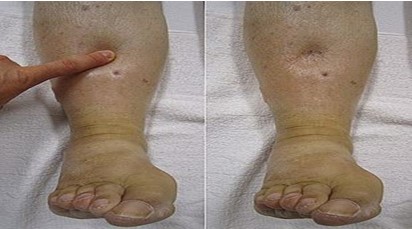
This occurs when fluid retention causes swelling in the lower limbs and sometimes the abdomen.
Choice A is incorrect because poor skin turgor is not a common symptom of right-sided heart failure.
Choice C is incorrect because oliguria, or decreased urine output, is not a common symptom of right-sided heart failure.
Choice D is incorrect because S4 galloping heart sounds are not a common symptom of right-sided heart failure.
A nurse on a medical unit is planning care for a group of clients.
Which of the following clients should the nurse attend to first?
A. A client who has chronic obstructive pulmonary disease and an oxygen saturation of 89%.
The client with chronic obstructive pulmonary disease and an oxygen saturation of 89% may require oxygen therapy or other interventions to improve respiratory function, but the situation is not immediately life-threatening.
B. A client who has thrombocytopenia and reports a nosebleed.
The nurse should attend to the client who has thrombocytopenia and reports a nosebleed first. Thrombocytopenia is a condition characterized by low platelet count, which increases the risk of bleeding. A nosebleed can be a sign of significant bleeding, and it is important for the nurse to assess the severity and take appropriate action to stop the bleeding and prevent further complications. Although the other clients also require nursing care, their conditions are not as urgent as the client with thrombocytopenia and a nosebleed.
C. A client who has left-sided paralysis and slurred speech from a prior stroke.
The client with left-sided paralysis and slurred speech from a prior stroke may require ongoing care and rehabilitation, but there is no indication of an acute change in their condition.
D. A client who has multiple sclerosis and reports ataxia and vertigo.
The client with multiple sclerosis and ataxia and vertigo may require assistance with mobility and balance, but their symptoms do not pose an immediate threat to their health.
Full Explanation
The nurse should attend to the client who has thrombocytopenia and reports a nosebleed first.

Thrombocytopenia is a condition characterized by low platelet count, which increases the risk of bleeding.
A nosebleed can be a sign of significant bleeding, and it is important for the nurse to assess the severity and take appropriate action to stop the bleeding and prevent further complications.
Although the other clients also require nursing care, their conditions are not as urgent as the client with thrombocytopenia and a nosebleed.
The client with chronic obstructive pulmonary disease and an oxygen saturation of 89% may require oxygen therapy or other interventions to improve respiratory function, but the situation is not immediately life-threatening.
The client with left-sided paralysis and slurred speech from a prior stroke may require ongoing care and rehabilitation, but there is no indication of an acute change in their condition.
The client with multiple sclerosis and ataxia and vertigo may require assistance with mobility and balance, but their symptoms do not pose an immediate threat to their health.