
Nursing practice questions with comprehensive rationales
NurseDive Free Nursing Practice Question
A nurse is caring for a client who is at 14 weeks of gestation and has hyperemesis gravidarum. Which of the following medications should the nurse plan to administer?
A. Digoxin.
Digoxin is a cardiac glycoside and is primarily used in the management of certain heart conditions, such as heart failure and atrial fibrillation. It is not indicated for hyperemesis gravidarum, which is severe and persistent vomiting during pregnancy.
B. Calcium gluconate.
Calcium gluconate is a mineral supplement used to treat calcium deficiencies. It is not a standard treatment for hyperemesis gravidarum.
C. Vitamin Bs.
Vitamin Bs (B6 and B12) are commonly used to manage hyperemesis gravidarum. Vitamin B6, also known as pyridoxine, has been shown to alleviate nausea and vomiting during pregnancy. Vitamin B12 may also be administered to help manage symptoms. Both vitamins are safe to use during pregnancy.
D. Propranolol.
Propranolol is a beta-blocker used to treat high blood pressure, heart conditions, and migraines. It is not recommended for managing hyperemesis gravidarum and is generally avoided during pregnancy due to potential risks to the developing fetus.
This question is an excerpt from Nurse Dive's nursing test bank - ATI Maternal Newborn Proctored Exam. Take the full exam now
Full Explanation
Choice A rationale:
Digoxin is a cardiac glycoside and is primarily used in the management of certain heart conditions, such as heart failure and atrial fibrillation. It is not indicated for hyperemesis gravidarum, which is severe and persistent vomiting during pregnancy.
Choice B rationale:
Calcium gluconate is a mineral supplement used to treat calcium deficiencies. It is not a standard treatment for hyperemesis gravidarum.
Choice C rationale:
Vitamin Bs (B6 and B12) are commonly used to manage hyperemesis gravidarum. Vitamin B6, also known as pyridoxine, has been shown to alleviate nausea and vomiting during pregnancy. Vitamin B12 may also be administered to help manage symptoms. Both vitamins are safe to use during pregnancy.
Choice D rationale:
Propranolol is a beta-blocker used to treat high blood pressure, heart conditions, and migraines. It is not recommended for managing hyperemesis gravidarum and is generally avoided during pregnancy due to potential risks to the developing fetus.
Similar Questions
A nurse is developing a plan of care for a newborn who has hyperbilirubinemia and a prescription for phototherapy. Which of the following interventions should the nurse include?
A. Check the newborn's temperature every 8 hr.
Checking the newborn's temperature every 8 hours is not directly related to managing hyperbilirubinemia or phototherapy. Monitoring the newborn's temperature is important, but it should be done more frequently, especially during phototherapy, as infants are at risk of developing hypothermia.
B. Apply moisturizing lotion to the newborn's skin every 4 hr.
Applying moisturizing lotion to the newborn's skin every 4 hours is not a necessary intervention for hyperbilirubinemia or phototherapy. While skin care is important for all newborns, it is not a specific intervention for this condition.
C. Give the newborn 1 oz of glucose water every 4 hr.
Giving the newborn 1 oz of glucose water every 4 hours is not an appropriate intervention for hyperbilirubinemia. Glucose water is not a recommended treatment for this condition. Instead, phototherapy helps break down the bilirubin and promote its elimination from the body.
D. Reposition the newborn every 2 to 3 hr.
Repositioning the newborn every 2 to 3 hours is the correct intervention. Repositioning helps ensure even exposure of the baby's skin to the phototherapy lights, maximizing its effectiveness in reducing bilirubin levels. Additionally, repositioning prevents pressure ulcers and promotes comfort for the infant during treatment.
Full Explanation
Choice A rationale:
Checking the newborn's temperature every 8 hours is not directly related to managing hyperbilirubinemia or phototherapy. Monitoring the newborn's temperature is important, but it should be done more frequently, especially during phototherapy, as infants are at risk of developing hypothermia.
Choice B rationale:
Applying moisturizing lotion to the newborn's skin every 4 hours is not a necessary intervention for hyperbilirubinemia or phototherapy. While skin care is important for all newborns, it is not a specific intervention for this condition.
Choice C rationale:
Giving the newborn 1 oz of glucose water every 4 hours is not an appropriate intervention for hyperbilirubinemia. Glucose water is not a recommended treatment for this condition.
Instead, phototherapy helps break down the bilirubin and promote its elimination from the body.
Choice D rationale:
Repositioning the newborn every 2 to 3 hours is the correct intervention. Repositioning helps ensure even exposure of the baby's skin to the phototherapy lights, maximizing its effectiveness in reducing bilirubin levels. Additionally, repositioning prevents pressure ulcers and promotes comfort for the infant during treatment.
A nurse is assessing a client who is at 31 weeks of gestation. Which of the following findings should the nurse identify as an indication of a potential prenatal complication?
A. Periodic tingling of fingers.
Periodic tingling of fingers is a common symptom during pregnancy and is often related to hormonal changes and increased fluid retention. While it can be uncomfortable, it is not necessarily an indication of a potential prenatal complication.
B. Absence of clonus.
Absence of clonus is not an abnormal finding during pregnancy. Clonus is a series of involuntary muscle contractions and relaxations and is generally not expected during a routine assessment.
C. Leg cramps.
Leg cramps are a common complaint during pregnancy and are usually caused by changes in calcium and magnesium levels. While they can be uncomfortable, they are not typically considered an indication of a potential prenatal complication.
D. Blurred vision.
Blurred vision can be an indication of preeclampsia, a serious condition that can occur during pregnancy. Preeclampsia is characterized by high blood pressure and damage to organs, often affecting the eyes, kidneys, and liver. It is crucial for the nurse to recognize this symptom and promptly inform the healthcare provider for further evaluation and management.
Full Explanation
Choice A rationale:
Periodic tingling of fingers is a common symptom during pregnancy and is often related to hormonal changes and increased fluid retention. While it can be uncomfortable, it is not necessarily an indication of a potential prenatal complication.
Choice B rationale:
Absence of clonus is not an abnormal finding during pregnancy. Clonus is a series of involuntary muscle contractions and relaxations and is generally not expected during a routine assessment.
Choice C rationale:
Leg cramps are a common complaint during pregnancy and are usually caused by changes in calcium and magnesium levels. While they can be uncomfortable, they are not typically considered an indication of a potential prenatal complication.
Choice D rationale:
Blurred vision can be an indication of preeclampsia, a serious condition that can occur during pregnancy. Preeclampsia is characterized by high blood pressure and damage to organs, often affecting the eyes, kidneys, and liver. It is crucial for the nurse to recognize this symptom and promptly inform the healthcare provider for further evaluation and management.
A nurse is caring for a client who is at 38 weeks of gestation and is experiencing continuous abdominal pain and vaginal bleeding. The client has a history of cocaine use. The nurse should identify that the client is likely experiencing which of the following complications?
A. Abruptio placentae.
Continuous abdominal pain and vaginal bleeding in a client with a history of cocaine use are indicative of abruptio placentae. Abruptio placentae is a medical emergency where the placenta detaches from the uterine wall before delivery, leading to severe bleeding and abdominal pain. Immediate medical intervention is necessary to prevent complications for both the mother and the baby.
B. Hydatidiform mole.
Hydatidiform mole is a gestational trophoblastic disease that occurs due to an abnormal pregnancy. It is not associated with continuous abdominal pain and vaginal bleeding. Instead, clients with this condition often present with vaginal bleeding and a grape-like cluster of cysts in the uterus.
C. Preterm labor.
Preterm labor involves regular uterine contractions and cervical changes before 37 weeks of gestation. While preterm labor can cause abdominal discomfort, it is not usually described as continuous abdominal pain. Vaginal bleeding is not a typical symptom of preterm labor.
D. Placenta previa.
Placenta previa is a condition where the placenta covers the opening of the cervix. It can cause painless vaginal bleeding, but it is not usually associated with continuous abdominal pain. Clients with placenta previa often experience sudden, painless bleeding later in pregnancy.
Full Explanation
Choice A rationale:
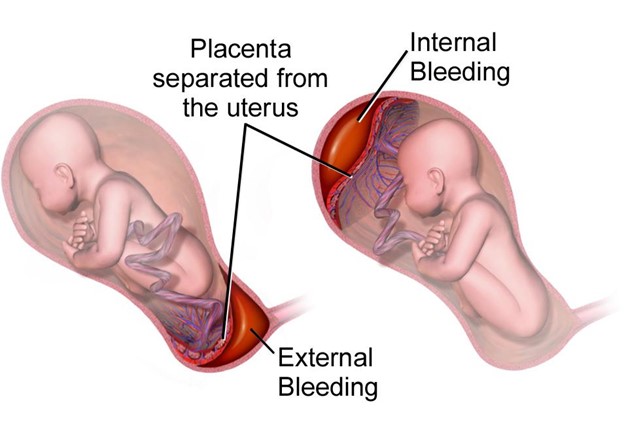
Continuous abdominal pain and vaginal bleeding in a client with a history of cocaine use are indicative of abruptio placentae. Abruptio placentae is a medical emergency where the placenta detaches from the uterine wall before delivery, leading to severe bleeding and abdominal pain. Immediate medical intervention is necessary to prevent complications for both the mother and the baby.
Choice B rationale:
Hydatidiform mole is a gestational trophoblastic disease that occurs due to an abnormal pregnancy. It is not associated with continuous abdominal pain and vaginal bleeding. Instead, clients with this condition often present with vaginal bleeding and a grape-like cluster of cysts in the uterus.
Choice C rationale:
Preterm labor involves regular uterine contractions and cervical changes before 37 weeks of gestation. While preterm labor can cause abdominal discomfort, it is not usually described as continuous abdominal pain. Vaginal bleeding is not a typical symptom of preterm labor.
Choice D rationale:
Placenta previa is a condition where the placenta covers the opening of the cervix. It can cause painless vaginal bleeding, but it is not usually associated with continuous abdominal pain. Clients with placenta previa often experience sudden, painless bleeding later in pregnancy.