Nursing practice questions with comprehensive rationales
NurseDive Free Nursing Practice Question
A nurse is caring for a client who is experiencing an increase in intracranial pressure (ICP). The nurse should expect which of the following as an early manifestation of increased ICP?
A. Papilledema
Papilledema, which is the swelling of the optic disc due to increased ICP, is not typically an early sign. It is usually a later manifestation because it takes time for the pressure to build up and affect the optic nerve.
B. Restlessness
Restlessness can be an early sign of increased ICP. As ICP begins to rise, it can cause subtle changes in a person's level of consciousness, leading to agitation or restlessness. This is often one of the first signs that healthcare providers notice when monitoring for changes in neurological status.
C. Projectile vomiting
Projectile vomiting may occur with increased ICP, but it is not usually an early sign. It tends to occur after other symptoms such as headache and altered consciousness and is more indicative of significant pressure increases that affect the brainstem.
D. Decorticate posturing
Decorticate posturing is a severe sign of brain injury associated with increased ICP but is not an early sign. It indicates significant damage to the brain and is a late and ominous sign in the progression of increased ICP.
This question is an excerpt from Nurse Dive's nursing test bank - Ati Rn Adult Medical Surgical 2023 Proctored Exam. Take the full exam now
Full Explanation
Choice A reason: Papilledema, which is the swelling of the optic disc due to increased ICP, is not typically an early sign. It is usually a later manifestation because it takes time for the pressure to build up and affect the optic nerve.
Choice B reason: Restlessness can be an early sign of increased ICP. As ICP begins to rise, it can cause subtle changes in a person's level of consciousness, leading to agitation or restlessness. This is often one of the first signs that healthcare providers notice when monitoring for changes in neurological status.
Choice C reason: Projectile vomiting may occur with increased ICP, but it is not usually an early sign. It tends to occur after other symptoms such as headache and altered consciousness and is more indicative of significant pressure increases that affect the brainstem.
Choice D reason: Decorticate posturing is a severe sign of brain injury associated with increased ICP but is not an early sign. It indicates significant damage to the brain and is a late and ominous sign in the progression of increased ICP.
Similar Questions
A nurse is teaching a client who has left-sided weakness how to use a quad cane. Which of the following client actions indicates an understanding of the teaching?
A. The client moves the cane 2 feet ahead.
Moving the cane 2 feet ahead is too far and can cause imbalance or a fall. The cane should be moved a short distance ahead, about the length of one natural step.
B. The client holds the cane with their right hand.
Holding the cane with the right hand is correct for someone with left-sided weakness. The cane should be used on the stronger side of the body to provide support for the weaker side.
C. The client takes a step with their left foot first.
Taking a step with the left foot first is not correct because the weaker leg should be advanced to the cane to ensure stability and support when moving.
D. The client advances the weaker (left) leg forward to the cane.
Advancing the weaker leg forward to the cane is correct. The cane provides support for the weaker leg, helping to maintain balance as the client walks.
Full Explanation
Choice A reason: Moving the cane 2 feet ahead is too far and can cause imbalance or a fall. The cane should be moved a short distance ahead, about the length of one natural step.
Choice B reason: Holding the cane with the right hand is correct for someone with left-sided weakness. The cane should be used on the stronger side of the body to provide support for the weaker side.
Choice C reason : Taking a step with the left foot first is not correct because the weaker leg should be advanced to the cane to ensure stability and support when moving.
Choice D reason: Advancing the weaker leg forward to the cane is correct. The cane provides support for the weaker leg, helping to maintain balance as the client walks.
A nurse is providing teaching for a client who has diabetes mellitus about the self-administration of insulin. The client has prescriptions for regular and NPH insulins. Which of the following statements by the client indicates an understanding of the teaching?
A. "I will draw the regular insulin into the syringe first."
Drawing the regular insulin into the syringe first is correct. When mixing two types of insulin, the clear (regular) insulin should be drawn up before the cloudy (NPH) insulin to prevent contamination.
B. "I will store prefilled syringes in the refrigerator with the needle pointed upward."
Storing prefilled syringes with the needle pointed upward can cause air bubbles to move into the insulin, which can alter the dose when injected. The needle should be pointed downward.
C. "I will gently roll the NPH vial between my hands before drawing up the insulin."
Shaking the NPH vial vigorously is not recommended as it can create air bubbles and affect the insulin dose. Instead, the vial should be gently rolled between the hands to mix the insulin.
D. "I will insert the needle at a 90-degree angle."
Inserting the needle at a 15-degree angle is incorrect for subcutaneous injections. A 90-degree angle is typically used unless the patient is very thin, in which case a 45-degree angle may be used.
Full Explanation
Choice A reason: Drawing the regular insulin into the syringe first is correct. When mixing two types of insulin, the clear (regular) insulin should be drawn up before the cloudy (NPH) insulin to prevent contamination.
Choice B reason: Storing prefilled syringes with the needle pointed upward can cause air bubbles to move into the insulin, which can alter the dose when injected. The needle should be pointed downward.
Choice C reason: Shaking the NPH vial vigorously is not recommended as it can create air bubbles and affect the insulin dose. Instead, the vial should be gently rolled between the hands to mix the insulin.
Choice D reason: Inserting the needle at a 15-degree angle is incorrect for subcutaneous injections. A 90-degree angle is typically used unless the patient is very thin, in which case a 45-degree angle may be used.
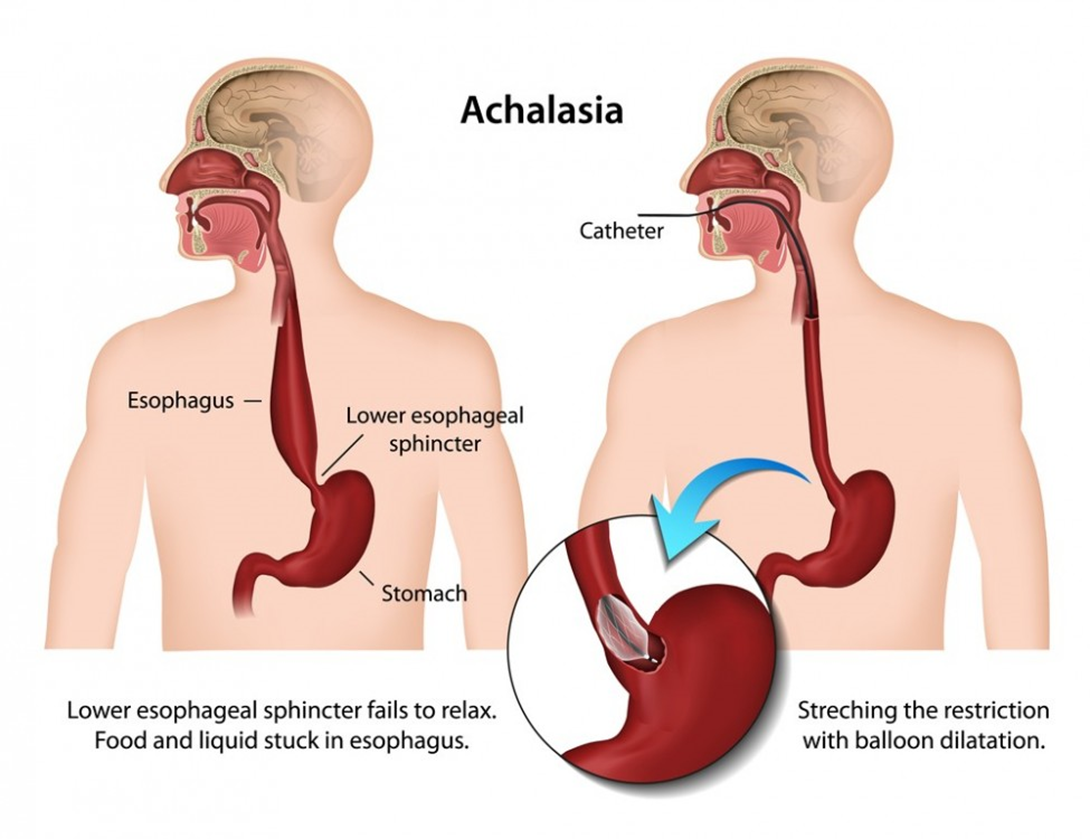
A nurse is caring for a client who has oral achalasia. The nurse should ask the client which of the following questions to assess their ability to swallow?
A. "Do you feel like you have food stuck at the base of your throat?"
Asking if the client feels like they have food stuck at the base of their throat is a pertinent question for assessing swallowing in a client with oral achalasia. Achalasia is characterized by difficulty in swallowing due to the inability of the lower esophageal sphincter to relax, leading to a sensation of food being stuck.
B. "Do you feel any burning sensations in your throat?"
While burning sensations in the throat can be associated with gastroesophageal reflux disease (GERD), they are not specific to achalasia. However, some clients with achalasia may experience similar symptoms due to food stasis and fermentation in the esophagus.
C. "Do you have any feelings of fullness in the neck?"
Feelings of fullness in the neck are not a typical symptom of achalasia. Achalasia primarily affects the esophagus and does not usually cause a sensation of fullness in the neck.
D. "Do you have any problems with pain while swallowing?"
Pain while swallowing, or odynophagia, can occur in achalasia but is more commonly associated with conditions that cause inflammation or irritation of the esophagus, such as infections or ingestion of irritants.
Full Explanation
Choice A reason: Asking if the client feels like they have food stuck at the base of their throat is a pertinent question for assessing swallowing in a client with oral achalasia. Achalasia is characterized by difficulty in swallowing due to the inability of the lower esophageal sphincter to relax, leading to a sensation of food being stuck.
Choice B reason: While burning sensations in the throat can be associated with gastroesophageal reflux disease (GERD), they are not specific to achalasia. However, some clients with achalasia may experience similar symptoms due to food stasis and fermentation in the esophagus.
Choice C reason: Feelings of fullness in the neck are not a typical symptom of achalasia. Achalasia primarily affects the esophagus and does not usually cause a sensation of fullness in the neck.
Choice D reason: Pain while swallowing, or odynophagia, can occur in achalasia but is more commonly associated with conditions that cause inflammation or irritation of the esophagus, such as infections or ingestion of irritants.