
Nursing practice questions with comprehensive rationales
NurseDive Free Nursing Practice Question
A nurse is caring for a client who is in active labor and notes the FHR baseline has been 100/min for the past 15 min.
The nurse should identify which of the following conditions as a possible cause of fetal bradycardia?
A. Maternal hypoglycemia.
Maternal hypoglycemia can lead to fetal bradycardia, causing a sustained low fetal heart rate. Hypoglycemia in the mother can affect the fetus by reducing the availability of glucose, which is essential for fetal metabolism and heart function. -
B. Maternal fever.
Maternal fever is more commonly associated with fetal tachycardia rather than bradycardia. Fever in the mother can lead to an increased fetal heart rate, not a decreased one. -
C. Chorioamnionitis.
Chorioamnionitis is an infection of the fetal membranes and amniotic fluid, which can lead to fetal distress and tachycardia rather than bradycardia.
D. Fetal anemia.
Fetal anemia can also cause bradycardia, but in this scenario, maternal hypoglycemia is a more immediate concern as it directly affects the fetal heart rate by impacting the fetal metabolic processes.
This question is an excerpt from Nurse Dive's nursing test bank - ATI Comprehensive Predictor 2023 Exit Proctored Exam A. Take the full exam now
Full Explanation
The correct answer is choice a. Maternal hypoglycemia.
Choice A rationale:
Maternal hypoglycemia can lead to fetal bradycardia, causing a sustained low fetal heart rate. Hypoglycemia in the mother can affect the fetus by reducing the availability of glucose, which is essential for fetal metabolism and heart function.
-
Choice B rationale:
Maternal fever is more commonly associated with fetal tachycardia rather than bradycardia. Fever in the mother can lead to an increased fetal heart rate, not a decreased one.
-
Choice C rationale:
Chorioamnionitis is an infection of the fetal membranes and amniotic fluid, which can lead to fetal distress and tachycardia rather than bradycardia.
-
Choice D rationale:
Fetal anemia can also cause bradycardia, but in this scenario, maternal hypoglycemia is a more immediate concern as it directly affects the fetal heart rate by impacting the fetal metabolic processes.
Similar Questions
A nurse is assessing a client who is in active labor.
Which of the following findings should the nurse report to the provider?
A. Early decelerations in the FHR.
wrong because early decelerations in the FHR are normal and benign, and indicate head compression during contractions. They do not require any intervention or reporting.
B. Contractions lasting 80 seconds.
wrong because contractions lasting 80 seconds are within the normal range for active labor, which is 40 to 90 seconds per contraction. They do not indicate any complication or abnormality.
C. FHR baseline 170/min.
FHR baseline 170/min. This is because a normal FHR baseline is between 110 and 160 bpm, and anything above or below this range indicates fetal distress and should be reported to the provider. A FHR baseline of 170/min could indicate fetal tachycardia, which could be caused by maternal fever, infection, dehydration, fetal anemia, or fetal hypoxia.
D. Temperature 37.4° C (99.3° F).
wrong because a temperature of 37.4° C (99.3° F) is slightly elevated but not considered a fever. A fever is defined as a temperature of 38° C (100.4° F) or higher. A mild increase in temperature could be due to dehydration, exertion, or environmental factors, and does not necessarily indicate infection or inflammation.
Full Explanation
The correct answer is C. FHR baseline 170/min. This is because a normal FHR baseline is between 110 and 160 bpm, and anything above or below this range indicates fetal distress and should be reported to the provider. A FHR baseline of 170/min could indicate fetal tachycardia, which could be caused by maternal fever, infection, dehydration, fetal anemia, or fetal hypoxia.
Choice A is wrong because early decelerations in the FHR are normal and benign, and indicate head compression during contractions.
They do not require any intervention or reporting.
Choice B is wrong because contractions lasting 80 seconds are within the normal range for active labor, which is 40 to 90 seconds per contraction.
They do not indicate any complication or abnormality.
Choice D is wrong because a temperature of 37.4° C (99.3° F) is slightly elevated but not considered a fever. A fever is defined as a temperature of 38° C (100.4° F) or higher.
A mild increase in temperature could be due to dehydration, exertion, or environmental factors, and does not necessarily indicate infection or inflammation.
A nurse is caring for a client in a clinic.
Exhibit 1 Exhibit 2.
Nurses' Notes.
0900:
A16-year-old client reports to the clinic with their caregiver. The client's caregiver informs the nurse that the client has "not been themselves lately." The client's parents and a sibling passed away from injuries sustained when a tornado moved through their town 1 month ago. They were the only survivor and witnessed their family's deaths.
0910:.
Client appears anxious but answers questions appropriately for age. They report experiencing nightmares that awaken them at night and startle easily during thunderstorm, but the client admits that they have always been afraid of thunderstorms. Client admits smoking marijuana for about 1 month because it helps clear their mind. They also admit that they have no desire to leave the house. They do attend school regularly and are on the honor roll.
Vital Signs.
0915:
Temperature 36.7° C (98° F).
BP 122/80 mm Hg Respiratory rate 20/min Heart rate 99/min.
Based on the information in the client's medical record, which of the following findings require immediate follow-up?
Select the 4 findings that require follow-up.
A. BP 122/80 mmHg.
BP 122/80 mmHg. This is not a finding that requires immediate follow-up because it is within the normal range for a 16-year-old client, which is 110 to 120/70 to 80 mmHg. A normal blood pressure indicates that the client’s cardiovascular system is functioning well and there are no signs of hypertension or hypotension.
B. Heart rate 99/min.
Heart rate 99/min. This is a finding that requires immediate follow-up because it is above the normal range for a 16-year-old client, which is 60 to 100 beats per minute. A high heart rate could indicate anxiety, stress, pain, infection or other conditions that need to be addressed.
C. Startles easy during thunderstorm.
Startles easy during thunderstorm. This is not a finding that requires immediate follow-up because it is a normal reaction to a loud noise or a frightening stimulus. The client admits that they have always been afraid of thunderstorms, which suggests that this is not a new or unusual behavior for them. However, the nurse may want to monitor the client’s anxiety level and provide reassurance and comfort during thunderstorms.
D. Client experiences nightmares.
Client experiences nightmares. This is a finding that requires immediate follow-up because it could indicate post-traumatic stress disorder (PTSD), which is a mental health condition that can develop after witnessing or experiencing a traumatic event. PTSD can cause distressing symptoms such as nightmares, flashbacks, intrusive thoughts, avoidance, negative mood and hyperarousal. PTSD can interfere with the client’s daily functioning and well-being and requires professional treatment.
E. Witnessing their family’s death.
Witnessing their family’s death. This is a finding that requires immediate follow-up because it is the most likely cause of the client’s PTSD symptoms and emotional distress. Witnessing the death of one’s family members is a devastating and traumatic experience that can have lasting effects on the client’s mental health. The client may benefit from grief counseling, trauma-focused therapy, medication or other interventions to help them cope with their loss and trauma.
F. Caregiver reporting client acting differently than usual.
Caregiver reporting client acting differently than usual. This is not a finding that requires immediate follow-up because it is a vague and subjective statement that does not specify how the client is acting differently or what changes have occurred in their behavior. The nurse may want to ask the caregiver for more details and examples of how the client has changed since the traumatic event and assess whether these changes are normal or concerning.
G. Attends school regularly.
Attends school regularly. This is not a finding that requires immediate follow-up because it indicates that the client is maintaining their academic performance and social interactions despite their trauma and grief. Attending school regularly can provide the client with a sense of routine, structure, support and achievement that can help them cope with their situation. However, the nurse may want to check with the client’s teachers and peers to see if they have noticed any changes in the client’s mood, behavior or participation at school.
H. Smoking marijuana to clear their mind.
Smoking marijuana to clear their mind. This is a finding that requires immediate follow-up because it indicates that the client is using an illicit substance to self-medicate their emotional pain. Smoking marijuana can have negative effects on the client’s physical and mental health, such as impairing their memory, cognition, judgment, coordination and motivation. It can also increase the risk of addiction, dependence and withdrawal symptoms. The client may need substance abuse counseling, education, referral or other services to help them quit smoking marijuana and find healthier ways to cope with their feelings.
Full Explanation
• B: Heart rate 99/min. This is a finding that requires immediate follow-up because it is above the normal range for a 16-year-old client, which is 60 to 100 beats per minute. A high heart rate could indicate anxiety, stress, pain, infection or other conditions that need to be addressed.
• D: Client experiences nightmares. This is a finding that requires immediate follow-up because it could indicate post-traumatic stress disorder (PTSD), which is a mental health condition that can develop after witnessing or experiencing a traumatic event. PTSD can cause distressing symptoms such as nightmares, flashbacks, intrusive thoughts, avoidance, negative mood and hyperarousal. PTSD can interfere with the client’s daily functioning and well-being and requires professional treatment.
• E: Witnessing their family’s death. This is a finding that requires immediate follow-up because it is the most likely cause of the client’s PTSD symptoms and emotional distress. Witnessing the death of one’s family members is a devastating and traumatic experience that can have lasting effects on the client’s mental health. The client may benefit from grief counseling, trauma-focused therapy, medication or other interventions to help them cope with their loss and trauma.
• H: Smoking marijuana to clear their mind. This is a finding that requires immediate follow-up because it indicates that the client is using an illicit substance to self-medicate their emotional pain. Smoking marijuana can have negative effects on the client’s physical and mental health, such as impairing their memory, cognition, judgment, coordination and motivation. It can also increase the risk of addiction, dependence and withdrawal symptoms. The client may need substance abuse counseling, education, referral or other services to help them quit smoking marijuana and find healthier ways to cope with their feelings.
The other findings do not require immediate follow-up for the following reasons:
• A: BP 122/80 mmHg. This is not a finding that requires immediate follow-up because it is within the normal range for a 16-year-old client, which is 110 to 120/70 to 80 mmHg. A normal blood pressure indicates that the client’s cardiovascular system is functioning well and there are no signs of hypertension or hypotension.
• C: Startles easy during thunderstorm. This is not a finding that requires immediate follow-up because it is a normal reaction to a loud noise or a frightening stimulus. The client admits that they have always been afraid of thunderstorms, which suggests that this is not a new or unusual behavior for them. However, the nurse may want to monitor the client’s anxiety level and provide reassurance and comfort during thunderstorms.
• F: Caregiver reporting client acting differently than usual. This is not a finding that requires immediate follow-up because it is a vague and subjective statement that does not specify how the client is acting differently or what changes have occurred in their behavior. The nurse may want to ask the caregiver for more details and examples of how the client has changed since the traumatic event and assess whether these changes are normal or concerning.
• G: Attends school regularly. This is not a finding that requires immediate follow-up because it indicates that the client is maintaining their academic performance and social interactions despite their trauma and grief. Attending school regularly can provide the client with a sense of routine, structure, support and achievement that can help them cope with their situation. However, the nurse may want to check with the client’s teachers and peers to see if they have noticed any changes in the client’s mood, behavior or participation at school.
A nurse is performing a skin assessment on a client who has dark skin.
Which of the following locations on the client’s body should the nurse observe to assess for cyanosis?
A. Area of trauma.
is wrong because an area of trauma may have bruising or inflammation that can mask cyanosis.
B. Sacrum.
B is wrong because the sacrum is not a good site to assess for cyanosis in any skin tone, as it is prone to pressure ulcers and poor circulation.
C. Shoulders.
is wrong because the shoulders are not a mucous membrane and may have more melanin than other areas of the body.
D. Palms of the hands.
Cyanosis is a bluish discoloration of the skin and mucous membranes due to inadequate oxygenation of the blood. It is more difficult to detect in people who have dark skin, so the nurse should look for cyanosis in areas where the skin is thinner and the blood supply is richer, such as the palms of the hands, the lips, the gums, and around the eyes. These areas are less affected by melanin, the pigment that gives skin its color.
Full Explanation
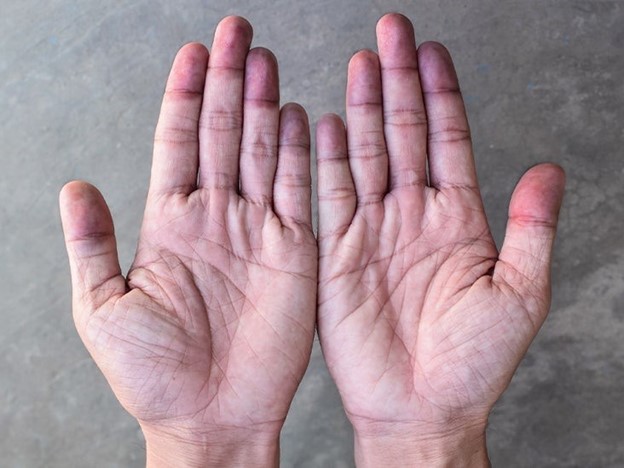
Cyanosis is a bluish discoloration of the skin and mucous membranes due to inadequate oxygenation of the blood. It is more difficult to detect in people who have dark skin, so the nurse should look for cyanosis in areas where the skin is thinner and the blood supply is richer, such as the palms of the hands, the lips, the gums, and around the eyes.
These areas are less affected by melanin, the pigment that gives skin its color.
Choice A is wrong because an area of trauma may have bruising or inflammation that can mask cyanosis.
Choice B is wrong because the sacrum is not a good site to assess for cyanosis in any skin tone, as it is prone to pressure ulcers and poor circulation.
Choice C is wrong because the shoulders are not a mucous membrane and may have more melanin than other areas of the body.