
Nursing practice questions with comprehensive rationales
NurseDive Free Nursing Practice Question
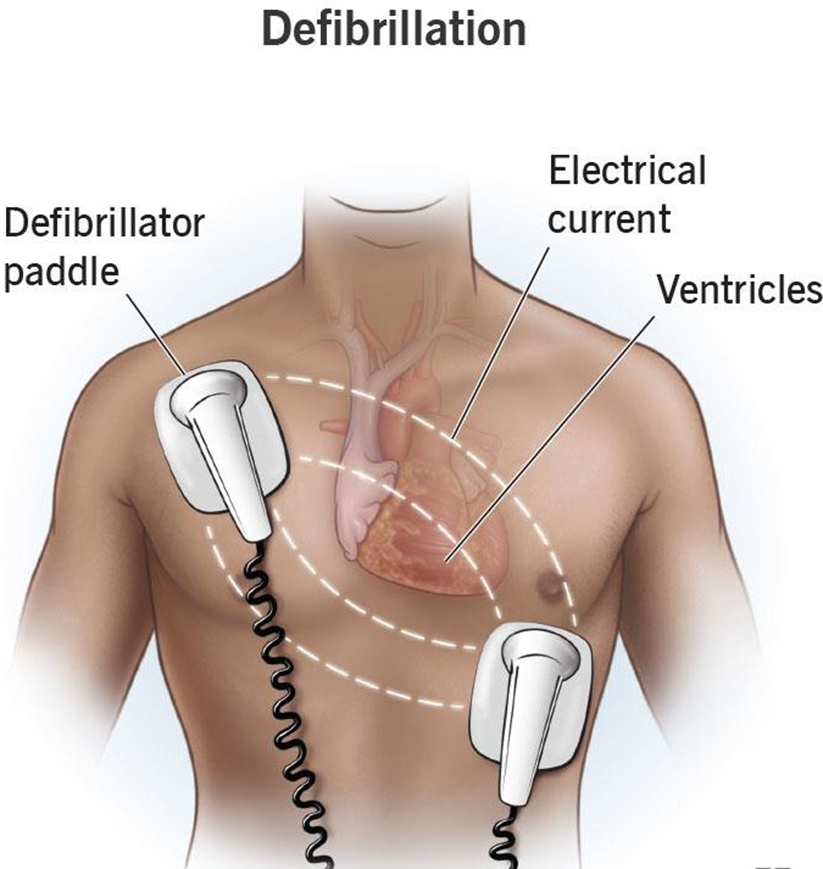
A nurse is caring for a client who is in pulseless ventricular tachycardia (V-Tach). The nurse recognizes the need for which priority intervention?
A. Synchronized Cardioversion
Synchronized cardioversion is not appropriate for pulseless ventricular tachycardia.
B. Repeat electrocardiogram (ECG)
A repeat ECG is not necessary for pulseless ventricular tachycardia.
C. Assessment of blood pressure
Assessment of blood pressure is not the priority in pulseless ventricular tachycardia.
D. Immediate Defibrillation
Immediate defibrillation is the priority in pulseless ventricular tachycardia to restore a perfusing rhythm.
This question is an excerpt from Nurse Dive's nursing test bank - Ati Rn Nsg 232 Proctored Exam Med Surg. Take the full exam now
Full Explanation
Rationale:
A. Synchronized cardioversion is not appropriate for pulseless ventricular tachycardia.
B. A repeat ECG is not necessary for pulseless ventricular tachycardia.
C. Assessment of blood pressure is not the priority in pulseless ventricular tachycardia.
D. Immediate defibrillation is the priority in pulseless ventricular tachycardia to restore a perfusing rhythm.
Similar Questions
A nurse is caring for a client admitted with hypertensive emergency. The nurse is aware the treatment goals for the patient include which of the following?
A. Reduce Blood pressure until patient is asymptomatic
Reducing blood pressure until the patient is asymptomatic is not specific and may not be achievable or safe.
B. Reduce the blood pressure to normal over a period of hours.
Reducing the blood pressure to normal over a period of hours may be too slow for a hypertensive emergency.
C. Reduction of blood pressure to normal over a period of days
Reducing blood pressure to normal over a period of days is too slow for a hypertensive emergency.
D. Reduction of blood pressure by 50% in the first hour.
The goal in a hypertensive emergency is to reduce blood pressure by 25% to 30% within the first hour, with the ultimate goal of a reduction of 50% in the first hour.
Full Explanation
Rationale:
A. Reducing blood pressure until the patient is asymptomatic is not specific and may not be achievable or safe.
B. Reducing the blood pressure to normal over a period of hours may be too slow for a hypertensive emergency.
C. Reducing blood pressure to normal over a period of days is too slow for a hypertensive emergency.
D. The goal in a hypertensive emergency is to reduce blood pressure by 25% to 30% within the first hour, with the ultimate goal of a reduction of 50% in the first hour.
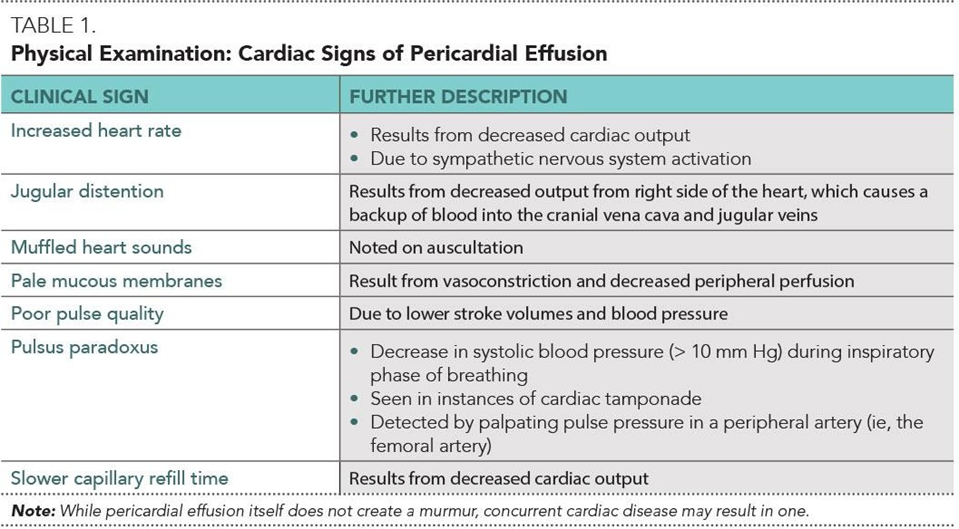
A nurse is caring for a client in a critical care unit who is 4 hours post operative coronary artery bypass surgery. The nurse performs the reassessment and suspects the client may be developing a pericardial effusion. What assessment findings would the nurse note in this case?
A. Diminished breath sounds
Diminished breath sounds are not typically associated with a pericardial effusion.
B. Increased blood pressure
Increased blood pressure is not typically associated with a pericardial effusion but it can instead result in hypotension due to decreased cardiac output due to compression of the heart by the accumulated fluid.
C. Diminished heart sounds
The heart sounds may become faint or distant due to fluid accumulation around the heart.
D. New systolic murmur
A new systolic murmur may indicate a pericardial effusion and should be further evaluated.
Full Explanation
Rationale:
A. Diminished breath sounds are not typically associated with a pericardial effusion.
B. Increased blood pressure is not typically associated with a pericardial effusion but it can instead result in hypotension due to decreased cardiac output due to compression of the heart by the accumulated fluid.
C. The heart sounds may become faint or distant due to fluid accumulation around the heart.
D. A new systolic murmur may indicate a pericardial effusion and should be further evaluated.
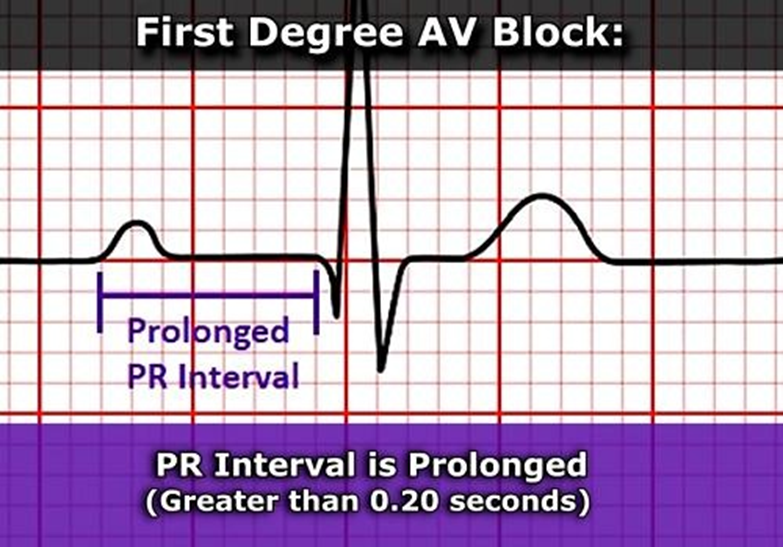
A nurse is reviewing cardiac rhythms and heart blocks for a critical care course. The nurse is aware that which of the following describes first degree heart block?
A. The PR interval gets longer then drops.
This describes a second-degree heart block, specifically Mobitz Type I (Wenckebach).
B. PR interval greater than 0.20 seconds in duration
A PR interval greater than 0.20 seconds is characteristic of first-degree heart block.
C. There are absent P waves
This describes third-degree heart block, also known as complete heart block.
D. R-R is irregular
An irregular R-R interval is not specific to first-degree heart block.
Full Explanation
Rationale:
A. This describes a second-degree heart block, specifically Mobitz Type I (Wenckebach).
B. A PR interval greater than 0.20 seconds is characteristic of first-degree heart block.
C. This describes third-degree heart block, also known as complete heart block.
D. An irregular R-R interval is not specific to first-degree heart block.