Nursing practice questions with comprehensive rationales
NurseDive Free Nursing Practice Question
A nurse is caring for a client who is postpartum. The client states, "I am concerned about my baby's hearing because my mother was born deaf." Which of the following statements should the nurse make?
A. "The best way to determine if your baby can hear is to clap your hands loudly and see if she startles."
rationale: This statement is not accurate, as startling in response to a loud noise does not necessarily indicate that the baby can hear normally. Startling can be a normal reflex response and may not accurately assess the baby's hearing ability.
B. "There is no need to worry about that. Most forms of hearing loss are not Inherited."
rationale: While it is true that many forms of hearing loss are not inherited, the client's concern about her family history of deafness is valid. It is essential to address her concerns and provide appropriate information about the hearing screening.
C. "We do routine hearing screenings on newborns. You'll know the results before you leave the hospital."
rationale: Routine hearing screenings are typically performed on newborns to identify any potential hearing problems early on. Early detection and intervention for hearing loss can lead to better outcomes for the baby's language development and overall well-being. By reassuring the client about the hearing screening, the nurse addresses her concerns and provides information about the process.
D. "Look at how she looks as you when you speak. That's a good sign."
rationale: While visual cues and responses are important for the baby's communication and bonding, they do not provide a definitive assessment of the baby's hearing ability. Hearing screening is a more reliable method to detect potential hearing problems in newborns.
This question is an excerpt from Nurse Dive's nursing test bank - ATI LPN Maternity Proctored Exam. Take the full exam now
Full Explanation
Choice A rationale: This statement is not accurate, as startling in response to a loud noise does not necessarily indicate that the baby can hear normally. Startling can be a normal reflex response and may not accurately assess the baby's hearing ability.
Choice B rationale: While it is true that many forms of hearing loss are not inherited, the client's concern about her family history of deafness is valid. It is essential to address her concerns and provide appropriate information about the hearing screening.
Choice C rationale: Routine hearing screenings are typically performed on newborns to identify any potential hearing problems early on. Early detection and intervention for hearing loss can lead to better outcomes for the baby's language development and overall well-being. By reassuring the client about the hearing screening, the nurse addresses her concerns and provides information about the process.
Choice D rationale: While visual cues and responses are important for the baby's communication and bonding, they do not provide a definitive assessment of the baby's hearing ability. Hearing screening is a more reliable method to detect potential hearing problems in newborns.
Similar Questions
A nurse is caring for a newborn immediately following delivery. After assuring a patent airway, which of the following actions should be the nurse's priority?
A. Apply identification bands.
rationale: Applying identification bands is an essential step in newborn care, but it is not the priority immediately after delivery. The nurse should first address the baby's physiological needs, such as drying and maintaining body temperature.
B. Document the Apgar score.
rationale: Assessing and documenting the Apgar score is important for evaluating the newborn's overall condition and response to delivery, but it is not the priority immediately after delivery.
C. Administer phytonadione IM.
rationale: Administering phytonadione (vitamin K) to prevent bleeding disorders in the newborn is essential, but it can be done after drying and stabilizing the baby's body temperature.
D. Dry the newborn.
rationale: After ensuring a patent airway, the nurse's priority should be to dry the newborn. Drying the newborn is important for maintaining body temperature and preventing heat loss, especially during the immediate post-delivery period. Wet newborns can lose heat rapidly through evaporation, so drying the baby helps prevent hypothermia and stabilize the baby's body temperature.
Full Explanation
Choice A rationale: Applying identification bands is an essential step in newborn care, but it is not the priority immediately after delivery. The nurse should first address the baby's physiological needs, such as drying and maintaining body temperature.
Choice B rationale: Assessing and documenting the Apgar score is important for evaluating the newborn's overall condition and response to delivery, but it is not the priority immediately after delivery.
Choice C rationale: Administering phytonadione (vitamin K) to prevent bleeding disorders in the newborn is essential, but it can be done after drying and stabilizing the baby's body temperature.
Choice D rationale: After ensuring a patent airway, the nurse's priority should be to dry the newborn. Drying the newborn is important for maintaining body temperature and preventing heat loss, especially during the immediate post-delivery period. Wet newborns can lose heat rapidly through evaporation, so drying the baby helps prevent hypothermia and stabilize the baby's body temperature.
A nurse is caring for a client who is postpartum and is breastfeeding her infant. Which of the following findings indicates mastitis?
A. Increase in breast milk
rationale: An increase in breast milk production is a normal physiological response during breastfeeding and does not indicate mastitis.
B. Red and painful area in one breast
rationale: Mastitis is an inflammation of the breast tissue, usually caused by infection. It commonly occurs in breastfeeding women and is characterized by redness, warmth, swelling, and pain in one breast. The affected breast may also be tender and sore to the touch.
C. Swelling in both breasts
rationale: Swelling in both breasts is a common occurrence during the early days of breastfeeding as the milk supply adjusts to the baby's needs. It is not specific to mastitis.
D. Cracked and bleeding nipples
rationale: Cracked and bleeding nipples can be a result of improper latch or positioning during breastfeeding, but they are not specific to mastitis.
Full Explanation
Choice A rationale: An increase in breast milk production is a normal physiological response during breastfeeding and does not indicate mastitis.
Choice B rationale: Mastitis is an inflammation of the breast tissue, usually caused by infection. It commonly occurs in breastfeeding women and is characterized by redness, warmth, swelling, and pain in one breast. The affected breast may also be tender and sore to the touch.
Choice C rationale: Swelling in both breasts is a common occurrence during the early days of breastfeeding as the milk supply adjusts to the baby's needs. It is not specific to mastitis.
Choice D rationale: Cracked and bleeding nipples can be a result of improper latch or positioning during breastfeeding, but they are not specific to mastitis.
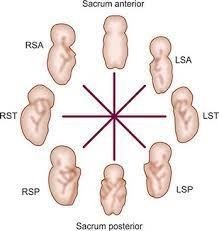
A nurse is performing Leopold maneuvers on a client who is in labor and determines the fetus is in an RSA position. Which of the following fetal presentations should the nurse document in the client's medical record?
A. Breech
rationale: A breech presentation means that the baby's buttocks or feet are the presenting part, not the shoulder.
B. Vertex
rationale: Vertex presentation refers to a head-down position of the baby with the occiput (back of the head) as the presenting part. In the RSA position, the baby is in vertex presentation, but the specific part facing the mother's right side is the shoulder.
C. Shoulder
rationale: RSA (Right Sacrum Anterior) indicates that the fetus is in a vertex presentation with the head pointing down and the back of the baby's head (occiput) facing the mother's right side. The shoulder is the presenting part in this position.
D. Mentum
rationale; Mentum refers to the chin of the baby. A mentum presentation (also called face presentation) means that the baby's face is the presenting part, not the shoulder.
Full Explanation
Choice A rationale: A breech presentation means that the baby's buttocks or feet are the presenting part, not the shoulder.
Choice B rationale: Vertex presentation refers to a head-down position of the baby with the occiput (back of the head) as the presenting part. In the RSA position, the baby is in vertex presentation, but the specific part facing the mother's right side is the shoulder.
Choice C rationale: RSA (Right Sacrum Anterior) indicates that the fetus is in a vertex presentation with the head pointing down and the back of the baby's head (occiput) facing the mother's right side. The shoulder is the presenting part of this position.
Choice D rationale; Mentum refers to the chin of the baby. A mentum presentation (also called face presentation) means that the baby's face is the presenting part, not the shoulder.