Nursing practice questions with comprehensive rationales
NurseDive Free Nursing Practice Question
A nurse is caring for a client who is receiving chemotherapy for treatment of ovarian cancer and experiencing nausea. Which of the following actions should the nurse take?
A. Instruct the client to restrict food intake prior to treatment.
Instructing the client to restrict food intake prior to treatment is not the best approach. While it might reduce nausea temporarily, it can lead to weakness and nutritional deficiencies. Chemotherapy patients need adequate nutrition to maintain their strength and immune function.
B. Encourage the client to drink a carbonated beverage 1 hr before meals.
Encouraging the client to drink a carbonated beverage 1 hour before meals can sometimes help with mild nausea, but it is not as effective as antiemetic medications. Carbonated beverages may provide temporary relief but do not address the underlying cause of chemotherapy-induced nausea.
C. Provide the client with an antiemetic 2 hours prior to the chemotherapy.
Providing the client with an antiemetic 2 hours prior to chemotherapy is the most effective action. Antiemetics are specifically designed to prevent nausea and vomiting associated with chemotherapy. Administering them before treatment helps to manage symptoms proactively, improving the client's comfort and ability to tolerate chemotherapy.
D. Advise the client to lie down after meals.
Advising the client to lie down after meals is not recommended as it can worsen nausea and increase the risk of gastroesophageal reflux. It is generally better for clients to remain upright for a period after eating to aid digestion and reduce nausea.
This question is an excerpt from Nurse Dive's nursing test bank - ATI Med Surg Proctored Exam 3. Take the full exam now
Full Explanation
The correct answer is: C. Provide the client with an antiemetic 2 hours prior to the chemotherapy.
Choice A reason:
Instructing the client to restrict food intake prior to treatment is not the best approach. While it might reduce nausea temporarily, it can lead to weakness and nutritional deficiencies. Chemotherapy patients need adequate nutrition to maintain their strength and immune function.
Choice B reason:
Encouraging the client to drink a carbonated beverage 1 hour before meals can sometimes help with mild nausea, but it is not as effective as antiemetic medications. Carbonated beverages may provide temporary relief but do not address the underlying cause of chemotherapy-induced nausea.
Choice C reason:
Providing the client with an antiemetic 2 hours prior to chemotherapy is the most effective action. Antiemetics are specifically designed to prevent nausea and vomiting associated with chemotherapy. Administering them before treatment helps to manage symptoms proactively, improving the client's comfort and ability to tolerate chemotherapy.
Choice D reason:
Advising the client to lie down after meals is not recommended as it can worsen nausea and increase the risk of gastroesophageal reflux. It is generally better for clients to remain upright for a period after eating to aid digestion and reduce nausea.
Similar Questions
The nurse is teaching a group of student nurses on the care of a client with Parkinson's disease. Which statement, if made by a student, indicates understanding of the topic?
A. Parkinson's disease results from too low acetylcholine as a result of an autoimmune reaction.
Reason: Parkinson's disease does not result from too low acetylcholine as a result of an autoimmune reaction, but this may be a description of myasthenia gravis, which affects the neuromuscular junction.
B. This disease is caused by the deterioration of the myelin sheath of the basal ganglia.
Reason: Parkinson's disease is not caused by the deterioration of the myelin sheath of the basal ganglia, but this may be a description of multiple sclerosis, which affects the central nervous system.
C. Excess dopamine and deficient acetylcholine are the two major causes of Parkinson's disease.
Reason: Excess dopamine and deficient acetylcholine are not the two major causes of Parkinson's disease, but they are reversed. Parkinson's disease is caused by low dopamine and high acetylcholine levels in the brain.
D. Parkinson's is caused by depletion of dopamine and excess of acetylcholine.
Reason: Parkinson's is caused by depletion of dopamine and excess of acetylcholine, as this affects the balance between these two neurotransmitters that control movement and coordination.
Full Explanation
Choice A Reason: Parkinson's disease does not result from too low acetylcholine as a result of an autoimmune reaction, but this may be a description of myasthenia gravis, which affects the neuromuscular junction.
Choice B Reason: Parkinson's disease is not caused by the deterioration of the myelin sheath of the basal ganglia, but this may be a description of multiple sclerosis, which affects the central nervous system.
Choice C Reason: Excess dopamine and deficient acetylcholine are not the two major causes of Parkinson's disease, but they are reversed. Parkinson's disease is caused by low dopamine and high acetylcholine levels in the brain.
Choice D Reason: Parkinson's is caused by depletion of dopamine and excess of acetylcholine, as this affects the balance between these two neurotransmitters that control movement and coordination.
A nurse notes that a client's serum potassium level is 6 mEq/L. The nurse interprets this as an expected finding in the client with which health problem?
A. Cushing's
Reason: Cushing's is not an expected health problem in a client with high potassium level, as it causes low potassium level due to excess cortisol and aldosterone production.
B. Diabetes insipidus
Reason: Diabetes insipidus is not an expected health problem in a client with high potassium level, as it causes low potassium level due to excessive water loss and dilution of blood.
C. Addison's
Reason: Addison's is an expected health problem in a client with high potassium level, as it causes high potassium level due to insufficient cortisol and aldosterone production.
D. Diarrhea
Reason: Diarrhea is not an expected health problem in a client with high potassium level, as it causes low potassium level due to excessive fluid and electrolyte loss.
Full Explanation
Choice A Reason: Cushing's is not an expected health problem in a client with high potassium level, as it causes low potassium level due to excess cortisol and aldosterone production.
Choice B Reason: Diabetes insipidus is not an expected health problem in a client with high potassium level, as it causes low potassium level due to excessive water loss and dilution of blood.
Choice C Reason: Addison's is an expected health problem in a client with high potassium level, as it causes high potassium level due to insufficient cortisol and aldosterone production.
Choice D Reason: Diarrhea is not an expected health problem in a client with high potassium level, as it causes low potassium level due to excessive fluid and electrolyte loss.
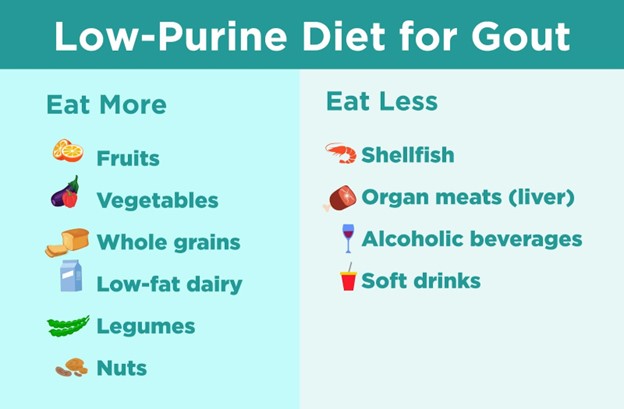
A nurse is reinforcing teaching for a client about following a low-purine diet to manage gout. Which of the following statements should the nurse identify as an indication that the client understands the instructions?
A. I'll drink white wine, not red.
Reason: Drinking white wine, not red, is not an indication that the client understands the instructions, as both types of wine are high in purine and may trigger gout attacks.
B. I'll limit the number of fruit servings I eat each day.
Reason: Limiting the number of fruit servings I eat each day is not an indication that the client understands the instructions, as most fruits are low in purine and may help to lower uric acid levels.
C. I'll avoid eating organ meats.
Reason: Avoiding eating organ meats is an indication that the client understands the instructions, as organ meats are very high in purine and may increase uric acid levels and cause gout flare-ups.
D. I'll choose red meat instead of poultry.
Reason: Choosing red meat instead of poultry is not an indication that the client understands the instructions, as both red meat and poultry are high in purine and may worsen gout symptoms.
Full Explanation
Choice A Reason: Drinking white wine, not red, is not an indication that the client understands the instructions, as both types of wine are high in purine and may trigger gout attacks.
Choice B Reason: Limiting the number of fruit servings I eat each day is not an indication that the client understands the instructions, as most fruits are low in purine and may help to lower uric acid levels.
Choice C Reason: Avoiding eating organ meats is an indication that the client understands the instructions, as organ meats are very high in purine and may increase uric acid levels and cause gout flare-ups.
Choice D Reason: Choosing red meat instead of poultry is not an indication that the client understands the instructions, as both red meat and poultry are high in purine and may worsen gout symptoms.