Nursing practice questions with comprehensive rationales
NurseDive Free Nursing Practice Question
A nurse is caring for a client who is receiving diazepam as conscious sedation for an endoscopy, Which of the following antidotes should the nurse have on hand during the procedure?
A. Naloxone
Naloxone (A) is the antidote for opioid overdose and would not be appropriate for reversing the effects of diazepam.
B. Atropine
Atropine (B) is an anticholinergic medication used to increase heart rate and is not specific to the reversal of diazepam sedation.
C. Flumazenil
Flumazenil is the antidote for diazepam, which is a benzodiazepine. Flumazenil is a selective antagonist that can reverse the sedative effects of benzodiazepines and is commonly used in cases of benzodiazepine overdose or to reverse sedation after procedures.
D. Neostigmine
Neostigmine (D) is a cholinesterase inhibitor used to reverse the effects of non-depolarizing neuromuscular blocking agents and is not indicated for reversing the effects of diazepam.
This question is an excerpt from Nurse Dive's nursing test bank - RN VATI Pharmacology S 2019 Proctored Exam. Take the full exam now
Full Explanation
Flumazenil is the antidote for diazepam, which is a benzodiazepine. Flumazenil is a selective antagonist that can reverse the sedative effects of benzodiazepines and is commonly used in cases of benzodiazepine overdose or to reverse sedation after procedures.
Naloxone (A) is the antidote for opioid overdose and would not be appropriate for reversing the effects of diazepam.
Atropine (B) is an anticholinergic medication used to increase heart rate and is not specific to the reversal of diazepam sedation.

Neostigmine (D) is a cholinesterase inhibitor used to reverse the effects of non-depolarizing neuromuscular blocking agents and is not indicated for reversing the effects of diazepam.
Similar Questions
A nurse is assessing a client who is receiving total parenteral nutrition (TPN). Which of the following findings should the nurse identify as an adverse effect of TPN
A. 2+ deep tendons reflexes
B. Casual blood glucose 100 mg/dl
C. Potassium 4.8 mEq/L
D. 2+ peripheral pitting Edema
TPN is a form of nutrition given intravenously to provide essential nutrients when a client is unable to consume an adequate oral diet. One of the potential adverse effects of TPN is fluid overload, which can manifest as peripheral edema. The presence of 2+ peripheral pitting edema indicates the accumulation of excess fluid in the tissues. It is important for the nurse to monitor the client's fluid balance closely and assess for signs of fluid overload, such as edema, to prevent complications.
Full Explanation
TPN is a form of nutrition given intravenously to provide essential nutrients when a client is unable to consume an adequate oral diet. One of the potential adverse effects of TPN is fluid overload, which can manifest as peripheral edema. The presence of 2+ peripheral pitting edema indicates the accumulation of excess fluid in the tissues. It is important for the nurse to monitor the client's fluid balance closely and assess for signs of fluid overload, such as edema, to prevent complications.
A nurse is caring for a client who is starting to take aspirin 81 mg daily. Which of the following findings should the nurse identify as a risk factor for the client's development of an aspirin-induced ulcer?
A. The client has a history of alcohol use disorder but is currently sober
B. The client recently had a norovirus infection
C. The client smokes one pack of cigarette per day
Smoking is a known risk factor for the development of aspirin-induced ulcers. It can increase the risk of gastrointestinal bleeding and compromise the integrity of the gastric mucosa. Smoking can also impair the healing process and increase the risk of complications associated with ulcers.
D. The client has a history of rheumatoid arthritis
Full Explanation
Smoking is a known risk factor for the development of aspirin-induced ulcers. It can increase the risk of gastrointestinal bleeding and compromise the integrity of the gastric mucosa. Smoking can also impair the healing process and increase the risk of complications associated with ulcers.
While the other factors mentioned in the options may have their own health implications, smoking is specifically associated with an increased risk of aspirin-induced ulcers. Therefore, the nurse should identify the client's smoking habit as a risk factor for the development of an aspirin-induced ulcer.
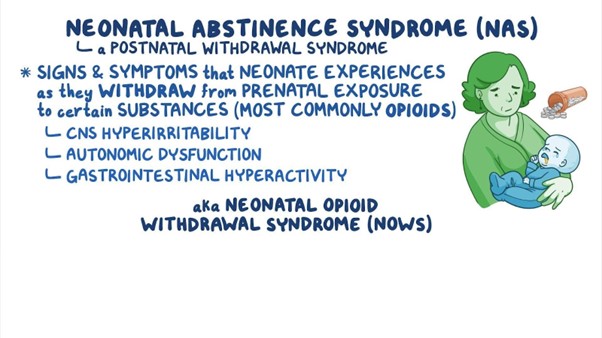
A nurse is assessing a neonate who was exposed to heroin in utero. Which of me following findings should the nurse identify as an indication that the neonate is experiencing neonatal abstinence syndrome?
A. Hyporeflexia
Neonatal abstinence syndrome (NAS) is a group of withdrawal symptoms that occur in newborns who were exposed to drugs, including heroin, in utero. Hyporeflexia, which refers to reduced or diminished reflexes, is one of the key findings in neonates experiencing NAS. During pregnancy, when the mother uses opioids like heroin, the baby becomes dependent on the drug. After birth, when the drug is no longer available, the baby experiences withdrawal symptoms as their body adjusts to the absence of the drug. Hyporeflexia is a common manifestation of NAS and is observed due to the central nervous system's response to the withdrawal.
B. Frequent yawning
Frequent yawning: While yawning can be seen in neonates with NAS, it is not as specific to the condition as hyporeflexia. Yawning can occur for various reasons and may not always be indicative of NAS.
C. Respiratory depression
Respiratory depression: Respiratory depression can be a severe complication of opioid exposure in utero and can result in life-threatening situations for the neonate. However, it is not specific to NAS. Respiratory depression is more closely associated with opioid overdose in the newborn, which can be a separate concern from NAS.
D. Constipation
Constipation: Constipation is a possible symptom in neonates experiencing NAS, but it is not as specific as hyporeflexia. Constipation can occur due to various factors and is not unique to NAS.
Full Explanation
Neonatal abstinence syndrome (NAS) is a group of withdrawal symptoms that occur in newborns who were exposed to drugs, including heroin, in utero. Hyporeflexia, which refers to reduced or diminished reflexes, is one of the key findings in neonates experiencing NAS.
During pregnancy, when the mother uses opioids like heroin, the baby becomes dependent on the drug. After birth, when the drug is no longer available, the baby experiences withdrawal symptoms as the body adjusts to the absence of the drug. Hyporeflexia is a common manifestation of NAS and is observed due to the central nervous system's response to the withdrawal.
Let's go through the other options:
B. Frequent yawning: While yawning can be seen in neonates with NAS, it is not as specific to the condition as hyporeflexia. Yawning can occur for various reasons and may not always be indicative of NAS.
C. Respiratory depression: Respiratory depression can be a severe complication of opioid exposure in utero and can result in life-threatening situations for the neonate. However, it is not specific to NAS. Respiratory depression is more closely associated with opioid overdose in the newborn, which can be a separate concern from NAS.
D. Constipation: Constipation is a possible symptom in neonates experiencing NAS, but it is not as specific as hyporeflexia. Constipation can occur due to various factors and is not unique to NAS.