Nursing practice questions with comprehensive rationales
NurseDive Free Nursing Practice Question
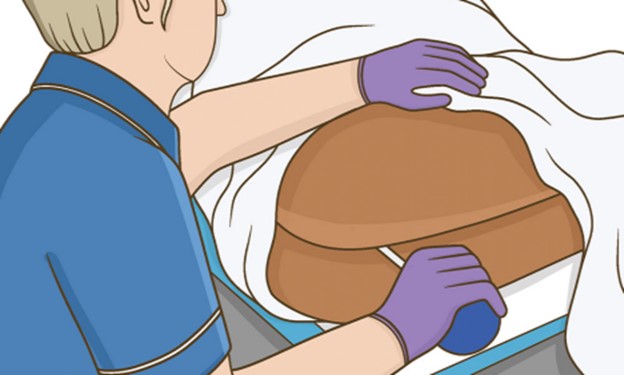
A nurse is caring for a client who reports constipation. The provider has prescribed an enema. Identify the sequence of steps the nurse should take to administer the enema. (Move the steps into the box on the right, placing them in the selected order of performance. Use all the steps)
A. Confirm the client's identity by checking her wristband
B. Provide for the client's privacy by dosing the curtains
C. Asset the cent into the Sims position
D. Insert the tip of the enema tubing into the client's rectum
This question is an excerpt from Nurse Dive's nursing test bank - Gastro Urinary Systems Medication Proctored Exam. Take the full exam now
Full Explanation
The correct sequence of steps the nurse should take to administer the enema is:
1. Provide for the client's privacy by closing the curtains.
2. Confirm the client's identity by checking her wristband.
3. Assist the client into the Sims position.
4. Insert the tip of the enema tubing into the client's rectum.
Proper infection control measures, preparing the enema solution, monitoring the flow rate, and documenting the procedure are among other important considerations that should be taken into account.
Similar Questions
A nurse assisting a provider with a sterile procedure prepares to pour a sterile solution onto a piece of gauze. In which order should the nurse perform the steps of pouring the solution? (Move the steps into the box on the right, placing them in the order of performance. Use all the steps.)
A. Remove the bottle cap.
B. Place the bottle cap inside up on clean surface.
C. Pick up the bottle with the label facing his palm.
D. Pour 1 to 2 mL into a receptacle.
E. Pour the solution onto the gauze.
Full Explanation
To pour the sterile solution onto a piece of gauze, the nurse should perform the steps in the following order:
1. Pick up the bottle with the label facing his palm.
2. Remove the bottle cap.
3. Pour 1 to 2 mL into a receptacle.
4. Pour the solution onto the gauze.
5. Place the bottle cap inside up on a clean surface.
It is important to maintain sterility throughout the procedure to prevent contamination. By following this order, the nurse ensures that the solution is poured onto the gauze while minimizing the risk of contamination. Placing the bottle cap inside up on a clean surface after removing it helps maintain the sterility of the cap as well.
A nurse is preparing a sterile field for the insertion of a urinary catheter. Identify the sequence of actions the nurse should follow. (Move the steps into the box on the right, placing them in the selected order of performance. Use all the steps.)
A. Perform hand hygiene.
B. Place the sterile package on the work surface.
C. Open the outermost flap of the package away from the body.
D. Open the side flaps of the package.
E. Open the innermost flap of the package toward the body.
F. Use the inner surface of the package as a sterile field.
Full Explanation
To prepare a sterile field for the insertion of a urinary catheter, the nurse should follow the sequence of actions in the following order:
1. Perform hand hygiene.
2. Place the sterile package on the work surface.
3. Open the outermost flap of the package away from the body.
4. Open the side flaps of the package.
5. Open the innermost flap of the package toward the body.
6. Use the inner surface of the package as a sterile field.
Following this sequence ensures that the nurse maintains proper hand hygiene, prepares the sterile package, and opens it in a way that maintains sterility. Opening the flaps in the correct order helps create a sterile field within the package, which can be used for the insertion of the urinary catheter.
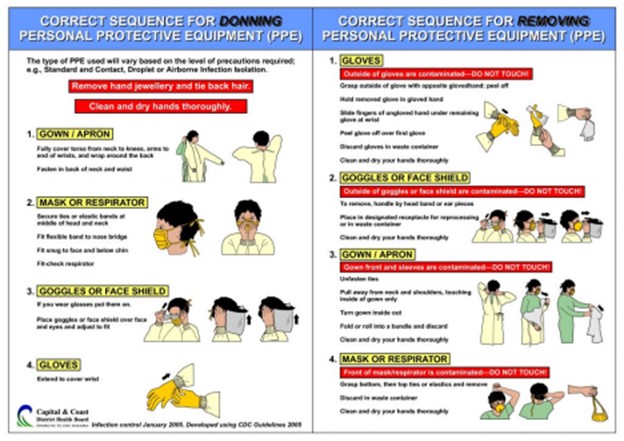
A nurse is caring for a client who is in contact isolation. When exiting the client's room, in what order should the nurse take the following steps when removing her personal protective equipment? (Move the nursing actions into the box on the right, placing them in the selected order of performance. All steps must be used.)
A. Remove gloves.
B. Remove protective eyewear.
C. Remove gown.
D. Remove mask
E. Perform hand hygiene.
Full Explanation
When removing personal protective equipment (PPE) after caring for a client in contact isolation, the nurse should follow the steps in the following order:
1. Remove gloves.
2. Remove protective eyewear.
3. Remove gown.
4. Remove mask.
5. Perform hand hygiene.
By following this sequence, the nurse ensures that the removal of PPE is done in a way that minimizes the risk of contamination. Removing gloves first helps prevent the spread of potential contaminants on the hands. Removing protective eyewear next avoids any potential contact with the face or eyes during the removal process. Removing the gown comes next, followed by the mask. Lastly, performing hand hygiene after removing all PPE helps ensure the hands are thoroughly cleaned.