
Nursing practice questions with comprehensive rationales
NurseDive Free Nursing Practice Question
A nurse is caring for a client who the provider suspects might have pernicious anemia. The nurse should expect the provider to prescribe which of the following diagnostic tests?
A. Schilling test
Schilling test: This is the correct answer. The Schilling test is used to diagnose pernicious anemia, which is caused by vitamin B12 deficiency. The test measures the absorption of vitamin B12 in the gastrointestinal tract.
B. Haptoglobin
Haptoglobin: Haptoglobin is a test used to assess hemolysis and is not specific for pernicious anemia.
C. Sweat test
Sweat test: The sweat test is used to diagnose cystic fibrosis and is not relevant to the diagnosis of pernicious anemia.
D. Antinuclear antibodies
Antinuclear antibodies: Antinuclear antibodies are tested to diagnose autoimmune disorders, such as systemic lupus erythematosus (SLE), and are not specific to pernicious anemia.
This question is an excerpt from Nurse Dive's nursing test bank - Smith Chason Los Angeles ATI Med Surg Proctored Exam 2. Take the full exam now
Full Explanation
A. Schilling test: This is the correct answer. The Schilling test is used to diagnose pernicious anemia, which is caused by vitamin B12 deficiency. The test measures the absorption of vitamin B12 in the gastrointestinal tract.
B. Haptoglobin: Haptoglobin is a test used to assess hemolysis and is not specific for pernicious anemia.
C. Sweat test: The sweat test is used to diagnose cystic fibrosis and is not relevant to the diagnosis of pernicious anemia.
D. Antinuclear antibodies: Antinuclear antibodies are tested to diagnose autoimmune disorders, such as systemic lupus erythematosus (SLE), and are not specific to pernicious anemia.
Similar Questions
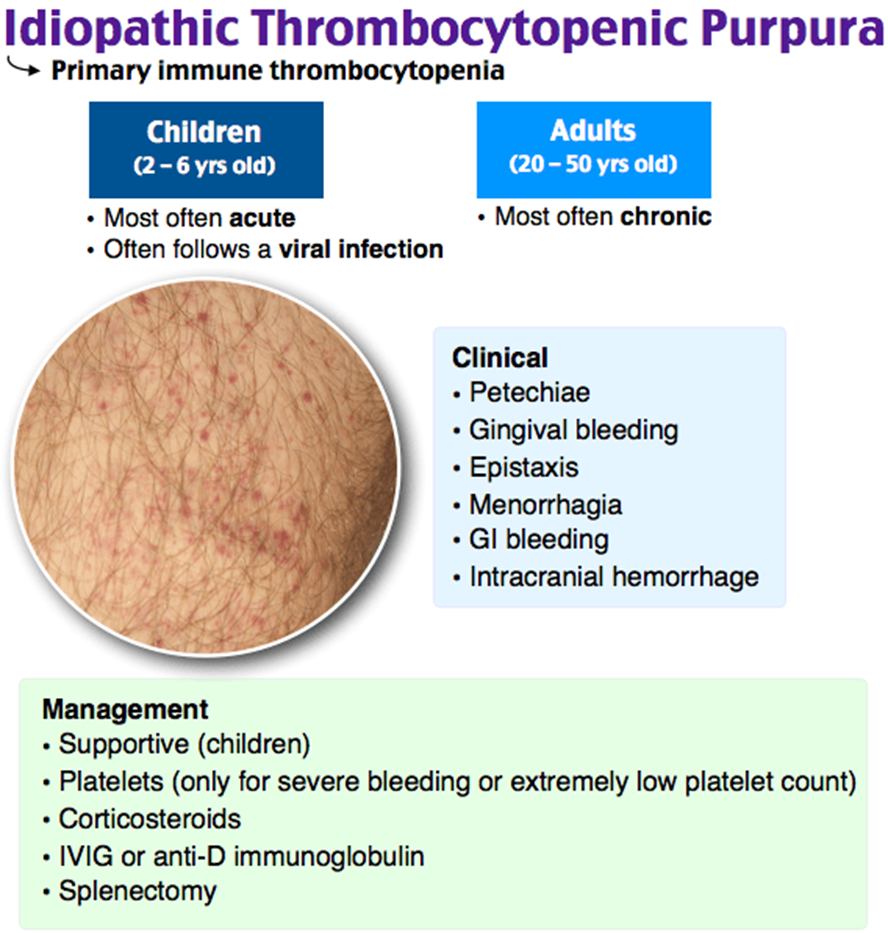
A nurse is reviewing the laboratory findings for a client who has idiopathic thrombocytopenic purpura (ITP). Which of the following findings should the nurse expect to be decreased?
A. RBC
RBC (Red Blood Cells): ITP primarily affects platelet levels, not red blood cells. Therefore, red blood cell counts are not typically decreased in ITP.
B. Platelets
Platelets: This is the correct answer. ITP is characterized by a low platelet count due to immune-mediated destruction of platelets. A decreased platelet count can lead to an increased risk of bleeding.
C. Granulocytes
Granulocytes: While ITP primarily affects platelets, it does not have a direct impact on granulocyte counts. Granulocytes are a type of white blood cell.
D. WBC
WBC (White Blood Cells): ITP primarily affects platelets, not white blood cells. Therefore, white blood cell counts are not typically decreased in ITP.
Full Explanation
A. RBC (Red Blood Cells): ITP primarily affects platelet levels, not red blood cells. Therefore, red blood cell counts are not typically decreased in ITP.
B. Platelets: This is the correct answer. ITP is characterized by a low platelet count due to immune-mediated destruction of platelets. A decreased platelet count can lead to an increased risk of bleeding.
C. Granulocytes: While ITP primarily affects platelets, it does not have a direct impact on granulocyte counts. Granulocytes are a type of white blood cell.
D. WBC (White Blood Cells): ITP primarily affects platelets, not white blood cells. Therefore, white blood cell counts are not typically decreased in ITP.
A nurse is reviewing blood pressure classifications with a group of nurses at an in-service meeting. Which of the following should the nurse include as a risk factor for the development of hypertension?
A. High-density lipoprotein (HDL) level of 70 mg/dL
High-density lipoprotein (HDL) level of 70 mg/dL: Having a high HDL level is generally considered a protective factor against cardiovascular disease, including hypertension.
B. A diet high in potassium
A diet high in potassium: A diet high in potassium is often associated with a lower risk of hypertension. Potassium helps balance sodium levels and supports healthy blood pressure.
C. Obstructive sleep apnea (OSA)
Obstructive sleep apnea (OSA): This is the correct answer. Obstructive sleep apnea is a known risk factor for hypertension. The repeated episodes of interrupted breathing during sleep can contribute to increased blood pressure.
D. Taking benazepril
Taking benazepril: Benazepril is an angiotensin-converting enzyme (ACE) inhibitor commonly used to treat hypertension. While it is used to manage high blood pressure, taking the medication itself is not a risk factor for developing hypertension.
Full Explanation
A. High-density lipoprotein (HDL) level of 70 mg/dL: Having a high HDL level is generally considered a protective factor against cardiovascular disease, including hypertension.
B. A diet high in potassium: A diet high in potassium is often associated with a lower risk of hypertension. Potassium helps balance sodium levels and supports healthy blood pressure.
C. Obstructive sleep apnea (OSA): This is the correct answer. Obstructive sleep apnea is a known risk factor for hypertension. The repeated episodes of interrupted breathing during sleep can contribute to increased blood pressure.
D. Taking benazepril: Benazepril is an angiotensin-converting enzyme (ACE) inhibitor commonly used to treat hypertension. While it is used to manage high blood pressure, taking the medication itself is not a risk factor for developing hypertension.
A nurse is providing discharge instructions for a client who has congestive heart failure. Which of the following client statements indicates to the nurse that the teaching was effective?
A. "I will take my diuretic before sleep and drink fluids during the day.
"I will take my diuretic before sleep and drink fluids during the day": This statement is not correct. Diuretics are usually taken in the morning to avoid disrupting sleep with increased urination at night. Additionally, fluid intake is generally restricted in congestive heart failure to manage fluid balance.
B. I plan to slow down if I am tired the day after exercising."
"I plan to slow down if I am tired the day after exercising": This statement reflects an understanding of the need to manage activity levels and recognize the signs of overexertion, which is crucial for clients with congestive heart failure. Pacing activities and allowing for adequate rest can help prevent exacerbations of heart failure symptoms.
C. "I will read food labels and limit my sodium to 4 grams per day."
"I will read food labels and limit my sodium to 4 grams per day": This is incorrect. Limiting sodium intake is a key component of heart failure management. The recommended sodium intake for individuals with heart failure is often much lower than 4 grams per day, typically around 2 grams or less.
D. "I should use naproxen to manage discomfort."
"I should use naproxen to manage discomfort": Using nonsteroidal anti-inflammatory drugs (NSAIDs) like naproxen can contribute to fluid retention and worsen heart failure symptoms. This statement is not indicative of effective teaching.
Full Explanation
Correct answer: B
A. "I will take my diuretic before sleep and drink fluids during the day": This statement is not correct. Diuretics are usually taken in the morning to avoid disrupting sleep with increased urination at night. Additionally, fluid intake is generally restricted in congestive heart failure to manage fluid balance.
B. "I plan to slow down if I am tired the day after exercising": This statement reflects an understanding of the need to manage activity levels and recognize the signs of overexertion, which is crucial for clients with congestive heart failure. Pacing activities and allowing for adequate rest can help prevent exacerbations of heart failure symptoms.
C. "I will read food labels and limit my sodium to 4 grams per day": This is incorrect. Limiting sodium intake is a key component of heart failure management. The recommended sodium intake for individuals with heart failure is often much lower than 4 grams per day, typically around 2 grams or less.
D. "I should use naproxen to manage discomfort": Using nonsteroidal anti-inflammatory drugs (NSAIDs) like naproxen can contribute to fluid retention and worsen heart failure symptoms. This statement is not indicative of effective teaching.