Nursing practice questions with comprehensive rationales
NurseDive Free Nursing Practice Question
A. Increased blood pressure
Fluid overload can lead to increased blood pressure due to the excess fluid circulating in the body.
B. increased heart rate
Increased heart rate is a compensatory mechanism in response to fluid volume overload.
C. Increase hematocrit
Increased hematocrit is not typically associated with fluid volume overload.
D. Increased respiratory rate
Increased respiratory rate is a compensatory mechanism in response to fluid volume overload.
E. Increased temperature
Increased temperature is not typically associated with fluid volume overload.
This question is an excerpt from Nurse Dive's nursing test bank - Ati Rn Nsg 232 Proctored Exam Med Surg. Take the full exam now
Full Explanation
Rationale:
A. Fluid overload can lead to increased blood pressure due to the excess fluid circulating in the body.
B. Increased heart rate is a compensatory mechanism in response to fluid volume overload.
C. Increased hematocrit is not typically associated with fluid volume overload.
D. Increased respiratory rate is a compensatory mechanism in response to fluid volume overload.
E. Increased temperature is not typically associated with fluid volume overload.
Similar Questions
A nurse is caring for a client who is scheduled for an echocardiogram the following day. Which of the following information should the nurse include about the test?
A. "The test is used to assess the structures and function of the valves and heart muscle"
An echocardiogram is a diagnostic test that uses sound waves to create images of the heart's chambers, valves, and surrounding structures, and assesses their function.
B. "You will not be permitted to eat or drink after midnight
Fasting is not typically required for an echocardiogram.
C. "During the test there will be slight discomfort in the chest area"
Discomfort is not typically associated with an echocardiogram.
D. "The test is used to identify the extent of blockages in the arteries in the heart
An echocardiogram does not typically assess the extent of blockages in the arteries.
Full Explanation
Rationale:
A. An echocardiogram is a diagnostic test that uses sound waves to create images of the heart's chambers, valves, and surrounding structures, and assesses their function.
B. Fasting is not typically required for an echocardiogram.
C. Discomfort is not typically associated with an echocardiogram.
D. An echocardiogram does not typically assess the extent of blockages in the arteries.
A nurse is caring for a client diagnosed with infective endocarditis. The nurse is aware that which of the following is the priority assessment finding for this patient?
A. Anorexia
Anorexia is a common symptom of infective endocarditis but is not typically the priority assessment finding.
B. Fever
Fever is a hallmark sign of infective endocarditis and should be monitored closely.
C. Dyspnea
Dyspnea is a common symptom of infective endocarditis but is not typically the priority assessment finding.
D. Malaise
Malaise is a common symptom of infective endocarditis but is not typically the priority assessment finding.
Full Explanation
Rationale:
A. Anorexia is a common symptom of infective endocarditis but is not typically the priority assessment finding.
B. Fever is a hallmark sign of infective endocarditis and should be monitored closely.
C. Dyspnea is a common symptom of infective endocarditis but is not typically the priority assessment finding.
D. Malaise is a common symptom of infective endocarditis but is not typically the priority assessment finding.
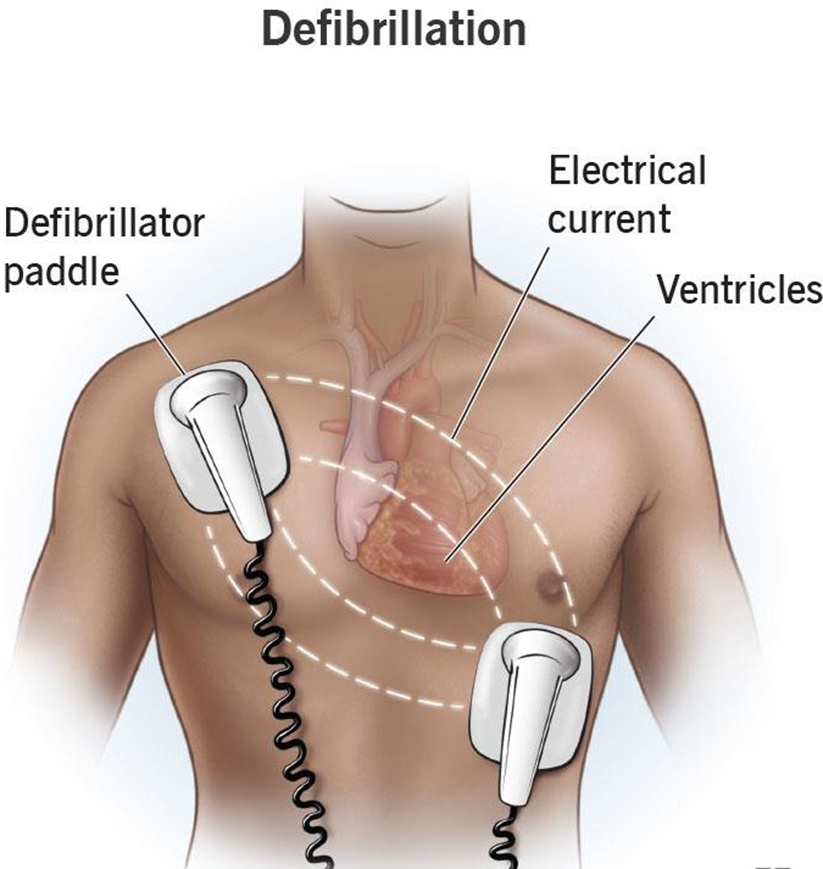
A nurse is caring for a client who is in pulseless ventricular tachycardia (V-Tach). The nurse recognizes the need for which priority intervention?
A. Synchronized Cardioversion
Synchronized cardioversion is not appropriate for pulseless ventricular tachycardia.
B. Repeat electrocardiogram (ECG)
A repeat ECG is not necessary for pulseless ventricular tachycardia.
C. Assessment of blood pressure
Assessment of blood pressure is not the priority in pulseless ventricular tachycardia.
D. Immediate Defibrillation
Immediate defibrillation is the priority in pulseless ventricular tachycardia to restore a perfusing rhythm.
Full Explanation
Rationale:
A. Synchronized cardioversion is not appropriate for pulseless ventricular tachycardia.
B. A repeat ECG is not necessary for pulseless ventricular tachycardia.
C. Assessment of blood pressure is not the priority in pulseless ventricular tachycardia.
D. Immediate defibrillation is the priority in pulseless ventricular tachycardia to restore a perfusing rhythm.