
Nursing practice questions with comprehensive rationales
NurseDive Free Nursing Practice Question
A nurse is caring for a newborn who is 6 hours old and has a bedside glucometer reading of 65 mg/dL. The newborn's mother has type 2 diabetes mellitus.
Which of the following actions should the nurse take?
A. Feed the newborn immediately.
A bedside glucometer reading of 65 mg/dL is within the normal range for a newborn who is 6 hours old. Feeding the newborn can help maintain their blood glucose level.
B. Administer 50 mL of dextrose solution IV.
Choice B is not an answer because administering 50 mL of dextrose solution IV is not necessary for a newborn with a normal blood glucose level.
C. Reassess the blood glucose level prior to the next feeding.
Choice C is not an answer because reassessing the blood glucose level prior to the next feeding is not necessary for a newborn with a normal blood glucose level.
D. Obtain a blood sample for a serum glucose level.
Choice D is not an answer because obtaining a blood sample for a serum glucose level is not necessary for a newborn with a normal blood glucose level.
This question is an excerpt from Nurse Dive's nursing test bank - ATI RN Maternal Newborn 2019 with NGN Proctored Exam. Take the full exam now
Full Explanation
A bedside glucometer reading of 65 mg/dL is within the normal range for a newborn who is 6 hours old.
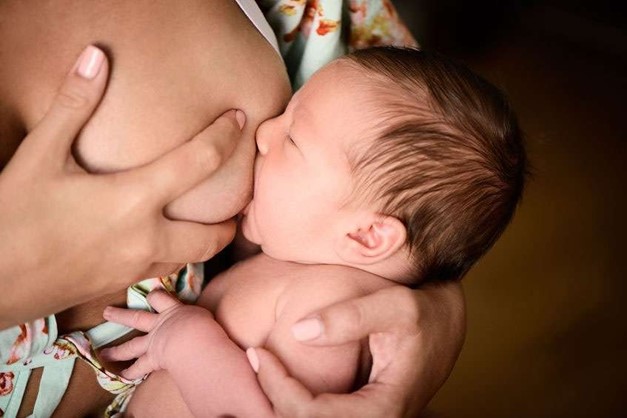
Feeding the newborn can help maintain their blood glucose level.
Choice B is not an answer because administering 50 mL of dextrose solution IV is not necessary for a newborn with a normal blood glucose level.
Choice C is not an answer because reassessing the blood glucose level prior to the next feeding is not necessary for a newborn with a normal blood glucose level.
Choice D is not an answer because obtaining a blood sample for a serum glucose
level is not necessary for a newborn with a normal blood glucose level.
Similar Questions
A nurse is admitting a client to the birthing unit who reports her contractions started 1 hour ago. The nurse determines the client is 80% effaced and 8 cm dilated.
The nurse realizes that the client is at risk for which of the following conditions?
A. Ectopic pregnancy.
Choice A is not an answer because ectopic pregnancy occurs when a fertilized egg implants outside of the uterus and is not a risk for a client who is in active labor.
B. Postpartum hemorrhage.
A client who is 80% effaced and 8 cm dilated is in active labor and at risk for postpartum hemorrhage.
C. Incompetent cervix.
Choice C is not an answer because an incompetent cervix refers to a cervix that dilates prematurely during pregnancy and is not a risk for a client who is in active labor.
D. Hyperemesis gravidarum.
Choice D is not an answer because hyperemesis gravidarum refers to severe nausea and vomiting during pregnancy and is not a risk for a client who is in active labor.
Full Explanation
A client who is 80% effaced and 8 cm dilated is in active labor and at risk for postpartum hemorrhage.
Choice A is not an answer because ectopic pregnancy occurs when a fertilized egg implants outside of the uterus and is not a risk for a client who is in active labor.
Choice C is not an answer because an incompetent cervix refers to a cervix that dilates prematurely during pregnancy and is not a risk for a client who is in active labor.
Choice D is not an answer because hyperemesis gravidarum refers to severe nausea and vomiting during pregnancy and is not a risk for a client who is in active labor.
A nurse is caring for a client who is postpartum and experiencing hypovolemic shock.
Which of the following findings should the nurse expect?
A. Cool, clammy skin.
A client who is postpartum and experiencing hypovolemic shock would have cool, clammy skin. This is because hypovolemic shock severely limits the body’s ability to get blood to all of its organs.
B. Urinary output 30 mL/hr.
Choice B is not correct because a urinary output of 30 mL/hr is within the normal range.
C. Bounding pulses.
Choice C is not correct because a client experiencing hypovolemic shock would have a weak pulse, not a bounding one.
D. Respiratory rate 18/min.
Choice D is not correct because a respiratory rate of 18/min is within the normal range, while a client experiencing hypovolemic shock would have an increased respiratory rate.
Full Explanation
A client who is postpartum and experiencing hypovolemic shock would have cool, clammy skin.
This is because hypovolemic shock severely limits the body’s ability to get blood
to all of its organs.

Choice B is not correct because a urinary output of 30 mL/hr is within the
normal range.
Choice C is not correct because a client experiencing hypovolemic shock would have a weak pulse, not a bounding one.
Choice D is not correct because a respiratory rate of 18/min is within the normal range, while a client experiencing hypovolemic shock would have an increased respiratory rate.
A nurse is assessing a client who is at 32 weeks of gestation and is receiving magnesium sulfate via continuous IV infusion.
Which of the following findings should the nurse report to the provider?
A. Decrease in frequency of contractions.
Choice A is not correct because a decrease in the frequency of contractions is an expected outcome of magnesium sulfate use as a tocolytic to stop preterm labor.
B. Urinary output 35 mL/hr.
Choice B is not correct because a urinary output of 35 mL/hr is within the normal range.
C. Absent deep-tendon reflexes.
A nurse should report absent deep-tendon reflexes to the provider when a client is receiving magnesium sulfate via continuous IV infusion 1. This is because reduced tendon reflexes can be a side effect of magnesium sulfate use during pregnancy.
D. BP 150/100 mm Hg.
Choice D is not correct because an elevated blood pressure is not a known side effect of magnesium sulfate use during pregnancy.
Full Explanation
A nurse should report absent deep-tendon reflexes to the provider when a client is receiving magnesium sulfate via continuous IV infusion.
This is because reduced tendon reflexes can be a side effect of magnesium sulfate use during pregnancy.
Choice A is not correct because a decrease in the frequency of contractions is an expected outcome of magnesium sulfate use as a tocolytic to stop preterm labor.
Choice B is not correct because a urinary output of 35 mL/hr is within the normal range.
Choice D is not correct because an elevated blood pressure is not a known side effect of magnesium sulfate use during pregnancy.