
Nursing practice questions with comprehensive rationales
NurseDive Free Nursing Practice Question
A nurse is caring for an infant who has coarctation of the aorta.
Which of the following should the nurse identify as an expected finding?
A. Frequent nosebleeds
frequent nosebleeds, is not a typical sign of coarctation of the aorta. Nosebleeds can be caused by many factors, such as dry air, allergies, trauma, or bleeding disorders.
B. Upper extremity hypotension
upper extremity hypotension, is also not a common finding in coarctation of the aorta. In fact, patients with this condition may have high blood pressure in the upper extremities due to the increased resistance of the narrowed aorta.
C. Weak femoral pulses.
This is because coarctation of the aorta is a congenital condition where the aorta is narrow, usually in the area where the ductus arteriosus inserts. This causes a decrease in blood flow to the lower body, resulting in weak or absent pulses in the femoral arteries.
D. Increased intracranial pressure
, increased intracranial pressure, is not directly related to coarctation of the aorta. Increased intracranial pressure can be caused by various conditions that affect the brain, such as head injury, stroke, infection, or tumor.
This question is an excerpt from Nurse Dive's nursing test bank - ATI Comprehensive Predictor 2023 Exit Proctored Exam A. Take the full exam now
Full Explanation
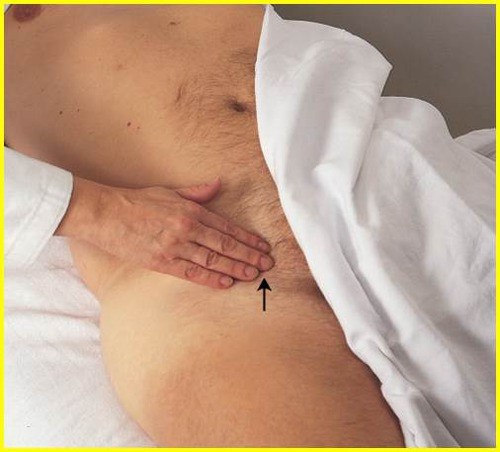
This is because coarctation of the aorta is a congenital condition where the aorta is narrow, usually in the area where the ductus arteriosus inserts. This causes a decrease in blood flow to the lower body, resulting in weak or absent pulses in the femoral arteries.
The other choices are incorrect for the following reasons:
- Choice A, frequent nosebleeds, is not a typical sign of coarctation of the aorta.
Nosebleeds can be caused by many factors, such as dry air, allergies, trauma, or bleeding disorders.
- Choice B, upper extremity hypotension, is also not a common finding in coarctation of the aorta. In fact, patients with this condition may have high blood pressure in the upper extremities due to the increased resistance of the narrowed aorta.
- Choice D, increased intracranial pressure, is not directly related to coarctation of the aorta.
Increased intracranial pressure can be caused by various conditions that affect the brain, such as head injury, stroke, infection, or tumor.
Normal ranges for blood pressure and pulse vary depending on age, sex, and health status.
However, some general guidelines are:
- Blood pressure: less than 120/80 mmHg for adults; less than 95/65 mmHg for infants.
- Pulse: 60 to 100 beats per minute for adults; 100 to 160 beats per minute for infants.
Similar Questions
A nurse in an emergency department is assessing an adolescent who has conduct disorder.
Which of the following questions is the priority for the nurse to ask the client?
A. How do you get along with your peers at school?
How do you get along with your peers at school?” is wrong because it is not the most urgent question to ask the client. While it is important to assess the client’s social relationships and possible peer rejection, this can be done after addressing the client’s safety and mental status.
B. Do you have a criminal record
How do you get along with your peers at school?” is wrong because it is not the most urgent question to ask the client. While it is important to assess the client’s social relationships and possible peer rejection, this can be done after addressing the client’s safety and mental status.
C. Do you have thoughts of harming yourself
Do you have thoughts of harming yourself?”. This is the priority question for the nurse to ask the client because it assesses the client’s risk for suicide, which is a serious and potentially life-threatening complication of conduct disorder. The nurse should use a direct and nonjudgmental approach when asking about suicidal ideation and plan.
D. How do you manage your behavior
How do you manage your behavior?” is wrong because it is not appropriate for the nurse to ask the client in an emergency department setting.
Full Explanation
The correct answer is choice C: “Do you have thoughts of harming yourself?”.
This is the priority question for the nurse to ask the client because it assesses the client’s risk for suicide, which is a serious and potentially life-threatening complication of conduct disorder. The nurse should use a direct and nonjudgmental approach when asking about suicidal ideation and plan.
Choice A: “How do you get along with your peers at school?” is wrong because it is not the most urgent question to ask the client.
While it is important to assess the client’s social relationships and possible peer rejection, this can be done after addressing the client’s safety and mental status.
Choice B: “Do you have a criminal record?” is wrong because it is not relevant to the client’s current condition and might make the client feel defensive or stigmatized.
The nurse should avoid asking questions that imply blame or judgment and focus on the client’s strengths and coping skills.
Choice D: “How do you manage your behavior?” is wrong because it is not appropriate for the nurse to ask the client in an emergency department setting.
This question might imply that the client is responsible for their conduct disorder, which is a complex and multifactorial mental health condition. The nurse should collaborate with the client and their family to develop a behavior management plan that involves positive reinforcement, limit setting, and consistent consequences.
Normal ranges: According to the DSM-5, conduct disorder is characterized by a persistent pattern of behavior that violates the rights of others or societal norms.
The symptoms of conduct disorder include aggression, deceitfulness, destruction of property, serious rule violations, and lack of remorse.
Conduct disorder can cause significant impairment in social, academic, or occupational functioning. The prevalence of conduct disorder is estimated to be 4% among children and adolescents.
The risk factors for conduct disorder include genetic factors, neurobiological factors, environmental factors, and psychological factors.
A nurse is reporting a client’s laboratory tests to the provider to obtain a prescription for the client’s daily warfarin.
Which of the following laboratory tests should the nurse plan to report to obtain the prescription for the warfarin?
A. INR
Warfarin is a vitamin K antagonist that inhibits the synthesis of factors II, VII, IX, and X in the liver. These factors are part of the extrinsic and common pathways of coagulation, which are measured by the prothrombin time (PT) and the international normalized ratio (INR). The INR is a standardized way of reporting the PT that accounts for the variability of different reagents and instruments. The INR is used to monitor the therapeutic effect of warfarin and to adjust the dose accordingly. The target INR range depends on the indication for warfarin, but it is usually between 2 and 3 for most conditions.
B. Fibrinogen level
Wrong because fibrinogen level is not affected by warfarin. Fibrinogen is a precursor of fibrin, which forms the final step of the coagulation cascade. Fibrinogen level can be decreased in conditions such as disseminated intravascular coagulation (DIC), liver disease, or severe bleeding
C. aPTT
Is wrong because aPTT is not affected by warfarin.
D. Platelet count
Platelet count is not affected by warfarin. Platelets are cell fragments that adhere to damaged blood vessels and form aggregates to initiate hemostasis.
Full Explanation
The correct answer is choice A. INR.
Warfarin is a vitamin K antagonist that inhibits the synthesis of factors II, VII, IX, and X in the liver.
These factors are part of the extrinsic and common pathways of coagulation, which are measured by the prothrombin time (PT) and the international normalized ratio (INR).
The INR is a standardized way of reporting the PT that accounts for the variability of different reagents and instruments.
The INR is used to monitor the therapeutic effect of warfarin and to adjust the dose accordingly.
The target INR range depends on the indication for warfarin, but it is usually between 2 and 3 for most conditions.
Choice B is wrong because fibrinogen level is not affected by warfarin.
Fibrinogen is a precursor of fibrin, which forms the final step of the coagulation cascade.
Fibrinogen level can be decreased in conditions such as disseminated intravascular coagulation (DIC), liver disease, or severe bleeding. Choice C is wrong because aPTT is not affected by warfarin.
aPTT measures the intrinsic and common pathways of coagulation, which are mainly dependent on factors VIII, IX, XI, and XII.
These factors are not inhibited by warfarin.
aPTT is used to monitor the effect of heparin, a direct antithrombin agent that inhibits thrombin and factor Xa.
Choice D is wrong because platelet count is not affected by warfarin.
Platelets are cell fragments that adhere to damaged blood vessels and form aggregates to initiate hemostasis.
Platelet count can be decreased in conditions such as immune thrombocytopenia (ITP), heparin-induced thrombocytopenia (HIT), or bone marrow suppression.
Normal ranges:
- INR: 0.8-1.2
- Fibrinogen: 200-400 mg/dL
- aPTT: 25-35 seconds
- Platelet count: 150-450 x 10^9/L References:
A nurse is caring for a client who is receiving total parenteral nutrition (TPN).
The bag has 20 mL remaining to infuse, but a new bag is not readily available.
Which of the following actions should the nurse take?
A. Give 500 mL of lactated Ringer’s solution.
Because giving 500 mL of lactated Ringer’s solution would not provide enough calories or glucose to prevent hypoglycemia. Lactated Ringer’s solution is an isotonic solution that contains electrolytes but no calories or glucose.
B. Temporarily discontinue the infusion
wrong because temporarily discontinuing the infusion would cause hypoglycemia, which can be life-threatening for the client.
C. Slow the TPN infusion rate
is wrong because slowing the TPN infusion rate would also cause hypoglycemia, as the client would receive less calories and glucose than prescribed
D. Administer dextrose 10% in water
This is because abruptly stopping TPN can cause hypoglycemia, which is a low blood sugar level that can cause shakiness, diaphoresis, confusion, and seizures. Therefore, infusing dextrose 10% in water temporarily at the same rate as the TPN can prevent this adverse effect. Dextrose 10% in water is a hypertonic solution that contains 340 calories per liter and can maintain the client’s blood glucose level until the new TPN bag arrives.
Full Explanation
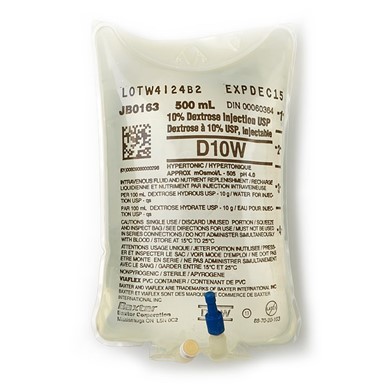
This is because abruptly stopping TPN can cause hypoglycemia, which is a low blood sugar level that can cause shakiness, diaphoresis, confusion, and seizures. Therefore, infusing dextrose 10% in water temporarily at the same rate as the TPN can prevent this adverse effect. Dextrose 10% in water is a hypertonic solution that contains 340 calories per liter and can maintain the client’s blood glucose level until the new TPN bag arrives.
Choice A is wrong because giving 500 mL of lactated Ringer’s solution would not provide enough calories or glucose to prevent hypoglycemia. Lactated Ringer’s solution is an isotonic solution that contains electrolytes but no calories or glucose.
Choice B is wrong because temporarily discontinuing the infusion would cause hypoglycemia, which can be life-threatening for the client.
Choice C is wrong because slowing the TPN infusion rate would also cause hypoglycemia, as the client would receive less calories and glucose than prescribed.