
Nursing practice questions with comprehensive rationales
NurseDive Free Nursing Practice Question
A nurse is collecting a sputum specimen from a client for culture and sensitivity. Which of the following actions should the nurse take?
A. Collect 2 ml of sputum in an emesis basin
While it is important to collect an adequate volume of sputum, using an emesis basin is inappropriate for collecting a specimen for culture and sensitivity. Sputum must be collected in a sterile container to avoid contamination, ensuring the accuracy of the culture results.
B. Instruct the client to rinse with an antiseptic mouthwash prior to specimen collection
Using an antiseptic mouthwash before collecting a sputum specimen is not recommended, as it could contaminate the sample with antiseptic agents, potentially affecting the growth of microorganisms in the culture. The client should rinse with plain water instead.
C. Swab the oropharynx with a sterile swab
Swabbing the oropharynx is more appropriate for collecting a throat culture rather than a sputum specimen. Sputum collection requires the client to expectorate mucus from the lower respiratory tract, not from the oropharynx, to obtain an accurate sample for culture and sensitivity.
D. Refrigerate the specimen until the time of transport to the laboratory
Refrigerating the sputum specimen is crucial to preserve the integrity of the sample and inhibit the growth of contaminants before it is transported to the laboratory. This action helps ensure that the results of the culture and sensitivity test are accurate.
This question is an excerpt from Nurse Dive's nursing test bank - VATI PN Comprehensive Predictor 2020 Proctored Exam. Take the full exam now
Full Explanation
Answer: (D) Refrigerate the specimen until the time of transport to the laboratory
Rationale:
A) Collect 2 ml of sputum in an emesis basin: While it is important to collect an adequate volume of sputum, using an emesis basin is inappropriate for collecting a specimen for culture and sensitivity. Sputum must be collected in a sterile container to avoid contamination, ensuring the accuracy of the culture results.
B) Instruct the client to rinse with an antiseptic mouthwash prior to specimen collection: Using an antiseptic mouthwash before collecting a sputum specimen is not recommended, as it could contaminate the sample with antiseptic agents, potentially affecting the growth of microorganisms in the culture. The client should rinse with plain water instead.
C) Swab the oropharynx with a sterile swab: Swabbing the oropharynx is more appropriate for collecting a throat culture rather than a sputum specimen. Sputum collection requires the client to expectorate mucus from the lower respiratory tract, not from the oropharynx, to obtain an accurate sample for culture and sensitivity.
D) Refrigerate the specimen until the time of transport to the laboratory: Refrigerating the sputum specimen is crucial to preserve the integrity of the sample and inhibit the growth of contaminants before it is transported to the laboratory. This action helps ensure that the results of the culture and sensitivity test are accurate.
Similar Questions
A nurse is caring for a client who has heart failure and reports difficulty with limiting sodium in their diet. Which of the following recommendations should the nurse provide?
A. Consume more prepared frozen dinners to minimize cooking with salt.
Prepared frozen dinners are often high in sodium
B. Add salt when preparing a meal instead of at the table.
Adding salt when preparing a meal would increase sodium intake
C. Use imitation crab and lobster products for salads at home.
Imitation crab and lobster products can also be high in sodium.
D. Replace bottled salad dressing with homemade vinegar and oil dressing.
A client with heart failure should limit their sodium intake. Bottled salad dressings can be high in sodium, so replacing them with homemade vinegar and oil dressing can help reduce sodium intake
Full Explanation
A client with heart failure should limit their sodium intake. Bottled salad dressings can be high in sodium, so replacing them with homemade vinegar and oil dressing can help reduce sodium intake.
The other options are not recommended for a client with heart failure who needs to limit their sodium intake.
a) Prepared frozen dinners are often high in sodium.
b) Adding salt when preparing a meal would increase sodium intake.
c) Imitation crab and lobster products (option can also be high in sodium.
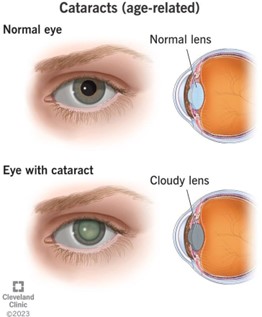
A nurse is assisting with the admission of an older adult client. Which of the following subjective findings suggests that the client may have cataracts?
A. Sudden dimmed vision
Sudden dimmed vision may be a symptom of other eye conditions.
B. Cloudy vision
Cloudy vision is a symptom of cataracts. Cataracts occur when the lens of the eye becomes cloudy, causing visual disturbances such as cloudy or blurry vision.
C. Intermitent flashes of light
Intermittent flashes of light may be a symptom of other eye conditions such as retinal detachment.
D. Pain in the eyes
Pain in the eyesis not a typical symptom of cataracts.
Full Explanation
Cloudy vision is a symptom of cataracts. Cataracts occur when the lens of the eye becomes cloudy, causing visual disturbances such as cloudy or blurry vision.The other options are not typical symptoms of cataracts.
a) Sudden dimmed vision may be a symptom of other eye conditions.
c) Intermitent flashes of light (option c) may be a symptom of other eye conditions such as retinal detachment.
d) Pain in the eyes (option d) is not a typical symptom of cataracts.
A nurse is caring for a client who has a new prescription for furosemide and asks the nurse about the purpose of the medication. The nurse states "This medication is a diuretic that removes excess fluid from your body." Which of the following ethical concepts is the nurse exhibiting?
A. Accountability
Accountability: Accountability refers to taking responsibility for one's actions and being answerable for the outcomes. While accountability is an important ethical concept for healthcare professionals, it is not directly demonstrated in this situation.
B. Autonomy
Autonomy refers to respecting an individual's right to make their own decisions and choices regarding their healthcare. While the nurse is providing information to the client, autonomy is not directly demonstrated in this situation.
C. Veracity
The nurse is exhibiting the ethical concept of veracity by providing the client with truthful and accurate information about the purpose of the medication. Veracity refers to the obligation to tell the truth and provide information in an honest and transparent manner.
D. Fidelity
Fidelity refers to being faithful and keeping promises or commitments made to clients. While fidelity is an important ethical concept, it is not directly demonstrated in this situation.
E. Justice
Justice refers to fairness and the equitable distribution of healthcare resources. While justice is an important ethical concept, it is not directly demonstrated in this situation.
Full Explanation
c. Veracity
The nurse is exhibiting the ethical concept of veracity by providing the client with truthful and accurate information about the purpose of the medication. Veracity refers to the obligation to tell the truth and provide information in an honest and transparent manner.
Explanation for the other options:
a .Accountability: Accountability refers to taking responsibility for one's actions and being answerable for the outcomes. While accountability is an important ethical concept for healthcare professionals, it is not directly demonstrated in this situation.
b. Autonomy: Autonomy refers to respecting an individual's right to make their own decisions and choices regarding their healthcare. While the nurse is providing information to the client, autonomy is not directly demonstrated in this situation.
d. Fidelity: Fidelity refers to being faithful and keeping promises or commitments made to clients. While
fidelity is an important ethical concept, it is not directly demonstrated in this situation.
e. Justice: Justice refers to fairness and the equitable distribution of healthcare resources. While justice is an important ethical concept, it is not directly demonstrated in this situation.
In this scenario, the nurse's action of providing truthful information to the client aligns with the ethical
concept of veracity.