
Nursing practice questions with comprehensive rationales
NurseDive Free Nursing Practice Question
A nurse is collecting data from a client in the health clinic who is reporting epigastric pain. Which of the following statements made by the client should the nurse identify as being consistent with peptic ulcer disease?
A. "I feel so much better after eating."
This is most consistent with a duodenal ulcer, where pain is relieved by food (but often returns 2–3 hours later). Gastric ulcers, on the other hand, may worsen with eating.
B. "The pain is worse after I eat a meal high in fat."
Fatty food intolerance and postprandial pain are more characteristic of gallbladder disease (cholelithiasis/cholecystitis), not PUD.
C. "The pain radiates down to my lower back."
Pain radiating to the back is more typical of pancreatitis, not PUD.
D. "My pain is relieved by having a bowel movement."
Relief of abdominal pain with a bowel movement suggests irritable bowel syndrome (IBS), not PUD.
This question is an excerpt from Nurse Dive's nursing test bank - Gastro Urinary Systems Medication Proctored Exam. Take the full exam now
Full Explanation
A. "I feel so much better after eating." This is most consistent with a duodenal ulcer, where pain is relieved by food (but often returns 2–3 hours later). Gastric ulcers, on the other hand, may worsen with eating.
B. "The pain is worse after I eat a meal high in fat." Fatty food intolerance and postprandial pain are more characteristic of gallbladder disease (cholelithiasis/cholecystitis), not PUD.
C. "The pain radiates down to my lower back." Pain radiating to the back is more typical of pancreatitis, not PUD.
D. "My pain is relieved by having a bowel movement." Relief of abdominal pain with a bowel movement suggests irritable bowel syndrome (IBS), not PUD.
Similar Questions
A nurse is reinforcing teaching with a client who reports taking bisacodyl daily. Which of the following information should the nurse include?
A. "Daily bowel movements are necessary for good intestinal health.”
B. "Chronic use of laxatives can lead to a tear in the rectal mucosa"
C. "Decrease your intake of high-fiber foods."
D. "Excessive laxative use can cause an electrolyte imbalance.”
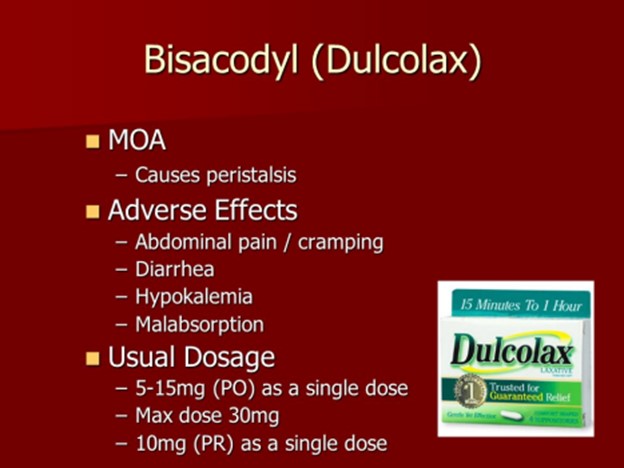
Bisacodyl is a stimulant laxative commonly used to treat constipation. However, it is important to educate the client about the potential risks associated with chronic laxative use. The statement regarding electrolyte imbalance is important because excessive or prolonged use of laxatives can lead to electrolyte disturbances, such as low potassium levels (hypokalemia), which can have adverse effects on various body functions. "Daily bowel movements are necessary for good intestinal health": While regular bowel movements are generally desirable, stating that daily bowel movements are necessary for good intestinal health is an overgeneralization. Bowel movement frequency can vary among individuals, and it is important to consider other factors such as diet, hydration, and overall health. "Chronic use of laxatives can lead to a tear in the rectal mucosa": While chronic use of laxatives can lead to complications such as dependence and potential damage to the digestive system, specifically mentioning a tear in the rectal mucosa (rectal mucosal injury) is not the most commonly associated concern. "Decrease your intake of high-fiber foods": It is generally recommended to increase fiber intake for individuals with constipation. Decreasing high-fiber foods would counteract the benefits of dietary fiber in promoting regular bowel movements and alleviating constipation.
Full Explanation
Bisacodyl is a stimulant laxative commonly used to treat constipation. However, it is important to educate the client about the potential risks associated with chronic laxative use. The statement regarding electrolyte imbalance is important because excessive or prolonged use of laxatives can lead to electrolyte disturbances, such as low potassium levels (hypokalemia), which can have adverse effects on various body functions.
"Daily bowel movements are necessary for good intestinal health": While regular bowel movements are generally desirable, stating that daily bowel movements are necessary for good intestinal health is an overgeneralization. Bowel movement frequency can vary among individuals, and it is important to consider other factors such as diet, hydration, and overall health.
"Chronic use of laxatives can lead to a tear in the rectal mucosa": While chronic use of laxatives can lead to complications such as dependence and potential damage to the digestive system, specifically mentioning a tear in the rectal mucosa (rectal mucosal injury) is not the most commonly associated concern.
"Decrease your intake of high-fiber foods": It is generally recommended to increase fiber intake for individuals with constipation. Decreasing high-fiber foods would counteract the benefits of dietary fiber in promoting regular bowel movements and alleviating constipation.
A nurse is reinforcing teaching for a client who has a duodenal ulcer and a new prescription for sucralfate. The client asks the nurse how sucralfate works. Which of the following statements should the nurse make?
A. "This medication adheres to the ulcer and protects it from gastric acid”
Sucralfate works by forming a protective barrier or coating over the surface of the ulcer. It adheres to the ulcer site and provides a physical barrier that protects the ulcer from gastric acid, pepsin, and bile salts. This protective barrier allows the ulcer to heal by preventing further damage and irritation from the stomach acid.
B. "This medication neutralizes gastric acid after it is secreted"
C. This medication kills the bacteria which cause ulcers
D. “This medication prevents gastric acid secretion in the stomach"
Full Explanation
Sucralfate works by forming a protective barrier or coating over the surface of the ulcer. It adheres to the ulcer site and provides a physical barrier that protects the ulcer from gastric acid, pepsin, and bile salts. This protective barrier allows the ulcer to heal by preventing further damage and irritation from the stomach acid.

A nurse is caring for a client who has gastroesophageal disease and a prescription for metoclopramide. For which of the following adverse effects should the monitor?
A. Sedation
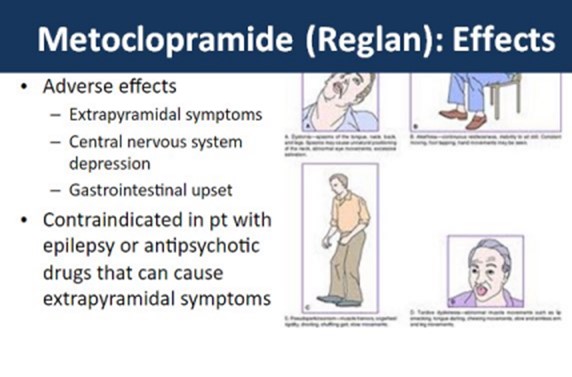
Metoclopramide is a medication commonly used to treat gastrointestinal disorders such as gastroesophageal reflux disease (GERD). While it is generally well-tolerated, it can have some adverse effects. Sedation is one of the common side effects of metoclopramide. It can cause drowsiness, dizziness, and a feeling of tiredness in some individuals. Therefore, the nurse should monitor the client for any signs of sedation or excessive drowsiness, especially when the client starts taking the medication or when the dose is increased.
B. Hypertension
C. Urinary retention
D. Blurred vision
Full Explanation
Metoclopramide is a medication commonly used to treat gastrointestinal disorders such as gastroesophageal reflux disease (GERD). While it is generally well-tolerated, it can have some adverse effects. Sedation is one of the common side effects of metoclopramide. It can cause drowsiness, dizziness, and a feeling of tiredness in some individuals. Therefore, the nurse should monitor the client for any signs of sedation or excessive drowsiness, especially when the client starts taking the medication or when the dose is increased.
Hypertension: Metoclopramide is not known to cause hypertension (high blood pressure) as a common side effect. In fact, it may have a mild hypotensive (blood pressure-lowering) effect in some individuals.
Urinary retention: Metoclopramide does not typically cause urinary retention. Instead, it can enhance gastrointestinal motility and increase the frequency of bowel movements.
Blurred vision: While visual disturbances are rare adverse effects of metoclopramide, blurred vision is not a commonly reported side effect. However, other visual disturbances like oculogyric crisis (involuntary rolling back of the eyes) have been reported in rare cases. Nevertheless, monitoring for blurred vision specifically is not a priority when administering metoclopramide.