
Nursing practice questions with comprehensive rationales
NurseDive Free Nursing Practice Question
A nurse is collecting data from the caregiver of a client who has Alzheimer's disease. The caregiver reports the client has difficulty sleeping at night and wanders throughout the house.
Which of the following interventions should the nurse recommend?
A. Give the client a barbiturate medication at bedtime.
Barbiturate medications can cause excessive sedation.
B. Encourage the client to take frequent walks during the day.
As a nurse, the intervention that should be recommended is encouraging the client to take frequent walks during the day. This will help the client expend some energy and reduce the restlessness that could be causing the sleep disturbance at night.
C. Allow the client to nap for at least 1 hr during the day.
Allowing the client to nap for at least 1 hour during the day can interfere with their ability to sleep at night.
D. Put a simple lock on the client's bedroom door.
Putting a lock on the client's door can be a safety risk in case of an emergency.
This question is an excerpt from Nurse Dive's nursing test bank - PN Comprehensive Predictor PN 2020 Proctored Exam. Take the full exam now
Full Explanation
As a nurse, the intervention that should be recommended is encouraging the client to take frequent walks during the day. This will help the client expend some energy and reduce the restlessness that could be causing the sleep disturbance at night.
The other options are not recommended because barbiturate medications can cause excessive sedation, allowing the client to nap for at least 1 hour during the day can interfere with their ability to sleep at night, and putting a lock on the client's door can be a safety risk in case of an emergency.
Similar Questions
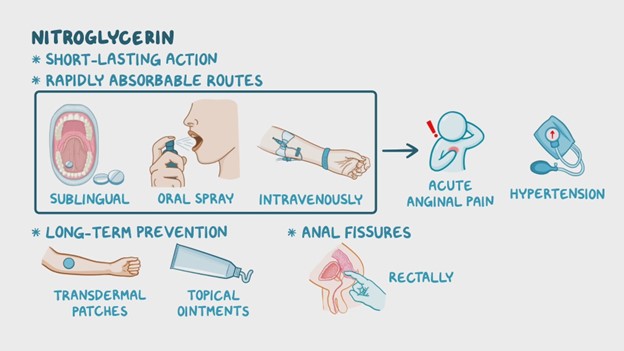
A nurse is reinforcing teaching with a client who has a new prescription for transdermal nitroglycerin patches. Which of the following statements indicates an understanding of the teaching?
A. "I will place the patch on a hairless area of skin."
The client should choose a clean, dry, hairless area of skin to apply the patch. It is important to rotate the application site to avoid skin irritation and ensure consistent drug absorption.
B. "I will remove the patch if I develop a headache."
If the client experiences a headache, it is not necessary to remove the patch, as headaches can be a common side effect of nitroglycerin use.
C. "I will replace the patch every 12 hours."
The patch should be replaced every 24 hours, not every 12 hours
D. "I will apply the patch in the same place every day."
Applying the patch in the same place every day can lead to skin irritation and decreased absorption.
Full Explanation
The client should choose a clean, dry, hairless area of skin to apply the patch. It is important to rotate the application site to avoid skin irritation and ensure consistent drug absorption. The patch should be replaced every 24 hours, not every 12 hours. If the client experiences a headache, it is not necessary to remove the patch, as headaches can be a common side effect of nitroglycerin use. Applying the patch in the same place every day can lead to skin irritation and decreased absorption.
A nurse is reinforcing teaching about palliative care to a client who has cancer. Which of the following statements should the nurse make?
A. "It is for clients who are given 6 months or less to live."
B. "It includes restriction of nutritional support."
C. "It enhances quality of life by promoting comfort."
Palliative care is an approach to care that focuses on improving the quality of life for individuals with serious or life-threatening illnesses. It aims to provide relief from pain, symptoms, and stress, rather than focusing solely on curing the underlying disease. Palliative care can be provided alongside curative treatments and is not limited to clients with a specific life expectancy. It does not involve the restriction of nutritional support but rather aims to address the overall physical, emotional, and spiritual needs of the client. While palliative care may be provided to clients with terminal illnesses, it is not exclusive to them, as it can be initiated at any stage of a serious illness.
D. "It is for clients who have a terminal illness."
Full Explanation
Palliative care is an approach to care that focuses on improving the quality of life for individuals with serious or life-threatening illnesses. It aims to provide relief from pain, symptoms, and stress, rather than focusing solely on curing the underlying disease. Palliative care can be provided alongside curative treatments and is not limited to clients with a specific life expectancy.
It does not involve the restriction of nutritional support but rather aims to address the overall physical, emotional, and spiritual needs of the client.
While palliative care may be provided to clients with terminal illnesses, it is not exclusive to them, as it can be initiated at any stage of a serious illness.
A nurse is reviewing the medical record of a client who has COPD. Which of the following laboratory findings indicates a need to request a dietary referral for the client?
A. Prealbumin 13 mg/dL
B. Potassium 3.5 mEq/L
C. Sodium 138 mEq/L
Prealbumin is a protein that is produced by the liver and is an indicator of the body's nutritional status. A low prealbumin level can indicate malnutrition, which is common in clients with COPD. Therefore, a dietary referral can help the client meet their nutritional needs and prevent further complications.
D. Total calcium 10 mg/dL
Full Explanation
Prealbumin is a protein that is produced by the liver and is an indicator of the body's nutritional status. A low prealbumin level can indicate malnutrition, which is common in clients with COPD. Therefore, a dietary referral can help the client meet their nutritional needs and prevent further complications.