Nursing practice questions with comprehensive rationales
NurseDive Free Nursing Practice Question
A nurse is reinforcing teaching about palliative care to a client who has cancer. Which of the following statements should the nurse make?
A. "It is for clients who are given 6 months or less to live."
B. "It includes restriction of nutritional support."
C. "It enhances quality of life by promoting comfort."
Palliative care is an approach to care that focuses on improving the quality of life for individuals with serious or life-threatening illnesses. It aims to provide relief from pain, symptoms, and stress, rather than focusing solely on curing the underlying disease. Palliative care can be provided alongside curative treatments and is not limited to clients with a specific life expectancy. It does not involve the restriction of nutritional support but rather aims to address the overall physical, emotional, and spiritual needs of the client. While palliative care may be provided to clients with terminal illnesses, it is not exclusive to them, as it can be initiated at any stage of a serious illness.
D. "It is for clients who have a terminal illness."
This question is an excerpt from Nurse Dive's nursing test bank - PN Comprehensive Predictor PN 2020 Proctored Exam. Take the full exam now
Full Explanation
Palliative care is an approach to care that focuses on improving the quality of life for individuals with serious or life-threatening illnesses. It aims to provide relief from pain, symptoms, and stress, rather than focusing solely on curing the underlying disease. Palliative care can be provided alongside curative treatments and is not limited to clients with a specific life expectancy.
It does not involve the restriction of nutritional support but rather aims to address the overall physical, emotional, and spiritual needs of the client.
While palliative care may be provided to clients with terminal illnesses, it is not exclusive to them, as it can be initiated at any stage of a serious illness.
Similar Questions
A nurse is reviewing the medical record of a client who has COPD. Which of the following laboratory findings indicates a need to request a dietary referral for the client?
A. Prealbumin 13 mg/dL
B. Potassium 3.5 mEq/L
C. Sodium 138 mEq/L
Prealbumin is a protein that is produced by the liver and is an indicator of the body's nutritional status. A low prealbumin level can indicate malnutrition, which is common in clients with COPD. Therefore, a dietary referral can help the client meet their nutritional needs and prevent further complications.
D. Total calcium 10 mg/dL
Full Explanation
Prealbumin is a protein that is produced by the liver and is an indicator of the body's nutritional status. A low prealbumin level can indicate malnutrition, which is common in clients with COPD. Therefore, a dietary referral can help the client meet their nutritional needs and prevent further complications.
A nurse is reinforcing teaching with a client who is at 16 weeks of gestation and has a prescription for ferrous sulfate to treat iron-deficiency anemia. Which of the following recommendations should the nurse make to improve the absorption of the medication?
A. "Increase your dietary fiber intake."
While increasing dietary fiber can help with constipation, a common side effect of iron supplements, it does not directly improve the absorption of the medication
B. "Eliminate berries and citrus fruits from your diet."
Berries and citrus fruits, on the other hand, are good sources of vitamin C, which can actually enhance iron absorption. Therefore, eliminating them from the diet would not be beneficial for improving iron absorption.
C. "Avoid drinking milk with the iron supplement.:
The recommendation the nurse should make to improve the absorption of the iron supplement (ferrous sulfate) is to avoid drinking milk with the medication. Calcium in milk can interfere with the absorption of iron, so it is best to separate the consumption of these two substances.
D. "Take the iron supplement with green tea."
Green tea contains compounds called tannins, which can interfere with iron absorption. Therefore, it is not recommended to take iron supplements with green tea.
Full Explanation
A. While increasing dietary fiber can help with constipation, a common side effect of iron supplements, it does not directly improve the absorption of the medication
B. Berries and citrus fruits, on the other hand, are good sources of vitamin C, which can actually enhance iron absorption. Therefore, eliminating them from the diet would not be beneficial for improving iron absorption.
C. The recommendation the nurse should make to improve the absorption of the iron supplement (ferrous sulfate) is to avoid drinking milk with the medication. Calcium in milk can interfere with the absorption of iron, so it is best to separate the consumption of these two substances.
D. Green tea contains compounds called tannins, which can interfere with iron absorption. Therefore, it is not recommended to take iron supplements with green tea.
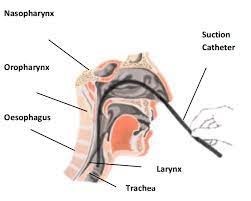
A nurse is performing nasopharyngeal suctioning for an adult client. Which of the following techniques should the nurse use?
A. Apply intermittent suction for 30 seconds.
The nurse should also apply intermittent suction for no longer than 15 seconds to prevent hypoxia and damage to the mucosal lining. Suctioning for an extended period can cause discomfort and harm to the client.
B. Insert the catheter 10 cm (4 in).
The distance that the nasopharyngeal catheter should be inserted varies from person to person and therefore 10 cm is not standard.
C. Apply suction while inserting the catheter.
During nasopharyngeal suctioning, the nurse should apply suction intermittently while withdrawing the catheter, not during insertion. Applying suction during insertion can cause tissue damage and increase the risk of trauma.
D. Wait 1 min between suctioning attempts.
Waiting 1 minute between suctioning attempts allows the client to recover and ensures that the procedure is not overly invasive. It also helps to prevent the client from becoming hypoxic.
Full Explanation
Waiting 1 minute between suctioning attempts allows the client to recover and ensures that the procedure is not overly invasive. It also helps to prevent the client from becoming hypoxic.
The distance that the nasopharyngeal catheter should be inserted varies from person to person and therefore 10 cm is not standard.
During nasopharyngeal suctioning, the nurse should apply suction intermittently while withdrawing the catheter, not during insertion. Applying suction during insertion can cause tissue damage and increase the risk of trauma.
The nurse should also apply intermittent suction for no longer than 15 seconds to prevent hypoxia and damage to the mucosal lining. Suctioning for an extended period can cause discomfort and harm to the client.