
Nursing practice questions with comprehensive rationales
NurseDive Free Nursing Practice Question
A nurse is conducting discharge and teaches parents about the care of their infant after cardiac surgery.
The nurse instructs the parents to notify the physician if the conditions occur. (Select all that apply.)
A. Respiratory rate of 36 breaths/minute at rest
This is wrong because a respiratory rate of 36 breaths/minute at rest is within the normal range for an infant.
B. Appetite slowly increasing
This is wrong because an appetite slowly increasing is a positive sign of recovery and does not require immediate attention.
C. Temperature above 37.7° C (100° F)
The parents should notify the physician if the infant has a temperature above 37.7° C (100° F). This is a sign of infection, respiratory distress, or cyanosis, which could indicate complications after cardiac surgery.
D. New, frequent coughing
The parents should notify the physician if the infant has new frequent coughing. This is a signof infection, respiratory distress, or cyanosis, which could indicate complications after cardiac surgery.
E. Turning blue or bluer than normal
The parents should notify the physician if the infant has turned blue or bluer than normal. These are signs of infection, respiratory distress, or cyanosis, which could indicate complications after cardiac surgery.
This question is an excerpt from Nurse Dive's nursing test bank - OB Pediatric Cumulative Exam Test 4 V 1 2023 Proctored Exam. Take the full exam now
Full Explanation
The parents should notify the physician if the infant has a temperature above 37.7° C (100° F), new frequent coughing, or turning blue or bluer
than normal. These are signs of infection, respiratory distress, or cyanosis, which could indicate complications after cardiac surgery.
Choice A is wrong because a respiratory rate of 36 breaths/minute at rest is within the normal range for an infant.
Choice B is wrong because an appetite slowly increasing is a positive sign of recovery and does not require immediate attention.
Similar Questions
When caring for an infant with an upper respiratory tract infection and elevated temperature, which appropriate nursing intervention should the nurse implement?
A. Give tepid water baths to reduce fever.
This is wrong because tepid water baths are not recommended for fever reduction. They can cause shivering, which increases heat production and can raise the temperature further. Instead, antipyretics such as acetaminophen or ibuprofen can be given as prescribed.
B. Encourage food intake to maintain caloric needs.
This is wrong because food intake may be decreased due to poor appetite, difficulty breathing, or sore throat. Forcing food intake can cause vomiting or aspiration. Fluid intake is more important than caloric intake during an acute infection.
C. Have child wear heavy clothing to prevent chilling.
This is wrong because heavy clothing can increase heat retention and discomfort. The infant should be dressed in light clothing and the room temperature should be comfortable.
D. Give small amounts of favorite fluids frequently to prevent dehydration.
Dehydration is a common complication of upper respiratory tract infections in infants, especially if they have a fever. Giving small amounts of fluids frequently can help maintain hydration and electrolyte balance.
Full Explanation
Give small amounts of favorite fluids frequently to prevent dehydration.
Dehydration is a common complication of upper respiratory tract infections in infants, especially if they have a fever. Giving small amounts of fluids frequently can help maintain hydration and electrolyte balance.
Some additional information about the other choices are:
Choice A is wrong because tepid water baths are not recommended for fever reduction. They can cause shivering, which increases heat production and can raise the
temperature further. Instead, antipyretics such as acetaminophen or ibuprofen can be given as prescribed.
Choice B is wrong because food intake may be decreased due to poor appetite, difficulty breathing, or sore throat. Forcing food intake can cause vomiting or aspiration. Fluid intake is more important than caloric intake during an acute infection.
Choice C is wrong because heavy clothing can increase heat retention and discomfort. The infant should be dressed in light clothing and the room temperature should be comfortable.
The nurse is assessing a child with acute epiglottitis.
Examining the child’s throat by using a tongue depressor might precipitate which symptom or condition?
A. Inspiratory stridor
This is wrong because inspiratory stridor is a sign of upper airway obstruction that is aggravated when a child with epiglottitis is supine. It is not caused by examining the throat with a tongue depressor.
B. Complete obstruction
If a child has acute epiglottitis, an examination of the throat may cause complete obstruction and should be performed only when immediate intubation can take place. This is because the inflamed epiglottis can block the airway and cause respiratory distress or failure.
C. Sore throat
This is wrong because sore throat and pain on swallowing are early signs of epiglottitis, not precipitated by examining the throat with a tongue depressor.
D. Respiratory tract infection
This is wrong because respiratory tract infection is the cause of epiglottitis, not a symptom or condition that is precipitated by examining the throat with a tongue depressor. Epiglottitis is caused by H. influenzae in the respiratory tract.
Full Explanation
If a child has acute epiglottitis, examination of the throat may cause complete obstruction and should be performed only when immediate intubation can take place.
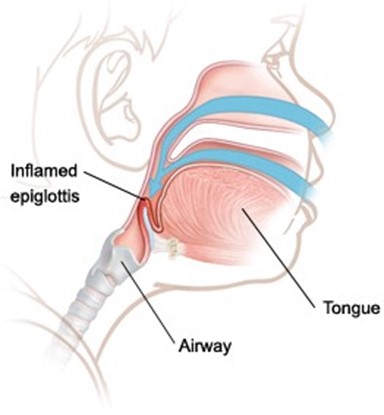
This is because the inflamed epiglottis can block the airway and cause respiratory distress or failure.
Choice A is wrong because inspiratory stridor is a sign of upper airway obstruction that is aggravated when a child with epiglottitis is supine.
It is not caused by examining the throat with a tongue depressor.
Choice C is wrong because sore throat and pain on swallowing are early signs of epiglottitis, not precipitated by examining the throat with a tongue depressor.
Choice D is wrong because respiratory tract infection is the cause of epiglottitis, not a symptom or condition that is precipitated by examining the throat with a tongue depressor.
Epiglottitis is caused by H. influenzae in the respiratory tract.
It is now recommended that children with asthma who are taking long-term inhaled steroids should be assessed frequently to monitor for increased risk of:
A. Cough
This is wrong because cough is not a side effect of inhaled steroids, but a symptom of asthma itself.
B. Osteoporosis
This is wrong because osteoporosis is not a common side effect of inhaled steroids in children, but a possible risk for adults who use high doses of inhaled steroids or oral steroids.
C. Slowed growth
Slowed growth. Children with asthma who are taking long-term inhaled steroids should be assessed frequently to monitor for this increased risk because some studies have shown a growth delay in children treated with moderate to high doses of inhaled steroids. This appears to occur only during the first year of treatment and may be reversible.
D. Cushing’s syndrome
Thisis wrong because Cushing’s syndrome is not a side effect of inhaled steroids, but a rare complication of oral steroids.
Full Explanation
Children with asthma who are taking long-term inhaled steroids should be assessed frequently to monitor for this increased risk because some studies have shown a growth delay in children treated with moderate to high doses of inhaled steroids. This appears to occur only during the first year of treatment and may be reversible.
Choice A is wrong because cough is not a side effect of inhaled steroids, but a symptom of asthma itself.
Choice B is wrong because osteoporosis is not a common side effect of inhaled steroids in children, but a possible risk for adults who use high doses of inhaled steroids or oral steroids.
Choice D is wrong because Cushing’s syndrome is not a side effect of inhaled steroids, but a rare complication of oral steroids.