
Nursing practice questions with comprehensive rationales
NurseDive Free Nursing Practice Question
A nurse is contributing to the plan of care for a newly-admitted client who has schizophrenia and a history of aggressive behavior.
Which of the following interventions should the nurse include in the initial plan?
A. Warn the client that the staff will use seclusion as a consequence if there are repeated reports of hallucination.
Choice A is wrong because warning the client that the staff will use seclusion as a consequence if there are repeated reports of hallucination is punitive and threatening. This can increase the client’s anxiety, paranoia, and hostility, and may worsen the psychotic symptoms. Seclusion should only be used as a last resort when the client poses a serious danger to self or others, and not as a punishment or coercion.
B. Keep the facility’s security personnel constantly visible to the client throughout treatment.
Choice B is wrong because keeping the facility’s security personnel constantly visible to the client throughout treatment is intimidating and stigmatizing. This can also increase the client’s fear, distrust, and resentment, and may trigger aggressive behavior. Security personnel should only be involved when there is an imminent risk of violence, and not as a routine measure.
C. Collaborate with the client to develop a daily physical exercise routine.
Collaborate with the client to develop a daily physical exercise routine. This intervention can help reduce aggression and impulsivity in schizophrenia by providing an outlet for frustration, enhancing self-esteem, and improving mood. Physical exercise can also improve physical health and reduce the risk of metabolic syndrome associated with antipsychotic medications.
D. Agree that the hallucinations are real if the client exhibits aggressive behavior toward other clients.
Choice D is wrong because agreeing that the hallucinations are real if the client exhibits aggressive behavior toward other clients is reinforcing the delusional belief and rewarding the aggression. This can also confuse the client and undermine the therapeutic relationship. The nurse should acknowledge the client’s experience of hallucinations, but not endorse them as reality. The nurse should also set clear limits on aggressive behavior and use de-escalation techniques to calm the client.
This question is an excerpt from Nurse Dive's nursing test bank - ATI PN Capstone Proctored Comprehensive Assessment 2020 B. Take the full exam now
Full Explanation
Collaborate with the client to develop a daily physical exercise routine. This intervention can help reduce aggression and impulsivity in schizophrenia by providing an outlet for frustration, enhancing self-esteem, and improving mood. Physical exercise can also improve physical health and reduce the risk of metabolic syndrome associated with antipsychotic medications.
Choice A is wrong because warning the client that the staff will use seclusion as a consequence if there are repeated reports of hallucination is punitive and threatening. This can increase the client’s anxiety, paranoia, and hostility, and may worsen the psychotic symptoms. Seclusion should only be used as a last resort when the client poses a serious danger to self or others, and not as a punishment or coercion.
Choice B is wrong because keeping the facility’s security personnel constantly visible to the client throughout treatment is intimidating and stigmatizing. This can also increase the client’s fear, distrust, and resentment, and may trigger aggressive behavior. Security personnel should only be involved when there is an imminent risk of violence, and not as a routine measure.
Choice D is wrong because agreeing that the hallucinations are real if the client exhibits aggressive behavior toward other clients is reinforcing the delusional belief and rewarding the aggression. This can also confuse the client and undermine the therapeutic relationship.
The nurse should acknowledge the client’s experience of hallucinations, but not endorse them as reality. The nurse should also set clear limits on aggressive behavior and use de-escalation techniques to calm the client.
Similar Questions
A nurse is reviewing the laboratory values for an adolescent who is scheduled for a surgical procedure.
For which of the following laboratory values should the nurse notify the provider?
A. Platelet count 120,000/mm².
The nurse should notify the provider because this value is lower than the normal range of 150,000 to 450,000 platelets per microliter of blood. A low platelet count can indicate a risk of bleeding or a condition such as thrombocytopenia or disseminated intravascular coagulation (DIC).
B. WBC count 9,800/mm³.
Choice B is wrong because WBC count 9,800/mm³ is within the normal range of 4,500 to 11,000 cells per microliter of blood.
C. Hgb 13 mg/dL.
Choice C is wrong because Hgb 13 mg/dL is within the normal range of 12 to 16 mg/dL for females and 14 to 18 mg/dL for males.
D. Hct 42%.
Choice D is wrong because Hct 42% is within the normal range of 37% to 47% for females and 42% to 52% for males.
Full Explanation
The nurse should notify the provider because this value is lower than the normal range of 150,000 to 450,000 platelets per microliter of blood. A low platelet count can indicate a risk of bleeding or a condition such as thrombocytopenia or disseminated intravascular coagulation (DIC).
Choice B is wrong because WBC count 9,800/mm³ is within the normal range of 4,500 to 11,000 cells per microliter of blood.
Choice C is wrong because Hgb 13 mg/dL is within the normal range of 12 to 16 mg/dL for females and 14 to 18 mg/dL for males.
Choice D is wrong because Hct 42% is within the normal range of 37% to 47% for females and 42% to 52% for males.
A nurse is reinforcing teaching with a newly licensed nurse about incident reports.
The nurse should identify that which of the following situations requires the completion of an incident report?
A. Nitroglycerin transdermal was applied to a client’s chest.
Choice A is wrong because nitroglycerin transdermal is a medication used to prevent angina (chest pain) and can be applied to a client’s chest as prescribed.
B. Cefotaxime was administered to a client after obtaining blood cultures.
Choice B is wrong because cefotaxime is an antibiotic that can be administered to a client after obtaining blood cultures to treat an infection.
C. Digoxin was administered to a client who has a heart rate of 64/min.
Choice C is wrong because digoxin is a medication used to treat heart failure and atrial fibrillation and can be administered to a client who has a heart rate of 64/min, which is within the normal range of 60 to 100 beats per minute.
D. Insulin lispro was administered to a client immediately before bed.
Insulin lispro was administered to a client immediately before bed. This is a situation that requires the completion of an incident report because insulin lispro is a rapid-acting insulin that should be given within 15 minutes before or after a meal. Giving it immediately before bed can cause hypoglycemia (low blood sugar) during the night, which can be dangerous for the client.
Full Explanation
Insulin lispro was administered to a client immediately before bed. This is a situation that requires the completion of an incident report because insulin lispro is a rapid-acting insulin that should be given within 15 minutes before or after a meal. Giving it immediately before bed can cause hypoglycemia (low blood sugar) during the night, which can be dangerous for the client.
Choice A is wrong because nitroglycerin transdermal is a medication used to prevent angina (chest pain) and can be applied to a client’s chest as prescribed.
Choice B is wrong because cefotaxime is an antibiotic that can be administered to a client after obtaining blood cultures to treat an infection.
Choice C is wrong because digoxin is a medication used to treat heart failure and atrial fibrillation and can be administered to a client who has a heart rate of 64/min, which is within the normal range of 60 to 100 beats per minute.
A charge nurse is observing a newly licensed nurse administer an enteral feeding to a client who has an established gastrostomy tube.
Which of the following actions by the newly licensed nurse indicates that the charge nurse should intervene?
A. The nurse checks the volume of the aspirate.
Choice A is wrong because checking the volume of the aspirate is a correct action to assess gastric residual volume and prevent complications such as nausea, vomiting, and aspiration.
B. The nurse checks the pH of the aspirate.
Choice B is wrong because checking the pH of the aspirate is a correct action to verify the placement of the NG tube and prevent accidental administration of enteral feeding into the lungs.
C. The nurse administers 15 mL of water before administering the feeding.
Choice C is wrong because administering 15 mL of water before administering the feeding is a correct action to flush the NG tube and prevent clogging.
D. The nurse adds food coloring to the tube feeding.
This action indicates that the charge nurse should intervene because adding food coloring to the tube feeding is not recommended and can cause adverse effects such as aspiration, diarrhea, and allergic reactions.
Full Explanation
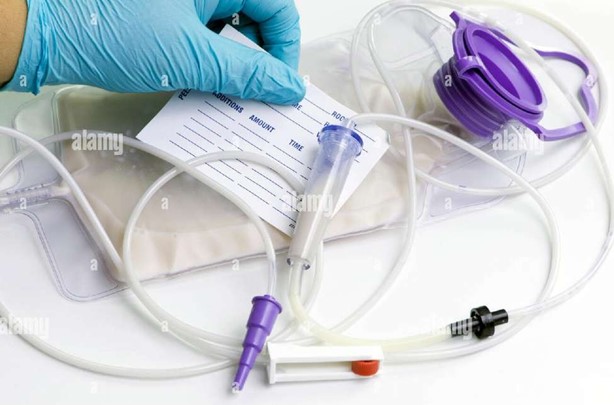
This action indicates that the charge nurse should intervene because adding food coloring to the tube feeding is not recommended and can cause adverse effects such as aspiration, diarrhea, and allergic reactions.
Choice A is wrong because checking the volume of the aspirate is a correct action to assess gastric residual volume and prevent complications such as nausea, vomiting, and aspiration.
Choice B is wrong because checking the pH of the aspirate is a correct action to verify the placement of the NG tube and prevent accidental administration of enteral feeding into the lungs.
Choice C is wrong because administering 15 mL of water before administering the feeding is a correct action to flush the NG tube and prevent clogging.
Normal ranges for gastric residual volume are less than 250 mL for adults and less than 5 mL/kg for children. Normal ranges for pH of gastric aspirate are less than 5.5 for adults and less than 4 for children.