
Nursing practice questions with comprehensive rationales
NurseDive Free Nursing Practice Question
A nurse is discussing risk factors of postpartum hemorrhage with a newly licensed nurse.
Which of the following conditions is a risk factor for postpartum hemorrhage that the nurse should include in the teaching?
A. Pregnancy induced hypertension.
Choice A is incorrect because pregnancy-induced hypertension is a risk factor for postpartum hemorrhage.
B. Meconium stained fluid.
Choice B is incorrect because meconium-stained fluid is not mentioned as a risk factor for postpartum hemorrhage in my sources.
C. Retained placental fragments.
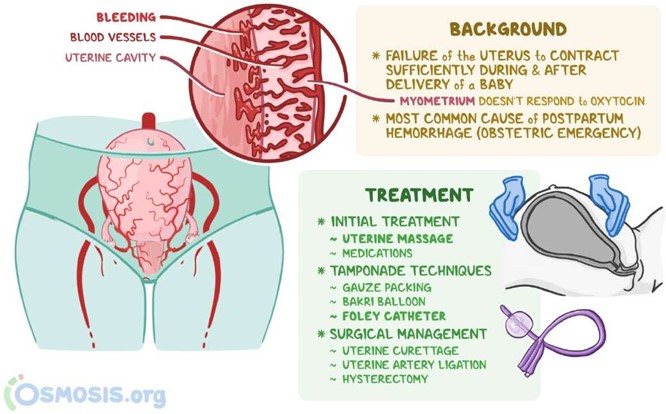
Retained placental fragments is a risk factor for postpartum hemorrhage. After delivery, the uterus continues to contract to deliver the placenta. Contractions also help to compress the blood vessels where the placenta was atached to the uterine wall. Postpartum hemorrhage can happen if parts of the placenta stay atached to the uterine wall.
D. Oligohydramnios.
Choice D is incorrect because oligohydramnios is not mentioned as a risk factor for postpartum hemorrhage in my sources.
This question is an excerpt from Nurse Dive's nursing test bank - ATI RN Maternal Newborn 2019 with NGN Proctored Exam. Take the full exam now
Full Explanation
Retained placental fragments is a risk factor for postpartum hemorrhage. After delivery, the uterus continues to contract to deliver the placenta.
Contractions also help to compress the blood vessels where the placenta was atached to the uterine wall.
Postpartum hemorrhage can happen if parts of the placenta stay atached to the
uterine wall.
Choice A is incorrect because pregnancy-induced hypertension is a risk factor for
postpartum hemorrhage.
Choice B is incorrect because meconium-stained fluid is not mentioned as a risk factor for postpartum hemorrhage in my sources.
Choice D is incorrect because oligohydramnios is not mentioned as a risk factor for postpartum hemorrhage in my sources.
Similar Questions
A nurse is planning care for a client who is pregnant and has HIV.
Which of the following actions should the nurse include in the plan of care?
A. Use a fetal scalp electrode during labor and delivery.
Choice A is incorrect because using a fetal scalp electrode during labor and delivery is not mentioned as an action that should be included in the plan of care for a client who is pregnant and has HIV in my sources.
B. Bathe the newborn before initiating skin-to-skin contact.
Bathing the newborn before initiating skin-to-skin contact is an action that the nurse should include in the plan of care for a client who is pregnant and has HIV.
C. Instruct the client to stop taking the antiretroviral medications at 32 weeks of gestation.
Choice C is incorrect because instructing the client to stop taking antiretroviral medications at 32 weeks of gestation is not mentioned as an action that should be included in the plan of care for a client who is pregnant and has HIV in my sources.
D. Administer a pneumococcal immunization to the newborn within 4 hours
Choice D is incorrect because administering a pneumococcal immunization to the newborn within 4 hours following birth is not mentioned as an action that should be included in the plan of care for a client who is pregnant and has HIV in my sources.
Full Explanation
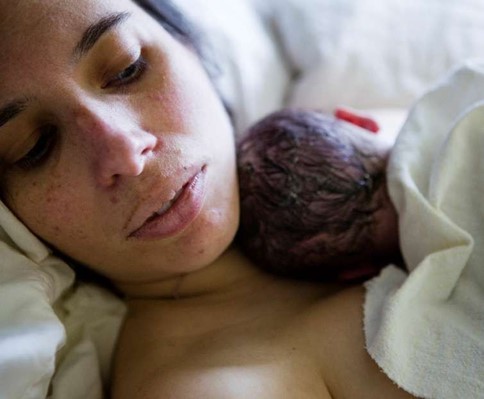
Bathing the newborn before initiating skin-to-skin contact is an action that the nurse should include in the plan of care for a client who is pregnant and has HIV.
Choice A is incorrect because using a fetal scalp electrode during labor and delivery is not mentioned as an action that should be included in the plan of care for a client who is pregnant and has HIV in my sources.
Choice C is incorrect because instructing the client to stop taking antiretroviral medications at 32 weeks of gestation is not mentioned as an action that should be included in the plan of care for a client who is pregnant and has HIV in my sources.
Choice D is incorrect because administering a pneumococcal immunization to the newborn within 4 hours following birth is not mentioned as an action that should be included in the plan of care for a client who is pregnant and has HIV in my sources.
A nurse is teaching a client and her partner about the technique of counterpressure during labor.
Which of the following statements by the nurse is appropriate?
A. "Your partner will apply continuous, firm pressure between your thumb and index finger.”
(A) "Your partner will apply continuous, firm pressure between your thumb and index finger": This statement is not appropriate for describing counterpressure during labor. Counterpressure typically involves applying pressure to areas such as the lower back or sacrum, not between the thumb and index finger.
B. "Your partner will apply pressure to the top of your uterus during contractions
(B) "Your partner will apply pressure to the top of your uterus during contractions": This statement is not appropriate. Applying pressure to the top of the uterus during contractions could be harmful and is not recommended as a counterpressure technique during labor. Counterpressure is generally applied to the lower back or hips to alleviate pain.
C. "Your partner will apply steady pressure with a tennis ball to your finger.”
(C) "Your partner will apply steady pressure with a tennis ball to your finger": This statement is not correct. Counterpressure during labor involves applying pressure to the lower back or hips, not to the fingers. A tennis ball may be used, but it is applied to the lower back or sacral area, not the fingers.
D. "Your partner will apply upward pressure on you.”
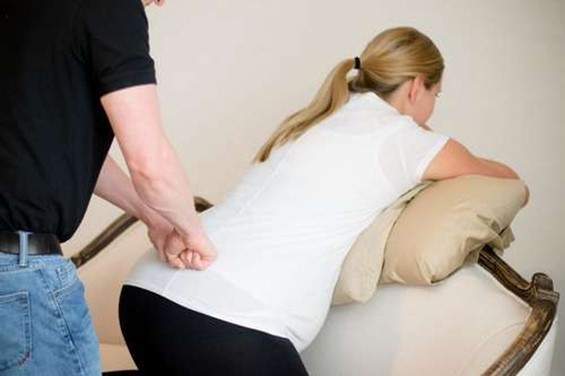
(D) "Your partner will apply upward pressure on you": This statement is appropriate. During labor, counterpressure is often applied by the partner to the lower back or hips, pressing upward or in a direction that helps alleviate the pain caused by contractions, particularly in cases of back labor. This technique can help relieve discomfort by counteracting the pressure from the baby's head against the mother's spine.
Full Explanation
Answer: D
Rationale:
(A) "Your partner will apply continuous, firm pressure between your thumb and index finger": This statement is not appropriate for describing counterpressure during labor. Counterpressure typically involves applying pressure to areas such as the lower back or sacrum, not between the thumb and index finger.
(B) "Your partner will apply pressure to the top of your uterus during contractions": This statement is not appropriate. Applying pressure to the top of the uterus during contractions could be harmful and is not recommended as a counterpressure technique during labor. Counterpressure is generally applied to the lower back or hips to alleviate pain.
(C) "Your partner will apply steady pressure with a tennis ball to your finger": This statement is not correct. Counterpressure during labor involves applying pressure to the lower back or hips, not to the fingers. A tennis ball may be used, but it is applied to the lower back or sacral area, not the fingers.
(D) "Your partner will apply upward pressure on you": This statement is appropriate. During labor, counterpressure is often applied by the partner to the lower back or hips, pressing upward or in a direction that helps alleviate the pain caused by contractions, particularly in cases of back labor. This technique can help relieve discomfort by counteracting the pressure from the baby's head against the mother's spine.
A nurse is providing dietary teaching to a client who is at 32 weeks of gestation and has cholelithiasis.
Which of the following foods should the nurse recommend for the client to include in her diet?
A. Baked chicken.
Baked chicken is a food that the nurse should recommend for a client who is at 32 weeks of gestation and has cholelithiasis to include in her diet. Eating healthy fats, like those found in lean meats such as chicken, can help the gallbladder contract and empty on a regular basis.
B. French fries.
Choice B is incorrect because French fries are not a food that the nurse should recommend for a client who is at 32 weeks of gestation and has cholelithiasis to include in her diet. Unhealthy fats, like those often found in fried foods, should be avoided.
C. Whole milk.
Choice C is incorrect because whole milk is not a food that the nurse should recommend for a client who is at 32 weeks of gestation and has cholelithiasis to include in her diet. Unhealthy fats, like those often found in whole milk, should be avoided.
D. Bacon cheeseburger.
Choice D is incorrect because a bacon cheeseburger is not a food that the nurse should recommend for a client who is at 32 weeks of gestation and has cholelithiasis to include in her diet. Unhealthy fats, like those often found in bacon and cheeseburgers, should be avoided.
Full Explanation
Baked chicken is a food that the nurse should recommend for a client who is at
32 weeks of gestation and has cholelithiasis to include in her diet.
Eating healthy fats, like those found in lean meats such as chicken, can help the gallbladder contract and empty on a regular basis.

Choice B is incorrect because French fries are not a food that the nurse should recommend for a client who is at 32 weeks of gestation and has cholelithiasis to include in her diet.
Unhealthy fats, like those often found in fried foods, should be avoided.
Choice C is incorrect because whole milk is not a food that the nurse should recommend for a client who is at 32 weeks of gestation and has cholelithiasis to include in her diet.
Unhealthy fats, like those often found in whole milk, should be avoided.
Choice D is incorrect because a bacon cheeseburger is not a food that the nurse should recommend for a client who is at 32 weeks of gestation and has cholelithiasis to include in her diet.
Unhealthy fats, like those often found in bacon and cheeseburgers, should be avoided.