
Nursing practice questions with comprehensive rationales
NurseDive Free Nursing Practice Question
A nurse is educating new parents about risk factors for sudden infant death syndrome (SIDS).
Which of the following statements should indicate to the nurse the need for additional teaching?
A. "Our baby will sleep in our bed because I am breastfeeding.".
“Our baby will sleep in our bed because I am breastfeeding.” Sharing a bed with a baby increases the risk of SIDS1.
B. "We will remove blankets and toys from the crib.".
Choice B is not the answer because removing blankets and toys from the crib is a recommended way to reduce the risk of SIDS2.
C. "We will give my baby a pacifier during naps and at bedtime.".
Choice C is not the answer because giving a baby a pacifier during naps and at bedtime can help reduce the risk of SIDS.
D. "We will place my baby on her back when sleeping.".
Choice D is not the answer because placing a baby on their back when sleeping is one of the most important measures to help protect against SIDS1.
This question is an excerpt from Nurse Dive's nursing test bank - ATI Custom SP23 N23 N240 Proctored Exam 3 Ch 11 24 32 43 44. Take the full exam now
Full Explanation
“Our baby will sleep in our bed because I am breastfeeding.” Sharing a bed with a baby increases the risk of SIDS1.
Choice B is not the answer because removing blankets and toys from the crib is a recommended way to reduce the risk of SIDS2.
Choice C is not the answer because giving a baby a pacifier during naps and at bedtime can help reduce the risk of SIDS.
Choice D is not the answer because placing a baby on their back when sleeping is one of the most important measures to help protect against SIDS1.
Similar Questions
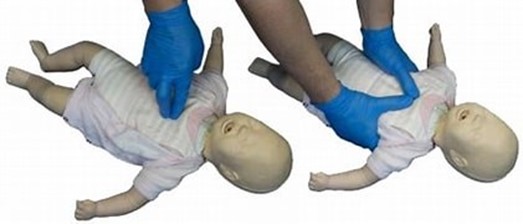
A nurse is preparing to begin chest compressions on an infant.
The nurse should perform compressions using which of the following techniques?
A. Deliver compressions just above the nipple line.
Deliver compressions just above the nipple line is incorrect, as this is not the correct location for chest compressions on an infant. The correct location is below the nipple line, at the center of the chest.
B. Deliver compressions with the heel of one hand.
Deliver compressions with the heel of one hand is incorrect, as this is the technique for chest compressions on a child, not an infant. For an infant, two fingers are used instead of one hand13.
C. Deliver compressions at a depth of 5 cm (2 in).
Deliver compressions at a depth of 5 cm (2 in) is incorrect, as this is too deep for an infant’s chest. The correct depth for an infant is about 4 cm (1.5 in) or 1/3 the depth of the chest12.
D. Deliver compressions at 1/3 the depth of the chest.
This is the recommended technique for chest compressions on an infant, as it provides adequate blood flow without causing injury12.
Full Explanation
This is the recommended technique for chest compressions on an infant, as it provides adequate blood flow without causing injury12.
Choice A.
Deliver compressions just above the nipple line is incorrect, as this is not the correct location for chest compressions on an infant.
The correct location is below the nipple line, at the center of the chest.
Choice B.
Deliver compressions with the heel of one hand is incorrect, as this is the technique for chest compressions on a child, not an infant. For an infant, two fingers are used instead of one hand13.
Choice C.
Deliver compressions at a depth of 5 cm (2 in) is incorrect, as this is too deep for an infant’s chest.
The correct depth for an infant is about 4 cm (1.5 in) or 1/3 the depth of the
chest12.
Therefore, choice D is the best answer.
A nurse is assessing a toddler who has acute nephrotic syndrome. Which of the following findings should the nurse report to the provider?
A. Yellow nasal discharge.
Yellow nasal discharge in a toddler with acute nephrotic syndrome signifies a potential upper respiratory tract infection, which is critically important. Children with nephrotic syndrome are highly susceptible to infections due to significant urinary loss of immunoglobulins, leading to an immunocompromised state. Furthermore, corticosteroid treatments, often prescribed for nephrotic syndrome, suppress the immune system. An infection can precipitate a relapse of the syndrome, lead to severe complications like peritonitis or sepsis, and requires prompt evaluation and potentially antibiotic therapy to prevent life-threatening outcomes.
B. Poor appetite.
Poor appetite is a non-specific symptom in toddlers with nephrotic syndrome and does not typically indicate an immediate, life-threatening complication. It can be attributed to generalized malaise, abdominal discomfort due to ascites, or even side effects of medications such as corticosteroids. While important to monitor for nutritional status and overall well-being, it does not carry the same urgency as signs of infection, which can rapidly lead to severe health deterioration in an immunocompromised child.
C. Facial edema.
Facial edema is a cardinal clinical manifestation of acute nephrotic syndrome, resulting from profound hypoalbuminemia. Reduced plasma oncotic pressure causes fluid to shift from the intravascular space into the interstitial space, leading to generalized edema, often prominently in the face. This finding is expected and indicates the disease process itself, rather than an acute, unexpected complication requiring immediate reporting, unless there is a sudden, significant worsening or associated respiratory compromise.
D. Irritability.
Irritability in a toddler can be a manifestation of general discomfort, illness, or even a side effect of corticosteroid therapy, which can cause mood disturbances and behavioral changes. While it warrants assessment to identify the underlying cause, irritability is a non-specific symptom and does not directly indicate an urgent, life-threatening complication of nephrotic syndrome requiring immediate medical intervention, unlike the signs of an acute infection in an immunocompromised child.
E. None
None
F. None
None
Full Explanation
Choice A rationale: Yellow nasal discharge in a toddler with acute nephrotic syndrome signifies a potential upper respiratory tract infection, which is critically important. Children with nephrotic syndrome are highly susceptible to infections due to significant urinary loss of immunoglobulins, leading to an immunocompromised state. Furthermore, corticosteroid treatments, often prescribed for nephrotic syndrome, suppress the immune system. An infection can precipitate a relapse of the syndrome, lead to severe complications like peritonitis or sepsis, and requires prompt evaluation and potentially antibiotic therapy to prevent life-threatening outcomes.
Choice B rationale: Poor appetite is a non-specific symptom in toddlers with nephrotic syndrome and does not typically indicate an immediate, life-threatening complication. It can be attributed to generalized malaise, abdominal discomfort due to ascites, or even side effects of medications such as corticosteroids. While important to monitor for nutritional status and overall well-being, it does not carry the same urgency as signs of infection, which can rapidly lead to severe health deterioration in an immunocompromised child.
Choice C rationale: Facial edema is a cardinal clinical manifestation of acute nephrotic syndrome, resulting from profound hypoalbuminemia. Reduced plasma oncotic pressure causes fluid to shift from the intravascular space into the interstitial space, leading to generalized edema, often prominently in the face. This finding is expected and indicates the disease process itself, rather than an acute, unexpected complication requiring immediate reporting, unless there is a sudden, significant worsening or associated respiratory compromise.
Choice D rationale: Irritability in a toddler can be a manifestation of general discomfort, illness, or even a side effect of corticosteroid therapy, which can cause mood disturbances and behavioral changes. While it warrants assessment to identify the underlying cause, irritability is a non-specific symptom and does not directly indicate an urgent, life-threatening complication of nephrotic syndrome requiring immediate medical intervention, unlike the signs of an acute infection in an immunocompromised child.
A nurse is caring for a child who has been physically abused by a family member. Which of the following statements should the nurse say to the child?
A. "Your family is bad for doing this to you.".
Choice A is not an answer because it can create more confusion and fear in the child.
B. "Let's discuss what happened with your family.".
Choice B is not an answer because discussing the abuse with the family may not be safe or appropriate.
C. "It is not your fault that this happened.".
This statement helps the child understand that they are not to blame for the abuse and can help reduce feelings of guilt or shame.
D. "I promise I won't tell anyone about this.".
Choice D is not an answer because it is important for the nurse to report the abuse to the appropriate authorities to ensure the child’s safety.
Full Explanation
This statement helps the child understand that they are not to blame for the abuse and can help reduce feelings of guilt or shame.
Choice A is not an answer because it can create more confusion and fear in the child.
Choice B is not an answer because discussing the abuse with the family may not be safe or appropriate.
Choice D is not an answer because it is important for the nurse to report the abuse to the appropriate authorities to ensure the child’s safety.