Nursing practice questions with comprehensive rationales
NurseDive Free Nursing Practice Question
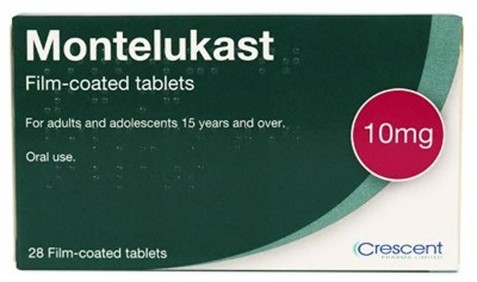
A nurse is evaluating teaching on a client who has a new prescription for montelukast to treat asthma. Which of the following statements by the client indicates an understanding of the teaching?
A. "I take this medication once a day in the evening."
Montelukast is an oral leukotriene receptor antagonist that prevents inflammation and bronchoconstriction in asthma. It is taken once daily in the evening to prevent nocturnal symptoms and improve morning lung function.
B. "I rinse my mouth after taking this medication."
"I rinse my mouth after taking this medication." This is not necessary, as montelukast is not associated with oral thrush or dysgeusia, unlike some inhaled corticosteroids.
C. "I use a spacer device when I inhale this medication."
"I use a spacer device when I inhale this medication." This is not applicable, as montelukast is not aninhaler, but a tablet or chewable form.
D. "I take this medication when I get an asthma attack."
"I take this medication when I get an asthma attack." This is not appropriate, as montelukast is not a rescue medication, but a maintenance medication that should be taken regularly to prevent asthma exacerbations. A short-acting beta2 agonist such as albuterol should be used for acute relief of symptoms.
This question is an excerpt from Nurse Dive's nursing test bank - ATI Med Surg Proctored Exam 1. Take the full exam now
Full Explanation
Montelukast is an oral leukotriene receptor antagonist that prevents inflammation and bronchoconstriction in asthma. It is taken once daily in the evening to prevent nocturnal symptoms and improve morning lung function.
- "I rinse my mouth after taking this medication." This is not necessary, as montelukast is not associated with oral thrush or dysgeusia, unlike some inhaled corticosteroids.
- "I use a spacer device when I inhale this medication." This is not applicable, as montelukast is not an inhaler, but a tablet or chewable form.
- "I take this medication when I get an asthma attack." This is not appropriate, as montelukast is not a rescue medication, but a maintenance medication that should be taken regularly to prevent asthma exacerbations. A short-acting beta2 agonist such as albuterol should be used for acute relief of symptoms.
Similar Questions
A nurse is caring for a client who has pneumonia and a prescription for oxygen therapy at 5 L/min via nasal cannula. Which of the following actions should the nurse take?
A. Remove the nasal cannula while the client eats.
Remove the nasal cannula while the client eats. This is not advisable, as the client may become hypoxic during eating, especially if they have pneumonia and impaired lung function. The nurse should monitor the client's oxygen saturation and respiratory status during meals and adjust the oxygen delivery device as needed.
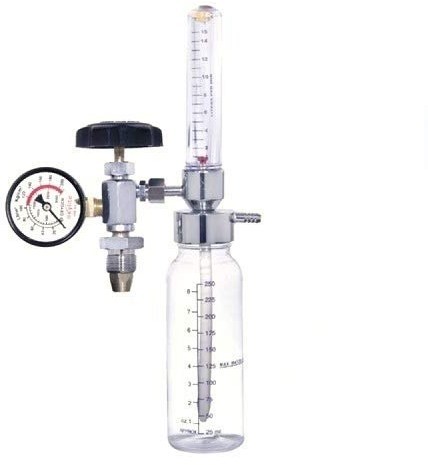
B. Attach a humidifier bottle to the base of the flow meter.
A humidifier bottle adds moisture to the oxygen, which prevents drying and irritation of the nasal mucosa and enhances gas exchange.
C. Secure the oxygen tubing to the bed sheet near the client's head.
Secure the oxygen tubing to the bed sheet near the client's head. This is not safe, as it can cause entanglement, dislodgement, or kinking of the tubing, which can compromise oxygen delivery and cause injury to the client.
D. Apply petroleum jelly to the nares as needed to soothe mucous membranes.
Apply petroleum jelly to the nares as needed to soothe mucous membranes. This is not recommended, as petroleum products can ignite in the presence of oxygen and cause burns or fire. A water-based lubricant should be used instead.
Full Explanation
A humidifier bottle adds moisture to the oxygen, which prevents drying and irritation of the nasal mucosa
and enhances gas exchange.
a. Remove the nasal cannula while the client eats. This is not advisable, as the client may become hypoxic during eating, especially if they have pneumonia and impaired lung function. The nurse should monitor the client's oxygen saturation and respiratory status during meals and adjust the oxygen delivery device as needed.
c. Secure the oxygen tubing to the bed sheet near the client's head. This is not safe, as it can cause entanglement, dislodgement, or kinking of the tubing, which can compromise oxygen delivery and cause injury to the client.
d. Apply petroleum jelly to the nares as needed to soothe mucous membranes. This is not recommended, as petroleum products can ignite in the presence of oxygen and cause burns or fire. A water-based lubricant should be used instead.
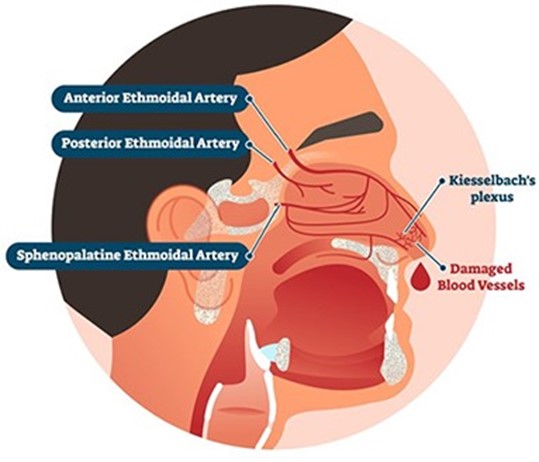
A nurse is caring for a client who has hypertension and develops epistaxis. Which of the following actions should the nurse take? (Select all that apply)
A. Tilt the client's head backward
Tilt the client's head backward. This is not recommended, as it can cause blood to drain into the throat and increase the risk of aspiration, nausea, or vomiting.
B. Move the client into high-Fowler's position
These actions help to control bleeding, reduce blood pressure, and promote clotting.
C. Apply pressure to the nares
These actions help to control bleeding, reduce blood pressure, and promote clotting.
D. Instruct the client to blow his nose
Instruct the client to blow his nose. This is not advisable, as it can dislodge any clots that have formed and worsen bleeding.
E. Place ice to the bridge of the client's nose
These actions help to control bleeding, reduce blood pressure, and promote clotting.
Full Explanation
These actions help to control bleeding, reduce blood pressure, and promote clotting.
a. Tilt the client's head backward. This is not recommended, as it can cause blood to drain into the throat and increase the risk of aspiration, nausea, or vomiting.
d. Instruct the client to blow his nose. This is not advisable, as it can dislodge any clots that have formed and worsen bleeding.
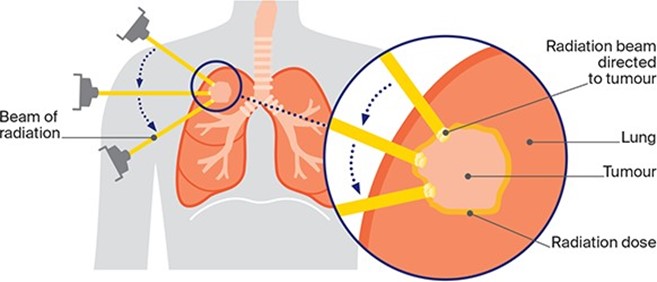
A nurse is caring for a client who is receiving radiation therapy to treat lung cancer. Which of the following actions should the nurse take?
A. Observe for signs of infection
Radiation therapy can cause immunosuppression, which increases the risk of infection. The nurse should monitor the client for signs of infection such as fever, chills, malaise, or purulent drainage.
B. Examine the skin for generalized urticaria
Examine the skin for generalized urticaria. This is not a common side effect of radiation therapy, as urticaria is an allergic reaction that causes hives or welts on the skin. Radiation therapy can cause localized skin irritation, erythema, or dryness, but not generalized urticaria.
C. Review laboratory test results for low hemoglobin
Review laboratory test results for low hemoglobin. This is not a direct effect of radiation therapy, as hemoglobin is a component of red blood cells that carries oxygen in the blood. Radiation therapy can cause anemia, which is a low number of red blood cells, but not necessarily low hemoglobin.
D. Monitor the mouth for signs of xerostomia
Monitor the mouth for signs of xerostomia. This is not relevant for a client who receives radiation therapy to treat lung cancer, as xerostomia is dry mouth caused by reduced salivary gland function. This can occur in clients who receive radiation therapy to treat head and neck cancer, but not lung cancer.
Full Explanation
Radiation therapy can cause immunosuppression, which increases the risk of infection. The nurse should monitor the client for signs of infection such as fever, chills, malaise, or purulent drainage.
- Examine the skin for generalized urticaria. This is not a common side effect of radiation therapy, as urticaria is an allergic reaction that causes hives or welts on the skin. Radiation therapy can cause localized skin irritation, erythema, or dryness, but not generalized urticaria.
- Review laboratory test results for low hemoglobin. This is not a direct effect of radiation therapy, as hemoglobin is a component of red blood cells that carries oxygen in the blood. Radiation therapy can cause anemia, which is a low number of red blood cells, but not necessarily low hemoglobin.
- Monitor the mouth for signs of xerostomia. This is not relevant for a client who receives radiation therapy to treat lung cancer, as xerostomia is dry mouth caused by reduced salivary gland function. This can occur in clients who receive radiation therapy to treat head and neck cancer, but not lung cancer.