Nursing practice questions with comprehensive rationales
NurseDive Free Nursing Practice Question
A nurse is monitoring a client who has received external radiation for throat cancer. Which of the following findings should the nurse expect?
A. Loss of taste
Radiation therapy can affect the taste buds, leading to a diminished or altered sense of taste. This can result in a reduced appetite or changes in food preferences.
B. Loose stools
Loose stools and bladder infection are not commonly associated with external radiation for throat cancer. Loose stools can be a side effect of radiation therapy to the abdomen or pelvis, but it is not typically seen in throat cancer treatment.
C. increased appetite
Increased appetite is also not a typical finding associated with radiation therapy, as it may cause side effects such as nausea or changes in taste, which can decrease appetite.
D. Bladder infection
Bladder infection is not directly related to radiation therapy, but it can occur as a complication in some individuals undergoing cancer treatment, especially if they have a compromised immune system.
This question is an excerpt from Nurse Dive's nursing test bank - PN Comprehensive Predictor PN 2020 Proctored Exam. Take the full exam now
Full Explanation
Radiation therapy can affect the taste buds, leading to a diminished or altered sense of taste.
This can result in a reduced appetite or changes in food preferences.
Loose stools and bladder infection are not commonly associated with external radiation for throat cancer. Loose stools can be a side effect of radiation therapy to the abdomen or pelvis, but it is not typically seen in throat cancer treatment.
Bladder infection is not directly related to radiation therapy, but it can occur as a complication in some individuals undergoing cancer treatment, especially if they have a compromised immune system.
Increased appetite is also not a typical finding associated with radiation therapy, as it may cause side effects such as nausea or changes in taste, which can decrease appetite
Similar Questions
A nurse is administering pancrelipase to a child who has cystic fibrosis. Which of the following outcomes should the nurse expect as a therapeutic effect of the treatment?
A. Improved respiratory function
Pancrelipase does not directly impact respiratory function. It is an enzyme replacement therapy used to aid digestion by compensating for the lack of pancreatic enzymes, not to improve lung function.
B. Decreased sodium excretion
Cystic fibrosis affects sodium and chloride transport, leading to higher sodium levels in sweat. However, pancrelipase does not affect sodium excretion; it focuses on aiding digestion.
C. Improved absorption of vitamins B and C
Pancrelipase helps with the digestion and absorption of fats and fat-soluble vitamins (A, D, E, K). Vitamins B and C are water-soluble and are not typically affected by the enzyme therapy used for fat digestion.
D. Reduced fat in the stools
This is the correct answer. Pancrelipase contains enzymes (lipase, protease, and amylase) that help break down fats, proteins, and carbohydrates. In cystic fibrosis, pancreatic enzyme production is often insufficient, leading to malabsorption and steatorrhea (excessive fat in the stools). By providing the necessary enzymes, pancrelipase helps improve the digestion and absorption of dietary fats, reducing the fat content in the stools.
Full Explanation
a. Pancrelipase does not directly impact respiratory function. It is an enzyme replacement therapy used to aid digestion by compensating for the lack of pancreatic enzymes, not to improve lung function.
b. Cystic fibrosis affects sodium and chloride transport, leading to higher sodium levels in sweat. However, pancrelipase does not affect sodium excretion; it focuses on aiding digestion.
c. Pancrelipase helps with the digestion and absorption of fats and fat-soluble vitamins (A, D, E, K). Vitamins B and C are water-soluble and are not typically affected by the enzyme therapy used for fat digestion.
d. This is the correct answer. Pancrelipase contains enzymes (lipase, protease, and amylase) that help break down fats, proteins, and carbohydrates. In cystic fibrosis, pancreatic enzyme production is often insufficient, leading to malabsorption and steatorrhea (excessive fat in the stools). By providing the necessary enzymes, pancrelipase helps improve the digestion and absorption of dietary fats, reducing the fat content in the stools.
A nurse is assisting with a prenatal examination of a client who is at 8 weeks of gestation. The nurse notes that the client's vagina and vulva are a purplish color. The nurse should document this finding as which of the following?
A. Ballottement
Ballottement refers to a palpable rebound of the fetus when the examiner pushes on the mother's abdomen.
B. Chadwick's sign
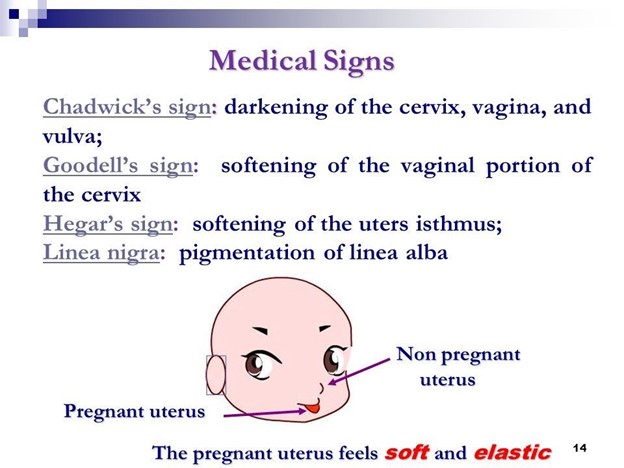
Chadwick's sign is a bluish or purplish discoloration of the cervix, vagina, and vulva that can occur during pregnancy. It is caused by increased blood flow and vascular changes in the area. It is considered a normal finding in early pregnancy and is often used as a sign to support the diagnosis of pregnancy.
C. Hegar's sign
Hegar's sign is the softening and compressibility of the lower uterine segment, which can be felt during a bimanual examination.
D. Chloasma
Chloasma refers to the development of hyperpigmented patches on the face, often referred to as the "mask of pregnancy."
Full Explanation
Chadwick's sign is a bluish or purplish discoloration of the cervix, vagina, and vulva that can occur during pregnancy. It is caused by increased blood flow and vascular changes in the area. It is considered a normal finding in early pregnancy and is often used as a sign to support the diagnosis of pregnancy.
Ballottement refers to a palpable rebound of the fetus when the examiner pushes on the mother's abdomen.
Hegar's sign is the softening and compressibility of the lower uterine segment, which can be felt during a bimanual examination.
Chloasma refers to the development of hyperpigmented patches on the face, often referred to as the "mask of pregnancy."
A nurse is caring for a client who is 2 days postoperative following an above-the-knee amputation. Which of the following actions should the nurse take to promote progression toward independence and mobility for the client?
A. Encourage the client to use the overbed trapeze.
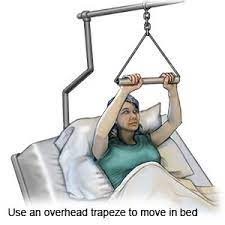
A nurse caring for a client who is 2 days postoperative following an above-the-knee amputation should encourage the client to use the overbed trapeze. This will promote independence and mobility by allowing the client to reposition themselves in bed and perform upper body exercises.
B. Maintain abduction of the client's residual limb with a pillow.
Maintaining abduction of the client's residual limb with a pillow can help prevent contractures, but it does not directly promote mobility.
C. Caution the client to avoid a prone position while in bed.
Cautioning the client to avoid a prone position while in bed is appropriate to prevent pressure injuries and promote healing, but it also does not directly promote mobility.
D. Keep a loose, absorbent dressing over the client's surgical site
Keeping a loose, absorbent dressing over the client's surgical site is important for infection control but does not promote mobility.
Full Explanation
A nurse caring for a client who is 2 days postoperative following an above-the-knee amputation should encourage the client to use the overbed trapeze. This will promote independence and mobility by allowing the client to reposition themselves in bed and perform upper body exercises.
Maintaining abduction of the client's residual limb with a pillow can help prevent contractures, but it does not directly promote mobility.
Cautioning the client to avoid a prone position while in bed is appropriate to prevent pressure injuries and promote healing, but it also does not directly promote mobility.
Keeping a loose, absorbent dressing over the client's surgical site is important for infection control but does not promote mobility.