
Nursing practice questions with comprehensive rationales
NurseDive Free Nursing Practice Question
A nurse is planning a class for parents of school-age children about iron intake. Which of the following should the nurse include as a manifestation of iron deficiency?
A. Lowered intellectual performance
Iron deficiency can have various manifestations, but one of the significant effects is its impact on cognitive function. Iron is essential for the proper functioning of the brain and nervous system. In children, iron deficiency can lead to lowered intellectual performance, including difficulties with concentration, learning, memory, and problem-solving skills. It can also affect overall cognitive development and academic performance.
B. Elevated temperature
"Elevated temperature": Elevated temperature or fever is not a direct manifestation of iron deficiency. Fever is commonly associated with infections, inflammatory conditions, or other illnesses, but not specifically with iron deficiency.
C. Decreased sleeping time
"Decreased sleeping time": While iron deficiency can cause various symptoms, changes in sleep patterns, such as decreased sleeping time, are not a typical manifestation. Iron deficiency may cause fatigue and general weakness, which could potentially impact sleep quality and duration, but it is not directly associated with decreased sleeping time.
D. Increased risk of infection
"Increased risk of infection": Iron deficiency can affect the immune system, making individuals more susceptible to infections. However, an increased risk of infection is a consequence of impaired immune function rather than a direct manifestation of iron deficiency itself.
This question is an excerpt from Nurse Dive's nursing test bank - ATI RN Nutrition 2019 Proctored Exam. Take the full exam now
Full Explanation
Iron deficiency can have various manifestations, but one of the significant effects is its impact on cognitive function. Iron is essential for the proper functioning of the brain and nervous system. In children, iron deficiency can lead to lowered intellectual performance, including difficulties with concentration, learning, memory, and problem-solving skills. It can also affect overall cognitive development and academic performance.
The other options listed are not typically associated with iron deficiency:
"Elevated temperature": Elevated temperature or fever is not a direct manifestation of iron deficiency. Fever is commonly associated with infections, inflammatory conditions, or other illnesses, but not specifically with iron deficiency.
"Decreased sleeping time": While iron deficiency can cause various symptoms, changes in sleep patterns, such as decreased sleeping time, are not a typical manifestation. Iron deficiency may cause fatigue and general weakness, which could potentially impact sleep quality and duration, but it is not directly associated with decreased sleeping time.
"Increased risk of infection": Iron deficiency can affect the immune system, making individuals more susceptible to infections. However, an increased risk of infection is a consequence of impaired immune function rather than a direct manifestation of iron deficiency itself.
Similar Questions
A nurse is reviewing the laboratory values of four clients. Which of the following values indicates to the nurse that a client has iron-deficiency anemia?
A. A client whose hematocrit is 42%
Hematocrit: The normal range for hematocrit is around 36% to 46% for females and 38% to 50% for males. A client with a hematocrit of 42% falls within the normal range and does not suggest iron-deficiency anemia.
B. A client whose hemoglobin is 15 g/dL
Hemoglobin: The normal range for hemoglobin is approximately 12 to 16 g/dL for females and 13.5 to 17.5 g/dL for males. A client with a hemoglobin level of 15 g/dL is within the normal range and does not indicate iron-deficiency anemia.
C. A client whose ferritin level is 8 ng/mL
Iron-deficiency anemia is characterized by a deficiency of iron, which is necessary for the production of hemoglobin in red blood cells. Ferritin is a protein that stores iron in the body, and a low ferritin level is an indicator of depleted iron stores. Ferritin: The normal range for ferritin varies depending on the laboratory, but typically it is around 12 to 300 ng/mL for females and 12 to 500 ng/mL for males. A client with a ferritin level of 8 ng/mL has a significantly low level, suggesting iron-deficiency anemia due to depleted iron stores.
D. A client whose RBC count is 5.2 million/mm3
RBC count: The normal range for red blood cell (RBC) count is roughly 4.2 to 5.4 million/mm3 for females and 4.7 to 6.1 million/mm3 for males. A client with an RBC count of 5.2 million/mm3 falls within the normal range and does not indicate iron-deficiency anemia.
Full Explanation
Iron-deficiency anemia is characterized by a deficiency of iron, which is necessary for the production of hemoglobin in red blood cells. Ferritin is a protein that stores iron in the body, and a low ferritin level is an indicator of depleted iron stores.
Ferritin: The normal range for ferritin varies depending on the laboratory, but typically it is around 12 to 300 ng/mL for females and 12 to 500 ng/mL for males. A client with a ferritin level of 8 ng/mL has a significantly low level, suggesting iron-deficiency anemia due to depleted iron stores.
Hematocrit: The normal range for hematocrit is around 36% to 46% for females and 38% to 50% for males. A client with a hematocrit of 42% falls within the normal range and does not suggest iron-deficiency anemia.
Hemoglobin: The normal range for hemoglobin is approximately 12 to 16 g/dL for females and
13.5 to 17.5 g/dL for males. A client with a hemoglobin level of 15 g/dL is within the normal range and does not indicate iron-deficiency anemia.
RBC count: The normal range for red blood cell (RBC) count is roughly 4.2 to 5.4 million/mm3 for females and 4.7 to 6.1 million/mm3 for males. A client with an RBC count of 5.2 million/mm3 falls within the normal range and does not indicate iron-deficiency anemia.
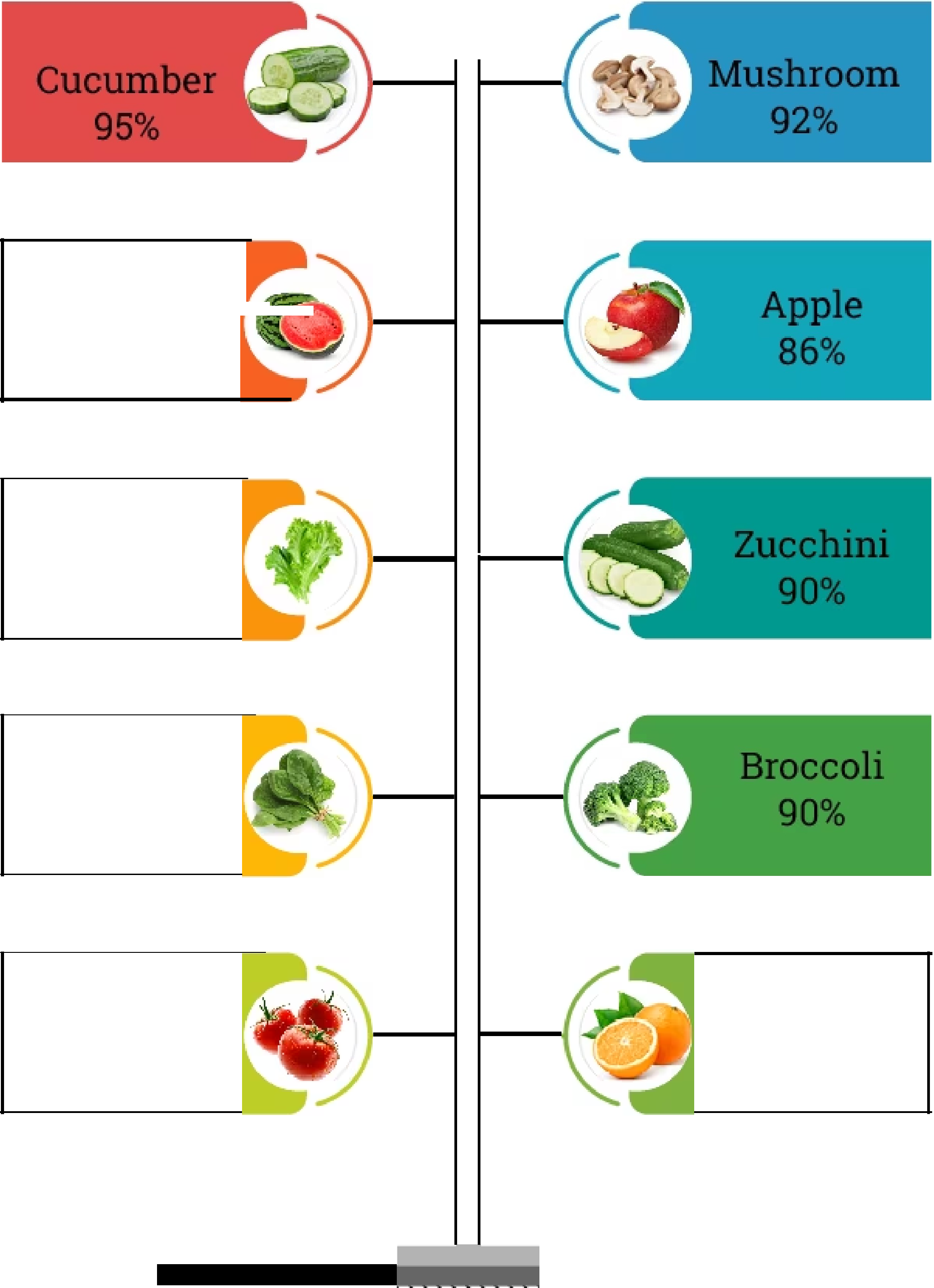
A nurse is educating the parent of a school-age child about the importance of maintaining water intake to prevent dehydration. Which of the following food choices should the nurse recommend as containing the greatest percentage of water?
A. Cheddar cheese
Cheddar cheese: Cheddar cheese has a low water content, approximately 36%.
B. Whole-wheat bread
Whole-wheat bread: Whole-wheat bread contains a moderate amount of water, usually around 35-40%.
C. Almonds
Almonds: Almonds have a relatively low water content, approximately 4-6%.
D. Broccoli
Broccoli: Broccoli is a vegetable with a high water content, usually around 90-91%.
Full Explanation
When educating the parent about the importance of maintaining water intake to prevent dehydration, recommending foods with high water content can be helpful. Among the options given, broccoli has the highest percentage of water content.
Here's the approximate percentage of water content in each food:
● Cheddar cheese: Cheddar cheese has a low water content, approximately 36%.
● Whole-wheat bread: Whole-wheat bread contains a moderate amount of water, usually around 35-40%.
● Almonds: Almonds have a relatively low water content, approximately 4-6%.
● Broccoli: Broccoli is a vegetable with a high water content, usually around 90-91%.
WATER-RICH FOODS
A nurse is teaching a client who is at 10 weeks of gestation about increasing folate in her diet. Which of the following food choices should the nurse recommend as the best source of folate?
A. 1/2 cup cooked asparagus
1/2 cup cooked asparagus: Asparagus is a good source of folate, and 1/2 cup of cooked asparagus contains approximately 134 micrograms of folate.
B. 1/2 cup plain low-fat yogurt
1/2 cup plain low-fat yogurt: While yogurt is a healthy food choice, it is not a significant source of folate.
C. 1 medium apple
1 medium apple: Apples are generally low in folate content and not considered a rich source of this nutrient.
D. 1 small banana
1 small banana: Bananas are also not known for their folate content and do not provide a significant amount of this nutrient.
Full Explanation
Folate, also known as vitamin B9, is an essential nutrient during pregnancy as it plays a crucial role in the development of the baby's neural tube. When teaching a client about increasing folate in their diet during pregnancy, it's important to recommend foods that are rich in this nutrient.
1/2 cup cooked asparagus: Asparagus is a good source of folate, and 1/2 cup of cooked asparagus contains approximately 134 micrograms of folate.
1/2 cup plain low-fat yogurt: While yogurt is a healthy food choice, it is not a significant source of folate.
1 medium apple: Apples are generally low in folate content and not considered a rich source of this nutrient.
1 small banana: Bananas are also not known for their folate content and do not provide a significant amount of this nutrient.
Given the options provided, 1/2 cup cooked asparagus is the best source of folate. It is important to note that other food sources rich in folate include dark leafy greens, legumes, fortified cereals, and citrus fruits. Encouraging a varied and balanced diet that incorporates these folate-rich foods can help ensure adequate folate intake during pregnancy.