
Nursing practice questions with comprehensive rationales
NurseDive Free Nursing Practice Question
A nurse is planning care for a client who has a central venous access device for intermittent infusions.
Which of the following actions should the nurse include in the plan of care?
A. Use an aseptic technique when changing the dressing.
The aseptic technique is important to prevent infection when changing the dressing of a central venous access device.
B. Cleanse the site with povidone-iodine.
Choice B is not correct because povidone-iodine is not always the recommended cleansing agent for central venous access devices.
C. Flush the catheter using a 10-mL syringe.
Choice C is not correct because a 10-mL syringe may generate too much pressure and damage the catheter.
D. Change the dressing every 24 hours.
Choice D is not correct because the dressing does not always need to be changed every 24 hours; the frequency of dressing changes depends on the type of dressing and the condition of the site.
This question is an excerpt from Nurse Dive's nursing test bank - ATI Adult Medical Surgical 2019 Proctored Exam. Take the full exam now
Full Explanation
The aseptic technique is important to prevent infection when changing the dressing of a central venous access device.
Choice B is not correct because povidone-iodine is not always the recommended cleansing agent for central venous access devices.
Choice C is not correct because a 10-mL syringe may generate too much pressure and damage the catheter.
Choice D is not correct because the dressing does not always need to be changed every 24 hours; the frequency of dressing changes depends on the type of dressing and the condition of the site.
Similar Questions
A nurse is planning care for an older adult client who has Ménière's disease.
Which of the following interventions should the nurse include in the plan?
A. Encourage the client to change positions slowly.
This can help prevent dizziness and loss of balance, which are common symptoms of Ménière’s disease.
B. Perform range-of-motion exercises to the client's neck every 4 hours.
Choice B is not correct because range-of-motion exercises to the client’s neck every 4 hours are not a standard intervention for Ménière’s disease.
C. Administer aspirin if the client reports a headache.
Choice C is not correct because aspirin is not always the recommended medication for headaches associated with Ménière’s disease.
D. Limit the client's fluid intake to 1,500 mL per day.
Choice D is not correct because limiting fluid intake is not a standard intervention for Ménière’s disease.
Full Explanation
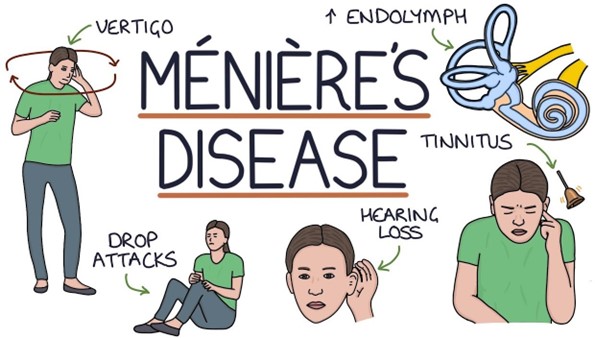
This can help prevent dizziness and loss of balance, which are common symptoms of Ménière’s disease.
Choice B is not correct because range-of-motion exercises to the client’s neck every 4 hours are not a standard intervention for Ménière’s disease.
Choice C is not correct because aspirin is not always the recommended medication for headaches associated with Ménière’s disease.
Choice D is not correct because limiting fluid intake is not a standard intervention for Ménière’s disease.
A nurse is caring for a client who has a chest tube. The client asks why the fluid in the water-seal chamber rises and falls.
Which of the following statements should the nurse make?
A. "This indicates a possible air leak.".
Choice A is not correct because tidaling does not indicate an air leak.
B. "This means your lung is fully re-expanded.".
Choice B is not correct because tidaling does not necessarily mean that the lung is fully re-expanded.
C. "Your breathing pattern causes this.".
The fluctuation of fluid in the water-seal chamber of a chest tube is known as tidaling and is caused by the changes in pressure within the chest during respiration.
D. "Suction pressure that is too high causes this.".
Choice D is not correct because suction pressure does not cause tidaling.
Full Explanation
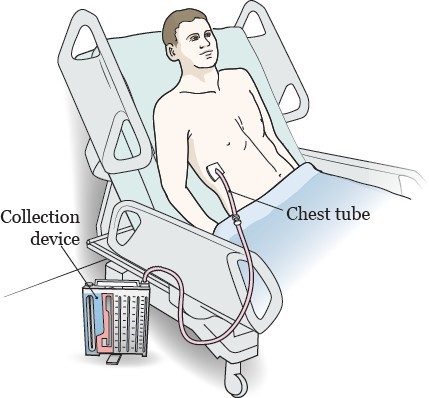
The fluctuation of fluid in the water-seal chamber of a chest tube is known as tidaling and is caused by the changes in pressure within the chest during respiration.
Choice A is not correct because tidaling does not indicate an air leak.
Choice B is not correct because tidaling does not necessarily mean that the lung is fully re-expanded.
Choice D is not correct because suction pressure does not cause tidaling.
A nurse is preparing to administer naloxone 10 mcg/kg via IV bolus to a client who weighs 220 lb. The amount available is 0.4 mg/mL. How many mL should the nurse administer? (round off to the nearest tenth)
A. 2.5 mL.
Let’s break down the problem step by step: Step 1: Convert the client’s weight from pounds (lb) to kilograms (kg). We know that 1 kg = 2.2 lbs. So, we have: 220 lb ÷ 2.2 = 100 kg Step 2: Calculate the total amount of naloxone needed. The doctor ordered 10 mcg/kg, and the client weighs 100 kg. So, we have: 10 mcg/kg × 100 kg = 1000 mcg Step 3: Convert micrograms (mcg) to milligrams (mg). We know that 1 mg = 1000 mcg. So, we have: 1000 mcg ÷ 1000 = 1 mg Step 4: Calculate the volume of naloxone solution needed. The available naloxone solution is 0.4 mg/mL. So, we have: 1 mg ÷ 0.4 = 2.5 mL So, the nurse should administer 2.5 mL of naloxone. Since we are asked to round off to the nearest tenth, the final answer remains 2.5 mL.
B. 25 mL.
None
C. 2.05 mL.
None
D. 2.25 mL.
None
Full Explanation
Let’s break down the problem step by step:
Step 1: Convert the client’s weight from pounds (lb) to kilograms (kg). We know that 1 kg = 2.2 lbs. So, we have: 220 lb ÷ 2.2 = 100 kg
Step 2: Calculate the total amount of naloxone needed. The doctor ordered 10 mcg/kg, and the client weighs 100 kg. So, we have: 10 mcg/kg × 100 kg = 1000 mcg
Step 3: Convert micrograms (mcg) to milligrams (mg). We know that 1 mg = 1000 mcg. So, we have: 1000 mcg ÷ 1000 = 1 mg
Step 4: Calculate the volume of naloxone solution needed. The available naloxone solution is 0.4 mg/mL. So, we have: 1 mg ÷ 0.4 = 2.5 mL
So, the nurse should administer 2.5 mL of naloxone. Since we are asked to round off to the nearest tenth, the final answer remains 2.5 mL.