
Nursing practice questions with comprehensive rationales
NurseDive Free Nursing Practice Question
A nurse is planning care for a client who has a peptic ulcer and a new prescription for sucralfate 2 gm administered twice daily. Which of the following times should the nurse plan to administer the medication?
A. One hour before breakfast and the evening meal
Sucralfate is a medication used to treat peptic ulcers by forming a protective coating on the stomach lining. It should be taken on an empty stomach, as food can interfere with its absorption and effectiveness. One hour before breakfast and the evening meal is the correct timing for administering sucralfate, allowing for an empty stomach before meals. At the time the client takes a proton pump inhibitor: Proton pump inhibitors are a different class of medications used to reduce stomach acid production. It is recommended to administer sucralfate separately, as it works differently and has different administration requirements. Thirty minutes after breakfast and the evening meal: Administering sucralfate after meals is not ideal, as it may not provide the desired therapeutic effect on an empty stomach. The time the client takes an antacid: Antacids are also different from sucralfate, and they can interfere with its absorption. It is generally recommended to administer sucralfate separately from antacids.
B. At the time the client takes a proton pump inhibitor
C. Thirty minutes after breakfast and the evening meal
D. The time the client takes an antacid
This question is an excerpt from Nurse Dive's nursing test bank - Gastro Urinary Systems Medication Proctored Exam. Take the full exam now
Full Explanation
Sucralfate is a medication used to treat peptic ulcers by forming a protective coating on the stomach lining. It should be taken on an empty stomach, as food can interfere with its absorption and effectiveness. One hour before breakfast and the evening meal is the correct timing for administering sucralfate, allowing for an empty stomach before meals.
At the time the client takes a proton pump inhibitor: Proton pump inhibitors are a different class of medications used to reduce stomach acid production. It is recommended to administer sucralfate separately, as it works differently and has different administration requirements.
Thirty minutes after breakfast and the evening meal: Administering sucralfate after meals is not ideal, as it may not provide the desired therapeutic effect on an empty stomach.
The time the client takes an antacid: Antacids are also different from sucralfate, and they can interfere with its absorption. It is generally recommended to administer sucralfate separately from antacids.
Similar Questions
A nurse is caring for a client who receives intermittent enteral feedings through an NG tube. Before administering a feeding, the nurse should measure the gastric residual for which of the following purposes?
A. To confirm the placement of the NG tube
B. To determine the client's electrolyte balance
C. To remove gastric acid that might cause dyspepsia
D. To identify delayed gastric emptying
The nurse should measure the gastric residual before administering a feeding to identify delayed gastric emptying. Gastric residual refers to the volume of formula or contents remaining in the stomach from the previous feeding. Measuring gastric residual helps assess how well the client's stomach is emptying and can indicate if there is delayed gastric emptying. By measuring gastric residual, the nurse can: ● Determine if the stomach has adequately emptied from the previous feeding. ● Assess the client's tolerance to enteral feedings. ● Detect signs of delayed gastric emptying, which can be indicative of gastrointestinal motility issues or other complications. ● Adjust the feeding rate or make other modifications to the enteral feeding plan based on the amount of residual volume. Confirming the placement of the NG tube is typically done using other methods, such as an X-ray, pH testing, or auscultation of air insufflation. Gastric residual measurement primarily serves the purpose of assessing gastric emptying, rather than confirming tube placement. While electrolyte imbalances can be monitored in the overall care of a client receiving enteral feedings, measuring gastric residual specifically focuses on assessing gastric emptying and feeding tolerance, rather than determining the client's electrolyte balance. Removing gastric acid that might cause dyspepsia is not the primary purpose of measuring gastric residual. Gastric residual measurement aims to evaluate the volume of the previous feeding and assess gastric emptying, rather than focusing on dyspepsia specifically.
Full Explanation
The nurse should measure the gastric residual before administering a feeding to identify delayed gastric emptying. Gastric residual refers to the volume of formula or contents remaining in the stomach from the previous feeding. Measuring gastric residual helps assess how well the client's stomach is emptying and can indicate if there is delayed gastric emptying.
By measuring gastric residual, the nurse can:
● Determine if the stomach has adequately emptied from the previous feeding. ● Assess the client's tolerance to enteral feedings.
● Detect signs of delayed gastric emptying, which can be indicative of gastrointestinal motility issues or other complications.
● Adjust the feeding rate or make other modifications to the enteral feeding plan based on the amount of residual volume.
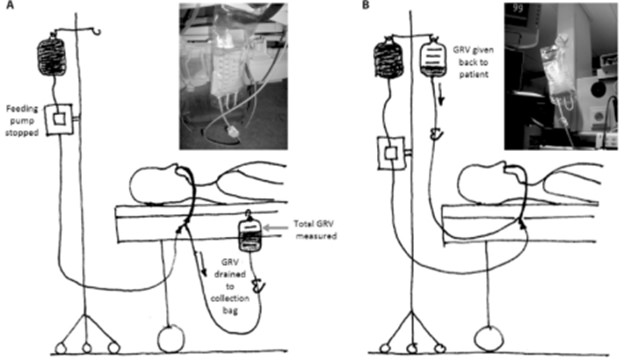
Confirming the placement of the NG tube is typically done using other methods, such as an X-ray, pH testing, or auscultation of air insufflation. Gastric residual measurement primarily serves the purpose of assessing gastric emptying, rather than confirming tube placement.
While electrolyte imbalances can be monitored in the overall care of a client receiving enteral feedings, measuring gastric residual specifically focuses on assessing gastric emptying and feeding tolerance, rather than determining the client's electrolyte balance.
Removing gastric acid that might cause dyspepsia is not the primary purpose of measuring gastric residual. Gastric residual measurement aims to evaluate the volume of the previous feeding and assess gastric emptying, rather than focusing on dyspepsia specifically.
A nurse is collecting data from a client in the health clinic who is reporting epigastric pain. Which of the following statements made by the client should the nurse identify as being consistent with peptic ulcer disease?
A. "I feel so much better after eating."
This is most consistent with a duodenal ulcer, where pain is relieved by food (but often returns 2–3 hours later). Gastric ulcers, on the other hand, may worsen with eating.
B. "The pain is worse after I eat a meal high in fat."
Fatty food intolerance and postprandial pain are more characteristic of gallbladder disease (cholelithiasis/cholecystitis), not PUD.
C. "The pain radiates down to my lower back."
Pain radiating to the back is more typical of pancreatitis, not PUD.
D. "My pain is relieved by having a bowel movement."
Relief of abdominal pain with a bowel movement suggests irritable bowel syndrome (IBS), not PUD.
Full Explanation
A. "I feel so much better after eating." This is most consistent with a duodenal ulcer, where pain is relieved by food (but often returns 2–3 hours later). Gastric ulcers, on the other hand, may worsen with eating.
B. "The pain is worse after I eat a meal high in fat." Fatty food intolerance and postprandial pain are more characteristic of gallbladder disease (cholelithiasis/cholecystitis), not PUD.
C. "The pain radiates down to my lower back." Pain radiating to the back is more typical of pancreatitis, not PUD.
D. "My pain is relieved by having a bowel movement." Relief of abdominal pain with a bowel movement suggests irritable bowel syndrome (IBS), not PUD.
A nurse is reinforcing teaching with a client who reports taking bisacodyl daily. Which of the following information should the nurse include?
A. "Daily bowel movements are necessary for good intestinal health.”
B. "Chronic use of laxatives can lead to a tear in the rectal mucosa"
C. "Decrease your intake of high-fiber foods."
D. "Excessive laxative use can cause an electrolyte imbalance.”
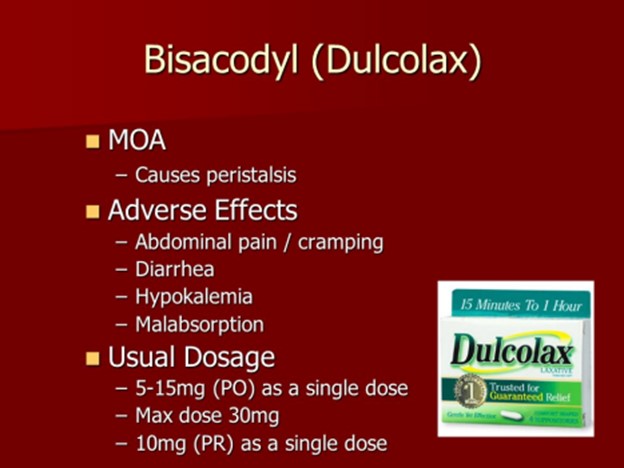
Bisacodyl is a stimulant laxative commonly used to treat constipation. However, it is important to educate the client about the potential risks associated with chronic laxative use. The statement regarding electrolyte imbalance is important because excessive or prolonged use of laxatives can lead to electrolyte disturbances, such as low potassium levels (hypokalemia), which can have adverse effects on various body functions. "Daily bowel movements are necessary for good intestinal health": While regular bowel movements are generally desirable, stating that daily bowel movements are necessary for good intestinal health is an overgeneralization. Bowel movement frequency can vary among individuals, and it is important to consider other factors such as diet, hydration, and overall health. "Chronic use of laxatives can lead to a tear in the rectal mucosa": While chronic use of laxatives can lead to complications such as dependence and potential damage to the digestive system, specifically mentioning a tear in the rectal mucosa (rectal mucosal injury) is not the most commonly associated concern. "Decrease your intake of high-fiber foods": It is generally recommended to increase fiber intake for individuals with constipation. Decreasing high-fiber foods would counteract the benefits of dietary fiber in promoting regular bowel movements and alleviating constipation.
Full Explanation
Bisacodyl is a stimulant laxative commonly used to treat constipation. However, it is important to educate the client about the potential risks associated with chronic laxative use. The statement regarding electrolyte imbalance is important because excessive or prolonged use of laxatives can lead to electrolyte disturbances, such as low potassium levels (hypokalemia), which can have adverse effects on various body functions.
"Daily bowel movements are necessary for good intestinal health": While regular bowel movements are generally desirable, stating that daily bowel movements are necessary for good intestinal health is an overgeneralization. Bowel movement frequency can vary among individuals, and it is important to consider other factors such as diet, hydration, and overall health.
"Chronic use of laxatives can lead to a tear in the rectal mucosa": While chronic use of laxatives can lead to complications such as dependence and potential damage to the digestive system, specifically mentioning a tear in the rectal mucosa (rectal mucosal injury) is not the most commonly associated concern.
"Decrease your intake of high-fiber foods": It is generally recommended to increase fiber intake for individuals with constipation. Decreasing high-fiber foods would counteract the benefits of dietary fiber in promoting regular bowel movements and alleviating constipation.