Nursing practice questions with comprehensive rationales
NurseDive Free Nursing Practice Question
A nurse is planning care for a client who is scheduled to receive a peripherally inserted central catheter in the arm. Which of the following interventions is appropriate for the nurse to include in the plan of care?
A. Measure the arm circumference above the insertion site daily.
Measuring the arm circumference above the insertion site daily is appropriate. When planning care for a client scheduled to receive a peripherally inserted central catheter (PICC) in the arm, it is appropriate for the nurse to include measuring the arm circumference above the insertion site daily. This intervention is essential to monitor for any signs of complications, such as edema or swelling, which could indicate thrombosis or infiltration at the insertion site.
B. Administer sedation
Administering sedation Administering sedation is not a routine intervention for a PICC insertion procedure is inappropriate. Sedation might be considered for certain procedures, but it is not typically used for PICC insertions. PICC insertions are generally performed with local anaesthesia at the insertion site.
C. Schedule an MRI post procedure to verify placement
Scheduling an MRI post procedure to verify placement An MRI is not typically used to verify the placement of a PICC. The placement of a PICC is usually confirmed using X-ray or other imaging methods that can visualize the catheter's location within the central veins. Post-procedure verification of PICC placement is essential to ensure proper positioning and to prevent complications.
D. Use gauze to secure an arm board to the involved extremity
Using gauze to secure an arm board to the involved extremity Using gauze to secure an arm board to the involved extremity is not a common practice for securing a PICC. After a PICC insertion, a securement device specifically designed for PICCs is typically used to secure the catheter in place and prevent movement.
This question is an excerpt from Nurse Dive's nursing test bank - ATI Comprehensive Predictor 2023 Exit Proctored Exam A. Take the full exam now
Full Explanation
Choice A reason:
Measuring the arm circumference above the insertion site daily is appropriate. When planning care for a client scheduled to receive a peripherally inserted central catheter (PICC) in the arm, it is appropriate for the nurse to include measuring the arm circumference above the insertion site daily. This intervention is essential to monitor for any signs of complications, such as edema or swelling, which could indicate thrombosis or infiltration at the insertion site.
Choice B reason:
Administering sedation Administering sedation is not a routine intervention for a PICC insertion procedure is inappropriate. Sedation might be considered for certain procedures, but it is not typically used for PICC insertions. PICC insertions are generally performed with local anaesthesia at the insertion site.
Choice C reason:
Scheduling an MRI post procedure to verify placement An MRI is not typically used to verify the placement of a PICC. The placement of a PICC is usually confirmed using X-ray or other imaging methods that can visualize the catheter's location within the central veins. Post-procedure verification of PICC placement is essential to ensure proper positioning and to prevent complications.
Choice D reason:
Using gauze to secure an arm board to the involved extremity Using gauze to secure an arm board to the involved extremity is not a common practice for securing a PICC. After a PICC insertion, a securement device specifically designed for PICCs is typically used to secure the catheter in place and prevent movement.
Similar Questions
A nurse is discussing treatment options with a client who is experiencing nicotine withdrawal. Which of the following information should the nurse include in the teaching?
A. Substitute tobacco use with an electronic cigarettee
Substitute tobacco use with an electronic cigarette Electronic cigarette, also known as e-cigarettes or vapes, are not recommended as a primary treatment for nicotine withdrawal. While they may be considered less harmful than traditional tobacco products, their long-term safety and effectiveness in helping individuals quit smoking are still a subject of debate and research. It is generally better to opt for proven nicotine replacement therapies, such as nicotine gum, patches, lozenges, or other medications approved by healthcare providers for smoking cessation.
B. Limit use of nicotine gum to 6 months
Limitin use of nicotine gum to 6 months is the correct choice. When discussing treatment options with a client experiencing nicotine withdrawal, the nurse should include the information that the use of nicotine gum should be limited to 6 months. Nicotine gum is a form of nicotine replacement therapy (NRT) used to help individuals quit smoking by reducing withdrawal symptoms and cravings. However, prolonged use of nicotine gum can lead to its own dependence on nicotine, which is counterproductive to the goal of quitting smoking altogether. The use of NRT is typically recommended for a limited duration, and the goal is to gradually reduce the dosage over time until the individual can comfortably quit nicotine use altogether.
C. Use progressively larger nicotine patches
Using progressively larger nicotine patches Using progressively larger nicotine patches is not a recommended approach for nicotine withdrawal. Nicotine patches are available in different strengths, and the appropriate dosage should be determined based on the individual's smoking history and nicotine dependence. Starting with the appropriate strength and gradually reducing the dosage over time is the preferred approach to help clients quit smoking.
D. Use up to 40 cotine leverages per day
Using up to 40 nicotine lozenges per day the use of nicotine lozenges should be guided by the instructions provided with the product or as prescribed by a healthcare provider. It is not advisable to exceed the recommended dosage. Using excessive amounts of nicotine lozenges or any other NRT product can lead to nicotine toxicity and other adverse effects.
Full Explanation
Choice A reason:
Substitute tobacco use with an electronic cigarette Electronic cigarette, also known as e-cigarettes or vapes, are not recommended as a primary treatment for nicotine withdrawal. While they may be considered less harmful than traditional tobacco products, their long-term safety and effectiveness in helping individuals quit smoking are still a subject of debate and research. It is generally better to opt for proven nicotine replacement therapies, such as nicotine gum, patches, lozenges, or other medications approved by healthcare providers for smoking cessation.
Choice B reason:
Limitin use of nicotine gum to 6 months is the correct choice. When discussing treatment options with a client experiencing nicotine withdrawal, the nurse should include the information that the use of nicotine gum should be limited to 6 months. Nicotine gum is a form of nicotine replacement therapy (NRT) used to help individuals quit smoking by reducing withdrawal symptoms and cravings.
However, prolonged use of nicotine gum can lead to its own dependence on nicotine, which is counterproductive to the goal of quitting smoking altogether. The use of NRT is typically recommended for a limited duration, and the goal is to gradually reduce the dosage over time until the individual can comfortably quit nicotine use altogether.
Choice C reason:
Using progressively larger nicotine patches Using progressively larger nicotine patches is not a recommended approach for nicotine withdrawal. Nicotine patches are available in different strengths, and the appropriate dosage should be determined based on the individual's smoking history and nicotine dependence. Starting with the appropriate strength and gradually reducing the dosage over time is the preferred approach to help clients quit smoking.
Choice D reason:
Using up to 40 nicotine lozenges per day the use of nicotine lozenges should be guided by the instructions provided with the product or as prescribed by a healthcare provider. It is not advisable to exceed the recommended dosage. Using excessive amounts of nicotine lozenges or any other NRT product can lead to nicotine toxicity and other adverse effects.
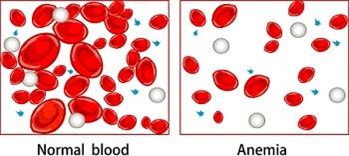
nurse is caring for an adult client who has chronic anaemia and is scheduled to receive a transfusion of 1 unit of packed RBCs. Which of the following actions should the nurse take?
A. Set the IV infusion pump to administer the blood over 6 hr.
Setting the IV infusion pump to administer the blood over 6 hours is not the recommended rate for administering packed RBCs. Blood transfusions are typically given more rapidly, usually within 2 to 4 hours. The specific rate may vary depending on the client's condition and the provider's order.
B. Administer the blood via a 21-gauge IV needle.
Administering the blood via a 21-gauge IV needle is not typically related to the administration of the packed RBCs. The appropriate gauge of the IV needle for blood transfusions depends on the client's condition and the type of transfusion. Larger-gauge needles are often used for blood transfusions to allow for a faster flow rate and prevent haemolysis of the blood cells.
C. Check the client's vital signs from the previous shift prior to the initiation of the transfusion
Checking the client's vital signs from the previous shift prior to the initiation of the transfusion is not sufficient for ensuring the client's safety during the blood transfusion. The nurse should assess the client's current vital signs, including temperature, heart rate, blood pressure, and respiratory rate, before initiating the transfusion. Monitoring vital signs is essential during the transfusion to detect any adverse reactions or changes in the client's condition.
D. Rush the blood administration tubing with 0.9% sodium chloride prior to the transfusion
Rush the blood administration tubing with 0.9% sodium chloride prior to the transfusion is the correct answer. When preparing to administer a blood transfusion to an adult client with chronic anaemia, the nurse should rush the blood administration tubing with 0.9% sodium chloride (normal saline) prior to the transfusion. This process is called priming the tubing. Priming the tubing helps remove any residual air from the tubing and ensures that the blood transfusion is administered smoothly without introducing air into the client's bloodstream. Air embolisms can be a serious complication, and priming the tubing with normal saline helps prevent this risk.
Full Explanation
Choice A reason
Setting the IV infusion pump to administer the blood over 6 hours is not the recommended rate for administering packed RBCs. Blood transfusions are typically given more rapidly, usually within 2 to 4 hours. The specific rate may vary depending on the client's condition and the provider's order.
Choice B reason
Administering the blood via a 21-gauge IV needle is not typically related to the administration of the packed RBCs. The appropriate gauge of the IV needle for blood transfusions depends on the client's condition and the type of transfusion. Larger-gauge needles are often used for blood transfusions to allow for a faster flow rate and prevent haemolysis of the blood cells.
Choice C reason
Checking the client's vital signs from the previous shift prior to the initiation of the transfusion is not sufficient for ensuring the client's safety during the blood transfusion. The nurse should assess the client's current vital signs, including temperature, heart rate, blood pressure, and respiratory rate, before initiating the transfusion. Monitoring vital signs is essential during the transfusion to detect any adverse reactions or changes in the client's condition.
Choice D reason
Rush the blood administration tubing with 0.9% sodium chloride prior to the transfusion is the correct answer. When preparing to administer a blood transfusion to an adult client with chronic anaemia, the nurse should rush the blood administration tubing with 0.9% sodium chloride (normal saline) prior to the transfusion. This process is called priming the tubing.
Priming the tubing helps remove any residual air from the tubing and ensures that the blood transfusion is administered smoothly without introducing air into the client's bloodstream. Air embolisms can be a serious complication, and priming the tubing with normal saline helps prevent this risk.
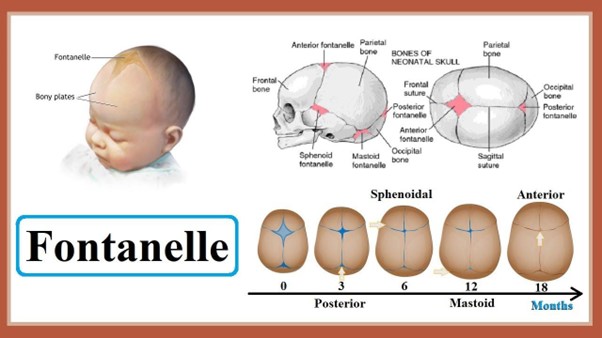
A nurse is assessing the fontanels of an 8-month-old infant. Which of the following findings should the nurse recognize as an expected finding
A. The anterior fontanel is open.
The anterior fontanel is open is the correct answer. An expected finding in an 8-month-old infant is that the anterior fontanel (the soft spot on the top of the baby's head) is open. The fontanelles are spaces between the bones of an infant's skull that allow for the baby's brain to grow and the skull to mould during birth. The anterior fontanel typically remains open until the baby is around 18 to 24 months old, with the closure process starting sometime after 9 months of age. Therefore, at 8 months of age, it is normal for the anterior fontanel to still be open.
B. Both fontanels are the same size.
Both fontanels are the same size is incorrect. Both fontanels are usually not the same size. The anterior fontanel is larger and diamond-shaped, while the posterior fontanel is smaller and triangular.
C. The posterior fontanel is open.
The posterior fontanel is open is incorrect. The posterior fontanel, located at the back of the baby's head, usually closes earlier than the anterior fontanel. It typically closes within the first few months after birth, so it is not expected to be open at 8 months of age.
D. Both fontanels show moulding
Both fontanels show molding is incorrect. Molding refers to the temporary shaping of the baby's head during birth due to the pressure exerted during the passage through the birth canal. By 8 months of age, the molding typically resolves, and the baby's head should have a more rounded appearance.
Full Explanation
Choice A reason
The anterior fontanel is open is the correct answer. An expected finding in an 8-month-old infant is that the anterior fontanel (the soft spot on the top of the baby's head) is open. The fontanelles are spaces between the bones of an infant's skull that allow for the baby's brain to grow and the skull to mould during birth.
The anterior fontanel typically remains open until the baby is around 18 to 24 months old, with the closure process starting sometime after 9 months of age. Therefore, at 8 months of age, it is normal for the anterior fontanel to still be open.
Choice B reason:
Both fontanels are the same size is incorrect. Both fontanels are usually not the same size. The anterior fontanel is larger and diamond-shaped, while the posterior fontanel is smaller and triangular.
Choice C reason:
The posterior fontanel is open is incorrect. The posterior fontanel, located at the back of the baby's head, usually closes earlier than the anterior fontanel. It typically closes within the first few months after birth, so it is not expected to be open at 8 months of age.
Choice D reason
Both fontanels show molding is incorrect. Molding refers to the temporary shaping of the baby's head during birth due to the pressure exerted during the passage through the birth canal. By 8 months of age, the molding typically resolves, and the baby's head should have a more rounded appearance.