
Nursing practice questions with comprehensive rationales
NurseDive Free Nursing Practice Question
A nurse is planning to teach a client about a high-potassium diet. Which of the following foods should the nurse instruct the client to eat? (Select all that apply.).
A. Sweet Potatoes.
Sweet potatoes are an excellent source of potassium. One medium sweet potato contains about 542 mg of potassium, making it a great option for a high-potassium diet.
B. Bananas.
Bananas are well-known for their high potassium content. A medium banana provides approximately 451 mg of potassium, which is beneficial for maintaining proper muscle and nerve function.
C. Grapes.
Grapes are not particularly high in potassium compared to other fruits. They contain some potassium, but not enough to be considered a significant source for a high-potassium diet.
D. Watermelon.
Watermelon is a good source of potassium. Two wedges of watermelon contain about 640 mg of potassium, making it a suitable choice for increasing potassium intake.
This question is an excerpt from Nurse Dive's nursing test bank - ATI custom Fluid and Electrolyte Exam Summer 2023 Proctored Exam. Take the full exam now
Full Explanation
The correct answer is choices A, B, and D. Here are the rationales for each choice:
Choice A rationale:
Sweet potatoes are an excellent source of potassium. One medium sweet potato contains about 542 mg of potassium, making it a great option for a high-potassium diet.
Choice B rationale:
Bananas are well-known for their high potassium content. A medium banana provides approximately 451 mg of potassium, which is beneficial for maintaining proper muscle and nerve function.
Choice C rationale:
Grapes are not particularly high in potassium compared to other fruits. They contain some potassium, but not enough to be considered a significant source for a high-potassium diet.
Choice D rationale:
Watermelon is a good source of potassium. Two wedges of watermelon contain about 640 mg of potassium, making it a suitable choice for increasing potassium intake.
Similar Questions
A nurse is caring for a female client in the emergency department who reports shortness of breath and pain in the lung area. She states that she started taking birth control pills 3 weeks ago and that she smokes. Her heart rate is 110/min, respiratory rate 40/min, and blood pressure 140/80 mm Hg. Her arterial blood gases are pH 7.50, PaCO2 29 mm Hg, PaO2 60 mm Hg, HCO3 20 mEq/L, and SaO2 86%. Which of the following is the priority nursing intervention?
A. Prepare to administer a sedative.
Administering a sedative is not appropriate as the priority intervention. Sedatives can depress respiratory function, which is already compromised in this patient.
B. Prepare for mechanical ventilation.
Preparing for mechanical ventilation might be necessary if the patient’s condition worsens, but it is not the immediate priority. The priority is to identify the underlying cause of the symptoms.
C. Massage the calf area for tenderness.
Massaging the calf area for tenderness is not relevant in this context. While calf tenderness can be a sign of deep vein thrombosis (DVT), which can lead to pulmonary embolism, the immediate priority is to assess for pulmonary embolism directly.
D. Assess for indications of pulmonary embolism.
Assessing for indications of pulmonary embolism is the priority because the patient’s symptoms (shortness of breath, chest pain, recent use of birth control pills, smoking history, and abnormal ABG values) strongly suggest a pulmonary embolism. Early identification and treatment are crucial to prevent further complications.
E. None
None
F. None
None
Full Explanation
The correct answer is d. Assess for indications of pulmonary embolism.
Choice A rationale:
Administering a sedative is not appropriate as the priority intervention. Sedatives can depress respiratory function, which is already compromised in this patient.
Choice B rationale:
Preparing for mechanical ventilation might be necessary if the patient’s condition worsens, but it is not the immediate priority. The priority is to identify the underlying cause of the symptoms.
Choice C rationale:
Massaging the calf area for tenderness is not relevant in this context. While calf tenderness can be a sign of deep vein thrombosis (DVT), which can lead to pulmonary embolism, the immediate priority is to assess for pulmonary embolism directly.
Choice D rationale:
Assessing for indications of pulmonary embolism is the priority because the patient’s symptoms (shortness of breath, chest pain, recent use of birth control pills, smoking history, and abnormal ABG values) strongly suggest a pulmonary embolism. Early identification and treatment are crucial to prevent further complications.
A nurse is reviewing the laboratory results of a client who has fluid volume deficit. The nurse would expect which of the following findings?
A. Urine specific gravity 1.035.
Fluid volume deficit reduces renal perfusion and stimulates antidiuretic hormone and aldosterone, promoting water reabsorption. The kidneys conserve free water, producing concentrated urine with higher solute content, which raises urine specific gravity. A value like 1.035 signifies significantly concentrated urine and aligns with dehydration physiology. This change is often an early, sensitive indicator because the renal concentrating mechanism responds rapidly to intravascular volume loss, sometimes preceding broader serum chemistry shifts.
B. BUN 19 mg/dL.
A BUN (blood urea nitrogen) level of 19 mg/dL can be a normal value. It is within the reference range (usually around 7-20 mg/dL) and does not provide specific information about fluid volume deficit.
C. Hematocrit 44.9%.
A hematocrit of 44.9% can also be within the normal range for some individuals, and while it can be elevated in cases of fluid volume deficit, it is not as sensitive as other parameters for detecting this condition.
D. Sodium 155 mEq/L.
Hypernatremia (e.g., sodium 155 mEq/L) can occur in hypertonic dehydration when free water loss exceeds sodium loss, increasing extracellular osmolality. Causes include insensible losses, osmotic diuresis, or diabetes insipidus, and inadequate water intake. However, many hypovolemic states are isotonic (e.g., balanced gastrointestinal losses or hemorrhage), leaving serum sodium near normal. Serum sodium also reflects thirst and access to water, so it is not uniformly abnormal across fluid volume deficit etiologies. While possible, marked hypernatremia is not the most consistent or early hallmark of hypovolemia. A reliably elevated urine specific gravity better reflects the kidney’s immediate response to volume depletion.
Full Explanation
Sodium 155 mEq/L. Choice A rationale:
A urine specific gravity of 1.035 indicates concentrated urine and is consistent with fluid volume deficit. However, it is not the most specific finding for this condition.
Choice B rationale:
A BUN (blood urea nitrogen) level of 19 mg/dL can be a normal value. It is within the reference range (usually around 7-20 mg/dL) and does not provide specific information about fluid volume deficit.
Choice C rationale:
A hematocrit of 44.9% can also be within the normal range for some individuals, and while it can be elevated in cases of fluid volume deficit, it is not as sensitive as other parameters for detecting this condition.
Choice D rationale:
This is the correct answer because a sodium level of 155 mEq/L is elevated and indicates hypernatremia, which is associated with fluid volume deficit. Hypernatremia occurs when there is a relative lack of water in relation to the sodium concentration in the blood, and it can lead to dehydration
A patient is admitted with hypernatremia caused by being stranded on a boat in the Atlantic Ocean for five days without a fresh water source. What is this patient at risk for developing?
A. Stress fractures.
Stress fractures are not directly related to hypernatremia. Hypernatremia is an electrolyte imbalance, and its main effects are related to cellular dehydration and neurological symptoms rather than bone fractures.
B. Cerebral bleeding.
This is the correct answer because hypernatremia can lead to severe dehydration and cause neurological complications, including cerebral bleeding. The brain cells can shrink due to water loss, causing blood vessels to rupture, leading to bleeding in the brain.
C. Atrial dysrhythmias.
Atrial dysrhythmias are not directly associated with hypernatremia. Hypernatremia primarily affects the central nervous system and can lead to neurological symptoms rather than cardiac dysrhythmias.
D. Pulmonary edema.
Pulmonary edema is not a likely consequence of hypernatremia. Pulmonary edema is associated with fluid volume excess, not fluid volume deficit, which is characteristic of hypernatremia.
Full Explanation
Cerebral bleeding. Choice A rationale:
Stress fractures are not directly related to hypernatremia. Hypernatremia is an electrolyte imbalance, and its main effects are related to cellular dehydration and neurological symptoms rather than bone fractures.
Choice B rationale:
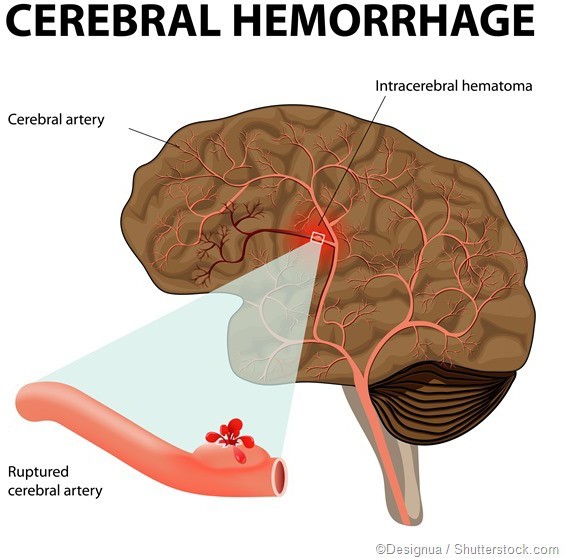
This is the correct answer because hypernatremia can lead to severe dehydration and cause neurological complications, including cerebral bleeding. The brain cells can shrink due to water loss, causing blood vessels to rupture, leading to bleeding in the brain.
Choice C rationale:
Atrial dysrhythmias are not directly associated with hypernatremia. Hypernatremia primarily affects the central nervous system and can lead to neurological symptoms rather than cardiac dysrhythmias.
Choice D rationale:
Pulmonary edema is not a likely consequence of hypernatremia. Pulmonary edema is associated with fluid volume excess, not fluid volume deficit, which is characteristic of hypernatremia.