
Nursing practice questions with comprehensive rationales
NurseDive Free Nursing Practice Question
A nurse is preparing a room for a client who has a tracheostomy tube. Which of following supplies should the nurse place in the room?
A. Povidone-iodine.
Choice A is wrong because povidone-iodine is an antiseptic solution that is not routinely used for tracheostomy care. It can cause skin irritation and damage to the mucous membranes.
B. Obturator.
An obturator is a device that is inserted into the tracheostomy tube to guide it through the stoma and prevent tissue damage. It should be removed after the tube is inserted and kept near the bedside in case of accidental decannulation.
C. Irrigation set.
Choice C is wrong because an irrigation set is not needed for a tracheostomy tube. Irrigation can introduce bacteria and increase the risk of infection. It can also cause coughing and bleeding.
D. Hemostats.
Choice D is wrong because hemostats are not used for a tracheostomy tube. Hemostats are surgical instruments that are used to clamp blood vessels or tissues. They have no role in tracheostomy care.
This question is an excerpt from Nurse Dive's nursing test bank - ATI PN Capstone Proctored Comprehensive Assessment 2020 B. Take the full exam now
Full Explanation
Obturator.
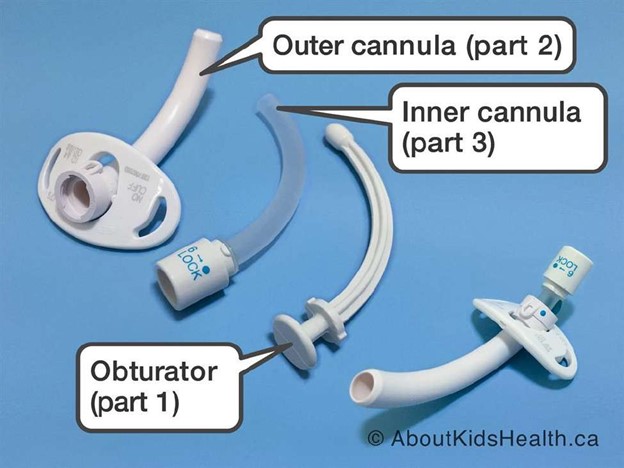
An obturator is a device that is inserted into the tracheostomy tube to guide it through the stoma and prevent tissue damage. It should be removed after the tube is inserted and kept near the bedside in case of accidental decannulation.
Choice A is wrong because povidone-iodine is an antiseptic solution that is not routinely used for tracheostomy care. It can cause skin irritation and damage to the mucous membranes.
Choice C is wrong because an irrigation set is not needed for a tracheostomy tube.
Irrigation can introduce bacteria and increase the risk of infection. It can also cause coughing and bleeding.
Choice D is wrong because hemostats are not used for a tracheostomy tube.
Hemostats are surgical instruments that are used to clamp blood vessels or tissues. They have no role in tracheostomy care.
Some other supplies that the nurse should place in the room are a trach tube the same size as the current tube and one size smaller, a portable suction machine with battery backup, and tubing that connects to the suction machine. Other supplies may include saline solution, syringes, gauze squares, gloves, a trachea tube brush, a waterproof drape, non-woven sponges, pipe cleaners, cotton tipped applicators, a T-drain sponge, twill tape, a trach holder, a speaking valve, a stoma cover, and a nebulizer.
Similar Questions
A nurse is reinforcing teaching with a client who has a newly diagnosed latex allergy.
Which of the following foods should the nurse instruct the client to avoid?
A. Wheat.
Choice A is wrong because wheat is not a latex cross-reactive food.
B. Strawberries.
Choice B is wrong because strawberries are a low or undetermined cross- reactive food.
C. Peanuts.
Choice C is wrong because peanuts are a low or undetermined cross-reactive food.
D. Bananas.
The nurse should instruct the client to avoid bananas because they are one of the foods that can cause a cross-reaction with latex allergy. This means that people who are allergic to latex may also have an allergic reaction to bananas because they contain similar proteins.
Full Explanation
The nurse should instruct the client to avoid bananas because they are one of the foods that can cause a cross-reaction with latex allergy. This means that people who are allergic to latex may also have an allergic reaction to bananas because they contain similar proteins.
Choice A is wrong because wheat is not a latex cross-reactive food.
Choice B is wrong because strawberries are a low or undetermined cross- reactive food.
Choice C is wrong because peanuts are a low or undetermined cross-reactive food.
Some other foods that the nurse should instruct the client to avoid are avocado, kiwi, chestnut, papaya, and potato. These foods have a high or moderate association with latex cross-reactions. The client should also be careful with other fruits and vegetables that may contain similar proteins to latex.
A nurse is reviewing the laboratory results of a client who has nephrotic syndrome.
Which of the following results should the nurse expect?
A. Proteinuria.
Proteinuria is the presence of excess protein in the urine, which is a hallmark of nephrotic syndrome. Nephrotic syndrome is a kidney disorder that causes increased permeability of the glomerular basement membrane, leading to loss of protein and other substances in the urine.
B. Hypolipidemia.
Choice B is wrong because hypolipidemia is a low level of lipids in the blood, which is not expected in nephrotic syndrome. On the contrary, nephrotic syndrome causes hyperlipidemia, which is a high level of lipids in the blood, due to increased synthesis and decreased clearance of lipoproteins.
C. Hyperalbuminemia.
Choice C is wrong because hyperalbuminemia is a high level of albumin in the blood, which is not expected in nephrotic syndrome. On the contrary, nephrotic syndrome causes hypoalbuminemia, which is a low level of albumin in the blood, due to loss of albumin in the urine and decreased synthesis by the liver.
D. Increased hemoglobin.
Choice D is wrong because increased hemoglobin is not expected in nephrotic syndrome. On the contrary, nephrotic syndrome can cause anemia, which is a low level of hemoglobin in the blood, due to loss of iron and erythropoietin in the urine and decreased production of red blood cells by the bone marrow.
Full Explanation
Proteinuria is the presence of excess protein in the urine, which is a hallmark of nephrotic syndrome. Nephrotic syndrome is a kidney disorder that causes increased permeability of the glomerular basement membrane, leading to loss of protein and other substances in the urine.
Choice B is wrong because hypolipidemia is a low level of lipids in the blood, which is not expected in nephrotic syndrome. On the contrary, nephrotic syndrome causes hyperlipidemia, which is a high level of lipids in the blood, due to increased synthesis and decreased clearance of lipoproteins.
Choice C is wrong because hyperalbuminemia is a high level of albumin in the blood, which is not expected in nephrotic syndrome. On the contrary, nephrotic syndrome causes hypoalbuminemia, which is a low level of albumin in the blood, due to loss of albumin in the urine and decreased synthesis by the liver.
Choice D is wrong because increased hemoglobin is not expected in nephrotic syndrome. On the contrary, nephrotic syndrome can cause anemia, which is a low level of hemoglobin in the blood, due to loss of iron and erythropoietin in the urine and decreased production of red blood cells by the bone marrow.
Normal ranges for proteinuria are less than 150 mg per day or less than 10 mg per deciliter on a random urine sample. Normal ranges for serum lipids are total cholesterol less than 200 mg per deciliter, LDL cholesterol less than 100 mg per deciliter, HDL cholesterol more than 40 mg per deciliter for men and more than 50 mg per deciliter for women, and triglycerides less than 150 mg per
deciliter. Normal ranges for serum albumin are 3.5 to 5.0 grams per deciliter.
A nurse is reviewing a client’s laboratory results prior to administering the client’s medications. The nurse notes that the client’s lithium level is 2.0 mEq/L.
Which of the following findings should the nurse expect?
A. Muscle irritability.
. A client with a lithium level of
B. Constipation.
Choice B is wrong because constipation is not a sign of lithium toxicity, but rather a possible side effect of lithium therapy at lower doses.
C. Hypoglycemia.
Choice C is wrong because hypoglycemia is not a sign of lithium toxicity, but rather a possible complication of diabetes or other conditions that affect blood sugar levels.
D. Increased BP.
Choice D is wrong because increased blood pressure is not a sign of lithium toxicity, but rather a possible risk factor for cardiovascular disease or other conditions that affect blood vessels.
Full Explanation
Muscle irritability. A client with a lithium level of
2.0 mEq/L has severe lithium toxicity, which can cause muscle irritability, tremors, seizures, and other neurological symptoms. The normal therapeutic range for lithium is 0.8-1.2 mEq/L.
Choice B is wrong because constipation is not a sign of lithium toxicity, but rather a possible side effect of lithium therapy at lower doses.
Choice C is wrong because hypoglycemia is not a sign of lithium toxicity, but rather a possible complication of diabetes or other conditions that affect blood sugar levels.
Choice D is wrong because increased blood pressure is not a sign of lithium toxicity, but rather a possible risk factor for cardiovascular disease or other conditions that affect blood vessels.