
Nursing practice questions with comprehensive rationales
NurseDive Free Nursing Practice Question
A nurse is preparing to administer amoxicillin 250 mg PO.
Available is amoxicillin oral suspension 125 mg/5 mL.
How many mL should the nurse administer? (Round the answer to the nearest whole number.
Use a leading zero if it applies.
Do not use a trailing zero.).
A. 2 mL.
Choice A is not the best answer because administering 2 mL of amoxicillin oral suspension 125 mg/5 mL would only give the client a total dose of 50 mg, which is not enough.
B. 5 mL.
Choice B is not the best answer because administering 5 mL of amoxicillin oral suspension 125 mg/5 mL would only give the client a total dose of 125 mg, which is not enough.
C. 8 mL.
Choice C is not the best answer because administering 8 mL of amoxicillin oral suspension 125 mg/5 mL would give the client a total dose of 200 mg, which is not enough.
D. 10 mL.
The nurse should administer 10 mL of amoxicillin oral suspension 125 mg/5 mL to give the client a total dose of 250 mg.
This question is an excerpt from Nurse Dive's nursing test bank - ATI Pharmacology Endocrine and Hematology Proctored Exam. Take the full exam now
Full Explanation
The nurse should administer 10 mL of amoxicillin oral suspension 125 mg/5 mL to give the client a total dose of 250 mg.
Choice A is not the best answer because administering 2 mL of amoxicillin oral suspension 125 mg/5 mL would only give the client a total dose of 50 mg, which is not enough.
Choice B is not the best answer because administering 5 mL of amoxicillin oral suspension 125 mg/5 mL would only give the client a total dose of 125 mg, which is not enough.
Choice C is not the best answer because administering 8 mL of amoxicillin oral suspension 125 mg/5 mL would give the client a total dose of 200 mg, which is not enough.
Similar Questions
A nurse is preparing to administer Lactated Ringer's solution IV to infuse at 120 mL/hr for a client who has a respiratory disorder. The drop factor in the manual IV tubing is 60 gtt/mL. The nurse should set the flow rate to deliver how many gtts/min?
A. 20 gtt/min.
Choice A is not the best answer because setting the flow rate to deliver 20 gtts/min would not provide the desired infusion rate of 120 mL/hr.
B. 30 gtt/min.
Choice B is not the best answer because setting the flow rate to deliver 30 gtts/min would not provide the desired infusion rate of 120 mL/hr.
C. 120 gtt/min.
The nurse should set the flow rate to deliver 40 gtts/min. This can be calculated by multiplying the infusion rate (120 mL/hr) by the drop factor (60 gtt/mL) and then dividing by the number of minutes in an hour (60 min/hr): (120 mL/hr) * (60 gtt/mL) / (60 min/hr) = 120 gtt/min
D. 50 gtt/min.
Choice D is not the best answer because setting the flow rate to deliver 50 gtts/min would provide a higher infusion rate than desired.
Full Explanation
The nurse should set the flow rate to deliver 40 gtts/min.
This can be calculated by multiplying the infusion rate (120 mL/hr) by the drop factor (60 gtt/mL) and then dividing by the number of minutes in an hour (60 min/hr): (120 mL/hr) * (60 gtt/mL) / (60 min/hr) = 120 gtt/min
Choice A is not the best answer because setting the flow rate to deliver 20 gtts/min would not provide the desired infusion rate of 120 mL/hr.
Choice B is not the best answer because setting the flow rate to deliver 30 gtts/min would not provide the desired infusion rate of 120 mL/hr.
Choice D is not the best answer because setting the flow rate to deliver 50 gtts/min would provide a higher infusion rate than desired.
The physician orders vancomycin hydrochloride 2 g/day by mouth in 4 divided doses.
The pharmacy fills the client's prescription with 500 mg vancomycin hydrochloride capsules.
The nurse should instruct the client to take______capsule(s) per dose.
Full Explanation
The physician has ordered a total of 2 g/day of vancomycin hydrochloride to be taken in 4 divided doses.
This means that each dose should be 2 g/day ÷ 4 = 0.5 g/dose.
Since the pharmacy has filled the prescription with 500 mg capsules, and 500 mg is equivalent to 0.5 g, the client should take 1 capsule per dose.
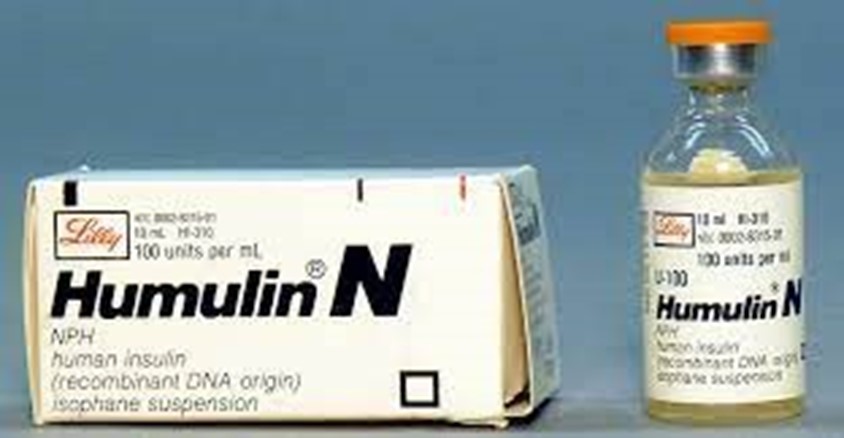
A nurse is preparing to administer a client's daily dose of NPH insulin at 0730.
The nurse should expect this type of insulin to peak within which of the following timeframes after administration?
A. 30 minutes to 3 hours.
Choice A: 30 minutes to 3 hours is not the answer because NPH insulin usually starts to work about 1 to 3 hours after injection and peaks 4 to 12 hours later12.
B. 2 to 6 hours.
Choice B: 2 to 6 hours is not the answer because NPH insulin usually starts to work about 1 to 3 hours after injection and peaks 4 to 12 hours later12.
C. 4 to 5 hours.
Choice C: 4 to 5 hours is not the answer because NPH insulin usually starts to work about 1 to 3 hours after injection and peaks 4 to 12 hours later12.
D. 6 to 10 hours.
NPH insulin is an intermediate-acting insulin that usually starts to work about 1 to 3 hours after injection and peaks 4 to 12 hours later12. Peak time is when insulin has its strongest effect on lowering blood glucose1.
Full Explanation
NPH insulin is an intermediate-acting insulin that usually starts to work about 1 to 3 hours after injection and peaks 4 to 12 hours later12.
Peak time is when insulin has its strongest effect on lowering blood glucose1.
Choice A: 30 minutes to 3 hours is not the answer because NPH insulin usually starts to work about 1 to 3 hours after injection and peaks 4 to 12 hours later12.
Choice B: 2 to 6 hours is not the answer because NPH insulin usually starts to work about 1 to 3 hours after injection and peaks 4 to 12 hours later12.
Choice C: 4 to 5 hours is not the answer because NPH insulin usually starts to work about 1 to 3 hours after injection and peaks 4 to 12 hours later12.