
Nursing practice questions with comprehensive rationales
NurseDive Free Nursing Practice Question
A nurse is preparing to administer antibiotic X over 20 min. Available is antibiotic X in 50 mL of 0.9% sodium chloride (NSS). The drop factor of the manual IV tubing is 20 gtt/mL. The nurse should set the manual IV infusion to deliver how many gtt/min?
(Round the answer to the nearest whole number. Use a leading zero if it applies. Do not use a trailing zero.)
This question is an excerpt from Nurse Dive's nursing test bank - Ati Maternal Newborn Proctored Exam 3 Reno 2 2020. Take the full exam now
Full Explanation
To calculate the infusion rate for antibiotic X, the nurse needs to use the formula: gtt/min = (Volume x Drop factor) / Time
Plugging in the values from the question, we get:
gtt/min = (50 mL x 20 gtt/mL) / 20 min Simplifying, we get:
gtt/min = 1000 gtt / 20 min Dividing, we get:
gtt/min = 50 gtt/min
Therefore, the nurse should set the manual IV infusion to deliver 50 gtt/min.
Similar Questions
A nurse on the labor and delivery unit is caring for a newborn immediately following birth. Which of the following actions by the nurse reduces evaporative heat loss by the newborn?
A. Drying the newborn's skin thoroughly
Drying the newborn's skin thoroughly helps reduce evaporative heat loss by removing wetness and promoting warmth.
B. Preventing air drafts
Preventing air drafts is important to reduce convective heat loss.
C. Placing the newborn on a warm surface
Placing the newborn on a warm surface helps prevent conductive heat loss.
D. Maintaining ambient room temperature at 24° C (75" F)
Maintaining ambient room temperature is important but does not directly address evaporative heat loss.
Full Explanation
A. Drying the newborn's skin thoroughly helps reduce evaporative heat loss by removing wetness and promoting warmth.
B. Preventing air drafts is important to reduce convective heat loss.
C. Placing the newborn on a warm surface helps prevent conductive heat loss.
D. Maintaining ambient room temperature is important but does not directly address evaporative heat loss.
A nurse in the newborn nursery is caring for a group of newborns. Which of the following newborns requires immediate intervention?
A. A newborn who is 18 hr post-delivery and has acrocyanosis
Acrocyanosis is a normal finding in newborns and does not require immediate intervention.
B. A newborn who is 24-hr post-delivery and has not passed meconium
Not passing meconium within the first 24 hours is not uncommon and may be normal.
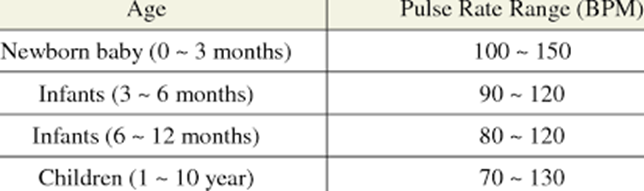
C. A newborn who is 24 hr post-delivery and has persistent tachycardia with a heart rate of 180 bpm
Persistent tachycardia in a newborn, especially with a heart rate of 180 bpm, requires immediate intervention as it may indicate a cardiac or other medical issue.
D. A newborn who is 24 hr post-delivery and has not voided
Not voiding within the first 24 hours may be normal, but it should be monitored.
Full Explanation
A. Acrocyanosis is a normal finding in newborns and does not require immediate intervention.
B. Not passing meconium within the first 24 hours is not uncommon and may be normal.
C. Persistent tachycardia in a newborn, especially with a heart rate of 180 bpm, requires immediate intervention as it may indicate a cardiac or other medical issue.
D. Not voiding within the first 24 hours may be normal, but it should be monitored.
A nurse is teaching a new mother the best method to store milk and use it later for feeding. She explains that the breast milk should never be thawed or heated in a microwave oven because of the following reasons. Please select all that apply
A. Microwaving decreases vitamin C content
Microwaving breast milk decreases vitamin C content.
B. Microwaving renders the milk tasteless
Microwaving does not render the milk tasteless, but it may alter the taste slightly.
C. Microwaving does not heat the milk evenly
Microwaving does not heat breast milk evenly, creating hot spots that can burn the baby's mouth.
D. Microwaving decreases antiinfective properties
Microwaving can decrease the antiinfective properties of breast milk.
E. Microwaving decreases the iron content in the milk
Microwaving breast milk does not decrease iron content.
Full Explanation
A. Microwaving breast milk decreases vitamin C content.
B. Microwaving does not render the milk tasteless, but it may alter the taste slightly.
C. Microwaving does not heat breast milk evenly, creating hot spots that can burn the baby's mouth.
D. Microwaving can decrease the antiinfective properties of breast milk.
E. Microwaving breast milk does not decrease iron content.