
Nursing practice questions with comprehensive rationales
NurseDive Free Nursing Practice Question
A nurse is preparing to administer dextrose 5% in water IV to infuse at 100 mL/60 min.
The drop factor on the manual IV tubing is 60 gtt/mL.
The nurse should set the IV flow rate to deliver how many gtt/min. (Round to the nearest whole number.).
This question is an excerpt from Nurse Dive's nursing test bank - ATI Pharmacology Endocrine and Hematology Proctored Exam. Take the full exam now
Full Explanation
The nurse should set the IV flow rate to deliver 100 gtt/min.
To calculate the flow rate in gtt/min, you can use the formula: (Volume to be infused (mL) x Drop factor (gtt/mL)) ÷ Time (min) = Flow rate (gtt/min).
Plugging in the values from the question: (100 mL x 60 gtt/mL) ÷ 60 min = 100 gtt/min.
Similar Questions
Which medication should the nurse have available to reverse heparin's effects for a client who has thrombophlebitis and is receiving a continuous heparin infusion?
A. Protamine sulfate.
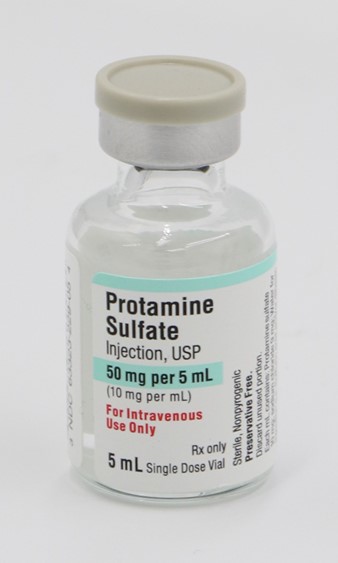
Protamine sulfate is a medication that can be used to reverse the anticoagulant effects of heparin1. It is a polycationic protein drug obtained from the sperm of fish and is used to reverse the anticoagulant effect of unfractionated heparin (UFH)2.
B. Deferoxamine.
Choice B, Deferoxamine, is not the correct answer because it is a medication used to treat iron overload, not to reverse heparin’s effects.
C. Sodium polystyrene sulfonate.
Choice C, Sodium polystyrene sulfonate, is not the correct answer because it is a medication used to treat high levels of potassium in the blood, not to reverse heparin’s effects.
D. Acetylcysteine.
Choice D, Acetylcysteine, is not the correct answer because it is a medication used to treat acetaminophen overdose and to loosen thick mucus in individuals with cystic fibrosis or chronic obstructive pulmonary disease.
Full Explanation
Protamine sulfate is a medication that can be used to reverse the anticoagulant effects of heparin1.
It is a polycationic protein drug obtained from the sperm of fish and is used to reverse the anticoagulant effect of unfractionated heparin (UFH)2.
Choice B, Deferoxamine, is not the correct answer because it is a medication used to treat iron overload, not to reverse heparin’s effects.
Choice C, Sodium polystyrene sulfonate, is not the correct answer because it is a medication used to treat high levels of potassium in the blood, not to reverse heparin’s effects.
Choice D, Acetylcysteine, is not the correct answer because it is a medication used to treat acetaminophen overdose and to loosen thick mucus in individuals with cystic fibrosis or chronic obstructive pulmonary disease.
A nurse is caring for a client who has hypertension and is to start taking Atenolol. The nurse should instruct the client to monitor which of the following findings is an adverse effect of this medication.
A. Constipation.
Choice A, Constipation, is not the correct answer because it is not a commonly reported adverse effect of atenolol.
B. Postural hypotension.
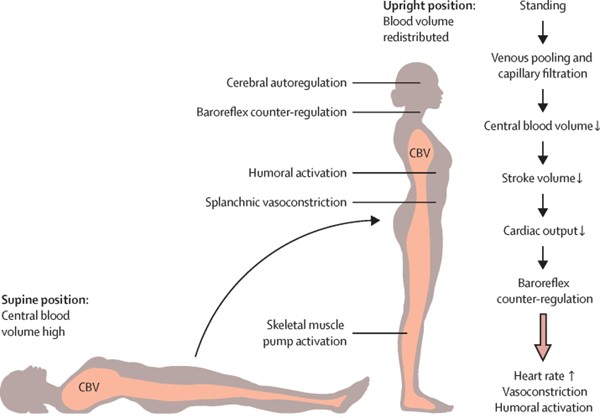
Postural hypotension is a potential adverse effect of atenolol. It can cause dizziness, faintness, or lightheadedness when getting up from a lying or sitting position suddenly12.
C. Dermatitis.
Choice C, Dermatitis, is not the correct answer because it is not a commonly reported adverse effect of atenolol.
D. Cardiac arrest.
Choice D, Cardiac arrest, is not the correct answer because it is not a commonly reported adverse effect of atenolol.
None
Full Explanation
Postural hypotension is a potential adverse effect of atenolol.
It can cause dizziness, faintness, or lightheadedness when getting up from a lying or sitting position suddenly12.
Choice A, Constipation, is not the correct answer because it is not a commonly reported adverse effect of atenolol.
Choice C, Dermatitis, is not the correct answer because it is not a commonly reported adverse effect of atenolol.
Choice D, Cardiac arrest, is not the correct answer because it is not a commonly reported adverse effect of atenolol.
A nurse is preparing to administer lorazepam 2 mg PO.
Available in lorazepam 1 mg tablets.
How many tablets should the nurse administer?
A. 1.
Choice A, 1 tablet, is not the correct answer because it would only provide a total dose of 1 mg.
B. 2.
The nurse should administer 2 tablets of lorazepam 1 mg to give a total dose of 2 mg. This is calculated by dividing the desired dose (2 mg) by the available dose (1 mg/tablet) to get the number of tablets needed: 2 mg / (1 mg/tablet) = 2 tablets.
C. 3.
Choice C, 3 tablets, is not the correct answer because it would provide a total dose of 3 mg.
D. 4.
Choice D, 4 tablets, is not the correct answer because it would provide a total dose of 4 mg.
Full Explanation
The nurse should administer 2 tablets of lorazepam 1 mg to give a total dose of 2 mg.
This is calculated by dividing the desired dose (2 mg) by the available dose (1 mg/tablet) to get the number of tablets needed: 2 mg / (1 mg/tablet) = 2 tablets.
Choice A, 1 tablet, is not the correct answer because it would only provide a total dose of 1 mg.
Choice C, 3 tablets, is not the correct answer because it would provide a total dose of 3 mg.
Choice D, 4 tablets, is not the correct answer because it would provide a total dose of 4 mg.