
Nursing practice questions with comprehensive rationales
NurseDive Free Nursing Practice Question
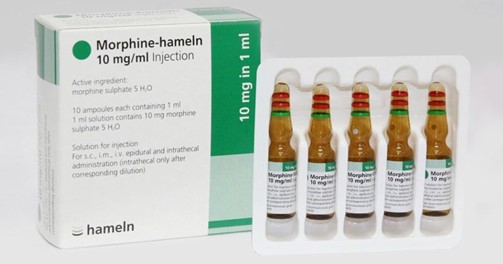
A nurse is preparing to administer morphine 0.2 mg/kg IM to a client who weighs 99 lb. Available is morphine injection 10 mg/mL. How many mL should the nurse administer?
(Round the answer to the nearest tenth. Use a leading zero if it applies. Do not use a trailing zero.)
This question is an excerpt from Nurse Dive's nursing test bank - Ati Dosage Calculations RN Fundamentals Proctored Exam. Take the full exam now
Full Explanation
First, you need to convert the client's weight from pounds to kilograms. There are approximately 2.2 pounds in 1 kilogram, so 99 lb / 2.2 = 45 kg. The dose of morphine is 0.2 mg/kg, so for a client who weighs 45 kg, the dose would be 0.2 mg/kg * 45 kg = 9 mg. To calculate the number of mL the nurse should administer, you need to divide the dose of morphine (9 mg) by the concentration of the morphine injection (10 mg/mL). This gives you 9 mg / (10 mg/mL) = 0.9 mL. When rounded to the nearest tenth, this remains
0.9 mL. So, the nurse should administer 0.9 mL of morphine injection.
Similar Questions
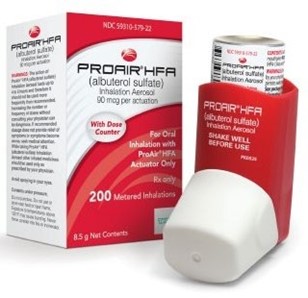
A nurse is talking with the parent of a child who has asthma and a new prescription for albuterol inhalation aerosol 8.5 g, inhale 1 to 2 puffs orally every 4 to 6 hr as needed for asthma. The nurse interprets this medication as which of the following types of prescription?
A. Now
B. PRN
The prescription for albuterol inhalation aerosol 8.5 g, inhale 1 to 2 puffs orally every 4 to 6 hr as needed for asthma is a PRN prescription. PRN stands for "pro re nata," which means "as needed" in Latin. This type of prescription allows the patient to take the medication as needed for a specific condition or symptom, rather than on a regular schedule.
C. Single
D. Standard
Full Explanation
The prescription for albuterol inhalation aerosol 8.5 g, inhale 1 to 2 puffs orally every 4 to 6 hr as needed for asthma is a PRN prescription. PRN stands for "pro re nata," which means "as needed" in Latin. This type of prescription allows the patient to take the medication as needed for a specific condition or symptom, rather than on a regular schedule.
A nurse is reviewing the medication list of a client. Which of the following medication instructions should the nurse identify as being prescribed using a metric unit?
A. Take 1 tsp four times daily
B. Take 0.5 oz 30 min before meals and at bedtime.
C. Take 2 drops four times daily
D. Take 15 mL 1 hr after meals and at bedtime
This medication instruction is prescribed using a metric unit because mL (milliliters) is a unit of volume in the metric system. The other medication instructions are prescribed using non-metric units: tsp (teaspoon) and oz (ounce) are units of volume in the US customary system, while drops is a non-standard unit of volume.
Full Explanation
This medication instruction is prescribed using a metric unit because mL (milliliters) is a unit of volume in the metric system. The other medication instructions are prescribed using non-metric units: tsp (teaspoon) and oz (ounce) are units of volume in the US customary system, while drops is a non-standard unit of volume.
A nurse weighed a client who is following a weight-loss plan. The scale shows that the client weighs 91 kg. What is the client's weight in lb? (Round the answer to the nearest whole number. Use a leading zero if it applies. Do not use a trailing zero.)
Full Explanation
To convert the client's weight from kilograms to pounds, you need to multiply the weight in kilograms by the conversion factor of 2.2 lb/kg. So, 91 kg * 2.2 lb/kg = 200.2 lb. When rounded to the nearest whole number, this becomes 200 lb.