Nursing practice questions with comprehensive rationales
NurseDive Free Nursing Practice Question
A nurse is preparing to administer ophthalmic solution to a client. Which of the following actions should the nurse take?
A. Ask the client to look down when instilling the solution.
B. Instil the drops into the superior canthus.
C. Approach the client’s eye from below it.
D. Hold the ophthalmic solution 2 cm (3/4 inch) above the lower conjunctival sac.
When administering ophthalmic drops, the nurse should hold the dropper 2 cm (3/4 inch) above the lower conjunctival sac and instill the prescribed number of drops into the sac. The client should be instructed to look up and away from the dropper while the drops are being instilled.
This question is an excerpt from Nurse Dive's nursing test bank - ATI Custom Pharmacology Proctored Exam 2. Take the full exam now
Full Explanation
When administering ophthalmic drops, the nurse should hold the dropper 2 cm (3/4 inch) above the lower conjunctival sac and instill the prescribed number of drops into the sac. The client should be instructed to look up and away from the dropper while the drops are being instilled.
Similar Questions
A provider prescribes a sublingual medication for a client who has an NG tube in place. Which of the following actions should the nurse take?
A. Administer the crushed medication through the NG tube.
Administering the crushed medication through the NG tube is inappropriate because sublingual medications are designed to be absorbed through the tissues under the tongue, not the gastrointestinal tract. Crushing and administering it through the NG tube would alter its intended absorption and effectiveness.
B. Dissolve the medication in water and give it through the NG tube.
Dissolving the medication in water and giving it through the NG tube is also incorrect for the same reasons as Choice A. Sublingual medications are specifically formulated to be absorbed through the mucous membranes under the tongue, and changing the route of administration can affect the drug’s efficacy.
C. Administer the medication under the client’s tongue.
Administering the medication under the client’s tongue is the correct action. Sublingual medications are designed to be absorbed directly into the bloodstream through the tissues under the tongue, bypassing the digestive system and providing rapid onset of action.
D. Request a prescription for an oral formulation of the medication.
While some medications can be safely switched to oral formulations for NG tube administration, such a change is only necessary when the prescribed route (in this case, sublingual) cannot be used. Without contraindications (e.g., inability to hold the medication under the tongue or mucosal issues), the original sublingual route should be followed.
Full Explanation
The correct answer is choice c. Administer the medication under the client’s tongue.
Choice A rationale:
Administering the crushed medication through the NG tube is inappropriate because sublingual medications are designed to be absorbed through the tissues under the tongue, not the gastrointestinal tract. Crushing and administering it through the NG tube would alter its intended absorption and effectiveness.
Choice B rationale:
Dissolving the medication in water and giving it through the NG tube is also incorrect for the same reasons as Choice A. Sublingual medications are specifically formulated to be absorbed through the mucous membranes under the tongue, and changing the route of administration can affect the drug’s efficacy.
Choice C rationale:
Administering the medication under the client’s tongue is the correct action. Sublingual medications are designed to be absorbed directly into the bloodstream through the tissues under the tongue, bypassing the digestive system and providing rapid onset of action.
Choice D rationale:
While some medications can be safely switched to oral formulations for NG tube administration, such a change is only necessary when the prescribed route (in this case, sublingual) cannot be used. Without contraindications (e.g., inability to hold the medication under the tongue or mucosal issues), the original sublingual route should be followed.
Which medication route provides the most rapid onset of a medication but also poses the greatest risk of adverse effect if administered incorrectly?
A. Subcutaneous (SQ).
B. Intradermal.
C. Intramuscular (IM).
D. Intravenous (IV).
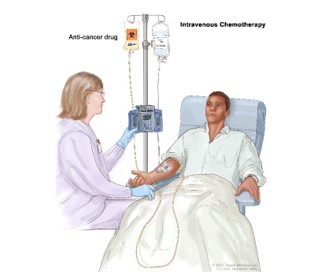
The intravenous route provides the most rapid onset of medication action because the medication is delivered directly into the bloodstream. However, this route also poses the greatest risk of adverse effects if the medication is administered incorrectly or too rapidly because there is no opportunity for the body to metabolize or excrete the medication before it reaches its target organs.
Full Explanation
The intravenous route provides the most rapid onset of medication action because the medication is delivered directly into the bloodstream. However, this route also poses the greatest risk of adverse effects if the medication is administered incorrectly or too rapidly because there is no opportunity for the body to metabolize or excrete the medication before it reaches its target organs.
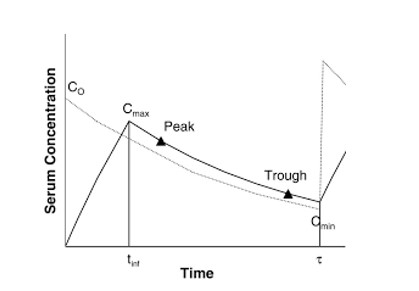
A nurse is caring for a client who has an infection and a prescription for gentamicin Intermittent IV bolus every 8 hr. A peak and trough are required with the next dose. Which of the following actions should the nurse take to obtain an accurate gentamicin serum level?
A. Draw a peak level 90 min prior to administering the medication and a trough level 90 min after the dose.
B. Draw a trough level immediately prior to administering the medication and a peak level 30 min after the
To obtain an accurate gentamicin serum level, the nurse should draw a trough level immediately before administering the next dose of medication and a peak level 30 minutes after the dose has been administered. The trough level measures the lowest concentration of the medication in the blood, while the peak level measures the highest concentration.
C. dose.
D. Draw a trough level at 0900 and a peak level at 2100.
Full Explanation
To obtain an accurate gentamicin serum level, the nurse should draw a trough level immediately before administering the next dose of medication and a peak level 30 minutes after the dose has been administered. The trough level measures the lowest concentration of the medication in the blood, while the peak level measures the highest concentration.