
Nursing practice questions with comprehensive rationales
NurseDive Free Nursing Practice Question
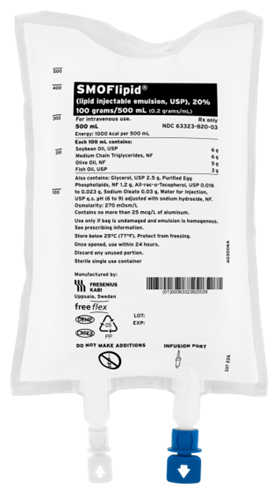
A nurse is preparing to administer total parenteral nutrition (TPN) 1800 mL to infuse over 24 hr. The nurse should set the IV pump to deliver how many mL/hr? (Round the answer to the nearest whole number. Use a leading zero if it applies. Do not use a trailing zero.)
This question is an excerpt from Nurse Dive's nursing test bank - College Proctored Exam 2 perfusion euro pm. Take the full exam now
Full Explanation
To calculate the infusion rate, divide the volume of fluid by the time in hours. In this case, 1800 mL / 24 hr = 75 mL/hr.
Round the answer to the nearest whole number and use a leading zero if it applies.
Do not use a trailing zero because it could be misread as a decimal point. Therefore, the nurse should set the IV pump to deliver 75 mL/hr.
Similar Questions
A nurse is caring for a client who has a deep vein thrombosis and is prescribed heparin by continuous IV infusion at 1,200 units/hr. Available is heparin 25,000 units in 500 mL DSW. The nurse should set the IV pump to deliver how many mL/hr? (Round the answer to the nearest tenth/whole number. Use a leading zero if it applies. Do not use a trailing zero.)
Full Explanation
To calculate the infusion rate, use the formula:
(rate in mL/hr) = (desired dose in units/hr) / (available dose in units/mL)
In this case, the desired dose is 1,200 units/hr and the available dose is 25,000 units / 500 mL = 50 units/mL. Therefore,
(rate in mL/hr) = (1,200 units/hr) / (50 units/mL) = 24 mL/hr
Round the answer to the nearest tenth/whole number and use a leading zero if it applies. Do not use a trailing zero because it could be misread as a decimal point. Therefore, the nurse should set the IV pump to deliver 24 mL/hr.
A nurse is preparing to administer clonazepam 1.5 mg PO in 3 equally divided doses every 8 hr for a client who has seizures. The amount available is clonazepam 0.5 mg tablets. How many tablets should the nurse administer per dose? (Round the answer to the nearest tenth. Use a leading zero if it applies. Do not use a trailing zero.)
Full Explanation
To calculate the number of tablets, divide the total dose by the dose per tablet. In this case, the total dose is 1.5 mg / 3 = 0.5 mg and the dose per tablet is 0.5 mg. Therefore,
(number of tablets) = (0.5 mg) / (0.5 mg) = 1 tablet
Round the answer to the nearest tenth and use a leading zero if it applies. Do not use a trailing zero because it could be misread as a decimal point. Therefore, the nurse should administer 1 tablet per dose.
A nurse is providing discharge teaching to a client who has peripheral arterial disease (PAD). Which of the following instructions should the nurse include in the teaching?
A. Adjust the thermostat so that the environment is warm.
The nurse should instruct the client to adjust the thermostat so that the environment is warm because cold temperatures can cause vasoconstriction and worsen the symptoms of PAD, such as pain, numbness, and poor wound healing. The client should also avoid exposure to cold weather and wear warm clothing.
B. Apply a heating pad on a low setting to help relieve leg pain.
Applying a heating pad on a low setting to help relieve leg pain is wrong because it can cause burns, vasodilation, and increased blood flow to the legs, which can increase the risk of bleeding and edema in PAD.
C. Wear antiembolic stockings during the day.
Wearing anti-embolic stockings during the day is wrong because they can impair arterial circulation and cause ischemia and tissue damage in PAD. Antiembolic stockings are used to prevent venous thromboembolism, not arterial disease.
D. Rest with the legs above heart level.
Resting with the legs above heart level is wrong because it can decrease arterial blood flow to the legs and worsen ischemia and pain in PAD. The client should rest with the legs at or below heart level to promote arterial circulation.
Full Explanation
The nurse should instruct the client to adjust the thermostat so that the environment is warm because cold temperatures can cause vasoconstriction and worsen the symptoms of PAD, such as pain, numbness, and poor wound healing. The client should also avoid exposure to cold weather and wear warm clothing.
- Apply a heating pad on a low setting to help relieve leg pain is wrong because it can cause burns, vasodilation, and increased blood flow to the legs, which can increase the risk of bleeding and edema in PAD.
- Wear antiembolic stockings during the day is wrong because they can impair arterial circulation and cause ischemia and tissue damage in PAD. Antiembolic stockings are used to prevent venous thromboembolism, not arterial disease.
Rest with the legs above heart level is wrong because it can decrease arterial blood flow to the legs and worsen ischemia and pain in PAD. The client should rest with the legs at or below heart level to promote arterial circulation.