
Nursing practice questions with comprehensive rationales
NurseDive Free Nursing Practice Question
A nurse is preparing to give change-of-shift report to the oncoming nurse. Which of the following information should the nurse include?
A. Medical diagnosis.
Choice A is wrong because the client’s input and output for the shift are routine data that can be found in the client’s chart and do not need to be verbally reported.
B. Number of visitors.
Choice B is wrong because the client’s blood pressure from the previous day is not relevant to the current condition of the client and does not reflect any changes or interventions.
C. Routine care.
A bone scan that is scheduled for today. The nurse should include this information in the change-of-shift report because the oncoming nurse might have to modify the client’s care to accommodate leaving the unit.
D. Expected laboratory results.
Choice D is wrong because the medication routine from the medication administration record is also routine data that can be accessed by the oncoming nurse and does not indicate any special needs or concerns.
This question is an excerpt from Nurse Dive's nursing test bank - ATI PN Capstone Proctored Comprehensive Assessment 2020 B. Take the full exam now
Full Explanation
A bone scan that is scheduled for today. The nurse should include this information in the change-of-shift report because the oncoming nurse might have to modify the client’s care to accommodate leaving the unit.
Choice A is wrong because the client’s input and output for the shift are routine data that can be found in the client’s chart and do not need to be verbally reported.
Choice B is wrong because the client’s blood pressure from the previous day is not relevant to the current condition of the client and does not reflect any changes or interventions.
Choice D is wrong because the medication routine from the medication administration record is also routine data that can be accessed by the oncoming nurse and does not indicate any special needs or concerns.
Similar Questions
A nurse is caring for a client who is at 10 weeks of gestation and reports nausea and vomiting on most days.
Which of the following recommendations should the nurse make?
A. Keep your environment well ventilated.
Keep your environment well ventilated. This can help reduce nausea and vomiting by eliminating odors that might trigger them.
B. Eat three large meals each day.
Choice B is wrong because eating three large meals each day can increase nausea and vomiting by overloading the stomach. It is better to eat small, frequent meals and avoid spicy, greasy, or strong-smelling foods.
C. Restrict intake of high-carbohydrate foods.
Choice C is wrong because restricting intake of high-carbohydrate foods can lead to ketosis, which can worsen nausea and vomiting. High-carbohydrate foods can also help settle the stomach and provide energy.
D. Brush your teeth immediately after eating.
Choice D is wrong because brushing your teeth immediately after eating can stimulate the gag reflex and cause nausea and vomiting. It is better to rinse your mouth with water or mouthwash after eating and brush your teeth at least an hour later.
Full Explanation
Keep your environment well ventilated. This can help reduce nausea and vomiting by eliminating odors that might trigger them.
Some additional explanations are:
Choice B is wrong because eating three large meals each day can increase nausea and vomiting by overloading the stomach. It is better to eat small, frequent meals and avoid spicy, greasy, or strong-smelling foods.
Choice C is wrong because restricting intake of high-carbohydrate foods can lead to ketosis, which can worsen nausea and vomiting. High-carbohydrate foods can also help settle the stomach and provide energy.
Choice D is wrong because brushing your teeth immediately after eating can stimulate the gag reflex and cause nausea and vomiting. It is better to rinse your mouth with water or mouthwash after eating and brush your teeth at least an hour later.
Normal ranges for nausea and vomiting in pregnancy are:
- Nausea and vomiting usually start around 6 weeks of gestation and peak around 9 weeks. They usually subside by 16 to 20 weeks, but some women may experience them throughout pregnancy.
- Nausea and vomiting are considered mild if they do not interfere with daily activities or nutrition. They are considered moderate if they cause some difficulty with daily activities or nutrition. They are considered severe if they prevent adequate intake of fluids and nutrients, cause weight loss, dehydration, electrolyte imbalance, or ketonuria.
- Nausea and vomiting that are severe or persist beyond 20 weeks of gestation may indicate a complication such as hyperemesis gravidarum, molar pregnancy, multiple gestation, or infection.
A nurse is preparing a room for a client who has a tracheostomy tube. Which of following supplies should the nurse place in the room?
A. Povidone-iodine.
Choice A is wrong because povidone-iodine is an antiseptic solution that is not routinely used for tracheostomy care. It can cause skin irritation and damage to the mucous membranes.
B. Obturator.
An obturator is a device that is inserted into the tracheostomy tube to guide it through the stoma and prevent tissue damage. It should be removed after the tube is inserted and kept near the bedside in case of accidental decannulation.
C. Irrigation set.
Choice C is wrong because an irrigation set is not needed for a tracheostomy tube. Irrigation can introduce bacteria and increase the risk of infection. It can also cause coughing and bleeding.
D. Hemostats.
Choice D is wrong because hemostats are not used for a tracheostomy tube. Hemostats are surgical instruments that are used to clamp blood vessels or tissues. They have no role in tracheostomy care.
Full Explanation
Obturator.
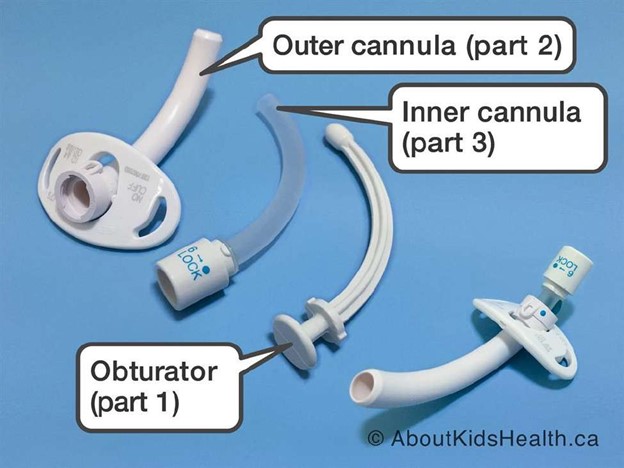
An obturator is a device that is inserted into the tracheostomy tube to guide it through the stoma and prevent tissue damage. It should be removed after the tube is inserted and kept near the bedside in case of accidental decannulation.
Choice A is wrong because povidone-iodine is an antiseptic solution that is not routinely used for tracheostomy care. It can cause skin irritation and damage to the mucous membranes.
Choice C is wrong because an irrigation set is not needed for a tracheostomy tube.
Irrigation can introduce bacteria and increase the risk of infection. It can also cause coughing and bleeding.
Choice D is wrong because hemostats are not used for a tracheostomy tube.
Hemostats are surgical instruments that are used to clamp blood vessels or tissues. They have no role in tracheostomy care.
Some other supplies that the nurse should place in the room are a trach tube the same size as the current tube and one size smaller, a portable suction machine with battery backup, and tubing that connects to the suction machine. Other supplies may include saline solution, syringes, gauze squares, gloves, a trachea tube brush, a waterproof drape, non-woven sponges, pipe cleaners, cotton tipped applicators, a T-drain sponge, twill tape, a trach holder, a speaking valve, a stoma cover, and a nebulizer.
A nurse is reinforcing teaching with a client who has a newly diagnosed latex allergy.
Which of the following foods should the nurse instruct the client to avoid?
A. Wheat.
Choice A is wrong because wheat is not a latex cross-reactive food.
B. Strawberries.
Choice B is wrong because strawberries are a low or undetermined cross- reactive food.
C. Peanuts.
Choice C is wrong because peanuts are a low or undetermined cross-reactive food.
D. Bananas.
The nurse should instruct the client to avoid bananas because they are one of the foods that can cause a cross-reaction with latex allergy. This means that people who are allergic to latex may also have an allergic reaction to bananas because they contain similar proteins.
Full Explanation
The nurse should instruct the client to avoid bananas because they are one of the foods that can cause a cross-reaction with latex allergy. This means that people who are allergic to latex may also have an allergic reaction to bananas because they contain similar proteins.
Choice A is wrong because wheat is not a latex cross-reactive food.
Choice B is wrong because strawberries are a low or undetermined cross- reactive food.
Choice C is wrong because peanuts are a low or undetermined cross-reactive food.
Some other foods that the nurse should instruct the client to avoid are avocado, kiwi, chestnut, papaya, and potato. These foods have a high or moderate association with latex cross-reactions. The client should also be careful with other fruits and vegetables that may contain similar proteins to latex.