Nursing practice questions with comprehensive rationales
NurseDive Free Nursing Practice Question
A nurse is preparing to provide tracheostomy care for a client.
Which of the following actions should the nurse plan to take?
A. Clean the stoma using an inward to outward circular motion.
When providing tracheostomy care, the nurse should clean the stoma using an inward to outward circular motion to remove any secretions or debris. It is important to avoid using excessive force or pressure, which can cause trauma to the stoma.
B. Cleanse the inner cannula with isopropyl alcohol.
Cleansing the inner cannula with isopropyl alcohol may be appropriate for some clients, but it is important to follow the healthcare provider's orders regarding inner cannula care.
C. Ensure at least three finger widths of space under tracheostomy ties.
When securing the tracheostomy ties, the nurse should ensure that there is enough space for two fingers, not three.
D. Prepare sterile supplies after removing the inner cannula.
The nurse should prepare sterile supplies before removing the inner cannula to ensure that they are readily available and reduce the risk of infection.
This question is an excerpt from Nurse Dive's nursing test bank - PN Comprehensive Predictor PN 2020 Proctored Exam. Take the full exam now
Full Explanation
a. Clean the stoma using an inward to outward circular motion.
When providing tracheostomy care, the nurse should clean the stoma using an inward to outward circular motion to remove any secretions or debris. It is important to avoid using excessive force or pressure, which can cause trauma to the stoma. Cleansing the inner cannula with isopropyl alcohol may be appropriate for some clients, but it is important to follow the healthcare provider's orders regarding inner cannula care.
When securing the tracheostomy ties, the nurse should ensure that there is enough space for two fingers, not three. Finally, the nurse should prepare sterile supplies before removing the inner cannula to ensure that they are readily available and reduce the risk of infection.
Similar Questions
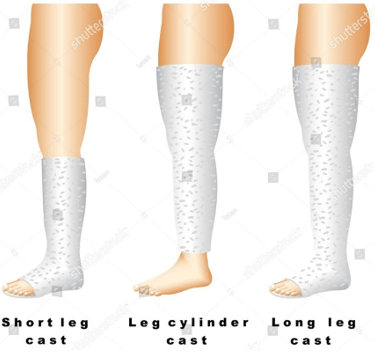
A nurse is collecting data from a client who has a long leg cast on his left leg. Which of the following findings is the priority?
A. Ecchymosis on the inner left thigh
May be a concerning finding, but it is not as urgent as diminished pulses. Ecchymosis may be a result of trauma during cast application, and may resolve on its own.
B. One fingerbreadth of space between the cast and the skin
Is a normal finding and indicates that the cast is not too tight.
C. Diminished pulses on the affected extremity
This finding may indicate compromised circulation, which is a serious complication that requires immediate intervention.
D. Client report of muscle spasms of the left leg
Is a common complaint in clients with casts and may be addressed with medication or other interventions, but it is not as urgent as diminished pulses.
Full Explanation
c. Diminished pulses on the affected extremity. This finding may indicate compromised circulation, which is
a serious complication that requires immediate intervention.
Option a. Ecchymosis on the inner left thigh may be a concerning finding, but it is not as urgent as diminished pulses. Ecchymosis may be a result of trauma during cast application, and may resolve on its own.
Option b. One fingerbreadth of space between the cast and the skin is a normal finding and indicates that the cast is not too tight.
Option d. Client report of muscle spasms of the left leg is a common complaint in clients with casts and may
be addressed with medication or other interventions, but it is not as urgent as diminished pulses. Therefore, the priority finding in this scenario is c. Diminished pulses on the affected extremity.
A nurse is caring for a client who has a prescription for warfarin. Which of the following laboratory tests should the nurse monitor?
A. Triiodothyronine
Is a thyroid hormone and is not directly related to warfarin therapy.
B. Blood urea nitrogen
Is a measure of kidney function and is also not directly related to warfarin therapy.
C. Arterial blood gases
Is a measure of oxygen and carbon dioxide levels in the blood and is not related to warfarin therapy.
D. Prothrombin time
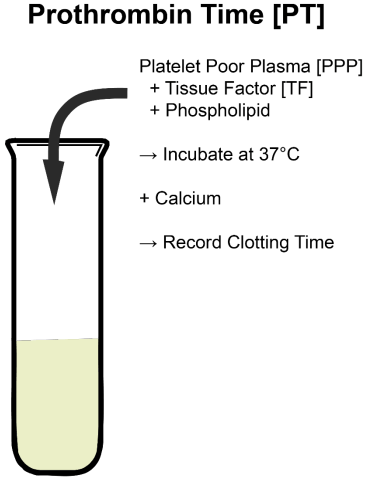
Warfarin is an anticoagulant medication that works by inhibiting the synthesis of vitamin K-dependent clotting factors in the liver. Therefore, it is important to monitor the client's clotting ability to ensure that the medication is working properly and not causing any adverse effects. The laboratory test that is used to monitor warfarin therapy is the prothrombin time (PT), which measures the time it takes for the blood to clot. The nurse should monitor the client's PT regularly and adjust the dosage of warfarin as necessary to maintain the therapeutic range.
Full Explanation
Prothrombin time.
Explanation:
When a client is prescribed warfarin, monitoring the prothrombin time (PT) and the International Normalized Ratio (INR) is crucial. Warfarin is an anticoagulant medication that affects the clotting ability of the blood by inhibiting vitamin K-dependent clotting factors. Monitoring the prothrombin time and INR helps determine the client's blood's ability to clot and the appropriate dosage of warfarin to maintain the desired therapeutic range.
Option a (Triiodothyronine) is a thyroid hormone and is not directly related to warfarin therapy.
Option b (Blood urea nitrogen) is a measure of kidney function and is also not directly related to warfarin therapy.
Option c (Arterial blood gases) is a measure of oxygen and carbon dioxide levels in the blood and is not related to warfarin therapy.
A nurse is assisting with the care of a client.
Complete the following sentence.
After notifying the provider, the nurse should first and then . (Separate your answers with a comma ',')
Full Explanation
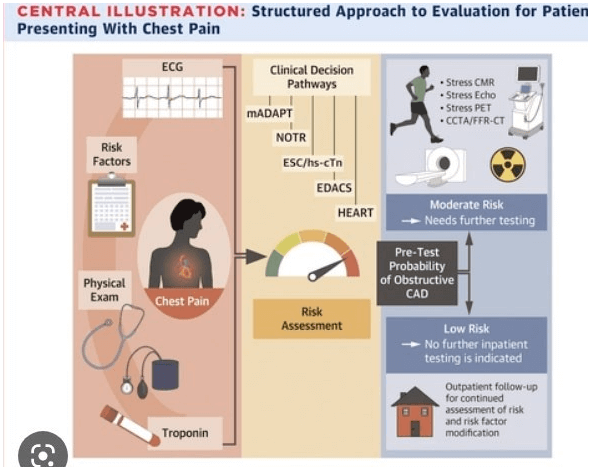
The client's symptoms are concerning for angina or a possible myocardial infarction (heart atack) and require immediate intervention. Nitroglycerin is a medication that can help relieve chest pain associated with cardiac events by dilating blood vessels and reducing the workload on the heart.
Therefore, the nurse should administer nitroglycerin as ordered by the provider. After administering nitroglycerin, the nurse should obtain an ECG to assess for any changes in cardiac rhythm or evidence of ischemia (lack of blood flow to the heart muscle).
The ECG can provide important diagnostic information and guide further treatment decisions.