Nursing practice questions with comprehensive rationales
NurseDive Free Nursing Practice Question
A nurse is providing discharge teaching to a client who has a new arteriovenous fistula in the right forearm. Which of the following manifestations should the nurse include in the teaching as a possible indication of venous insufficiency?
A. Cold and numb sensation distal to the fistula site
Cold and numb sensation distal to the fistula site is a possible indication of venous insufficiency. Venous insufficiency is a condition in which the veins have difficulty returning blood from the limbs to the heart, resulting in blood pooling and reduced perfusion. A new arteriovenous fistula can cause increased blood flow through the artery and decreased blood flow through the vein, leading to venous insufficiency. This can manifest as coldness, numbness, tingling, or cyanosis in the fingers or hand below the fistula site.
B. A raised red rash around the fistula site
A raised red rash around the fistula site is not a possible indication of venous insufficiency. A raised red rash around the fistula site can indicate an allergic reaction, an infection, or an inflammation of the skin or subcutaneous tissue. The nurse should assess the rash for size, shape, color, texture, temperature, and drainage, and report any signs of infection or inflammation, such as fever, pus, or swelling.
C. Pain in the right arm proximal to the fistula site
Pain in the right arm proximal to the fistula site is not a possible indication of venous insufficiency. Pain in the right arm proximal to the fistula site can indicate arterial insufficiency, which is a condition in which the arteries have difficulty delivering oxygen-rich blood to the tissues, resulting in ischemia and necrosis. Arterial insufficiency can be caused by atherosclerosis, thrombosis, embolism, or vasospasm. The nurse should assess the pain for location, intensity, duration, frequency, and quality, and report any signs of ischemia or necrosis, such as pallor, coolness, weak pulses, or ulceration.
D. Foul-smelling drainage from the fistula site
Foul-smelling drainage from the fistula site is not a possible indication of venous insufficiency. Foul- smelling drainage from the fistula site can indicate an infection of the fistula or surrounding tissue. The nurse should assess the drainage for color, odor, amount, and consistency, and report any signs of infection or sepsis, such as fever, chills, malaise, or hypotension.
This question is an excerpt from Nurse Dive's nursing test bank - ATI Med Surg 2 Proctored Exam. Take the full exam now
Full Explanation
Choice A: Cold and numb sensation distal to the fistula site is a possible indication of venous insufficiency. Venous insufficiency is a condition in which the veins have difficulty returning blood from the limbs to the heart, resulting in blood pooling and reduced perfusion. A new arteriovenous fistula can cause increased blood flow through the artery and decreased blood flow through the vein, leading to venous insufficiency. This can manifest as coldness, numbness, tingling, or cyanosis in the fingers or hand below the fistula site.
Choice B: A raised red rash around the fistula site is not a possible indication of venous insufficiency. A raised red rash around the fistula site can indicate an allergic reaction, an infection, or an inflammation of the skin or subcutaneous tissue. The nurse should assess the rash for size, shape, color, texture, temperature, and drainage, and report any signs of infection or inflammation, such as fever, pus, or swelling.
Choice C: Pain in the right arm proximal to the fistula site is not a possible indication of venous insufficiency. Pain in the right arm proximal to the fistula site can indicate arterial insufficiency, which is a condition in which the arteries have difficulty delivering oxygen-rich blood to the tissues, resulting in ischemia and necrosis. Arterial insufficiency can be caused by atherosclerosis, thrombosis, embolism, or vasospasm. The nurse should assess the pain for location, intensity, duration, frequency, and quality, and report any signs of ischemia or necrosis, such as pallor, coolness, weak pulses, or ulceration.
Choice D: Foul-smelling drainage from the fistula site is not a possible indication of venous insufficiency. Foul-smelling drainage from the fistula site can indicate an infection of the fistula or surrounding tissue. The nurse should assess the drainage for color, odor, amount, and consistency, and report any signs of infection or sepsis, such as fever, chills, malaise, or hypotension.
Similar Questions
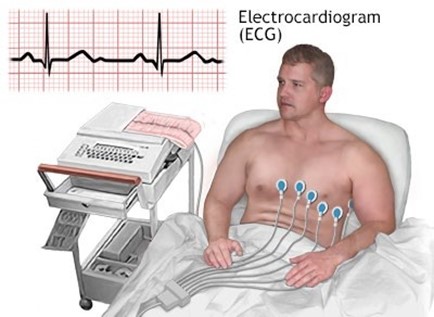
A nurse is assisting with obtaining an electrocardiogram (ECG) for a client who has atrial fibrillation. Which of the following actions should the nurse take? (Select all that apply.)
A. Inspect the electrode pads
Choice A: Inspectingthe electrode pads is an action that the nurse should take. The electrode pads are adhesive patches that atach to the skin and connect to the ECG machine. The nurse should inspect the electrode pads for expiration date, cleanliness, and stickiness, and replace them if necessary. The nurse should also check for any signs of skin irritation or allergy from the electrode pads.
B. Instruct the client not to talk during the test
Choice B: Instructing the client not to talk during the test is an action that the nurse should take. Talking during the test can interfere with the ECG recording and cause artifacts or false readings. The nurse should instruct the client to remain still and quiet during the test and avoid any movements or activities that can affect the heart rate or rhythm, such as coughing, deep breathing, or shivering.
C. Administer an analgesic prior to the procedure
Choice C: Administering an analgesic prior to the procedure is not an action that the nurse should take. An analgesic is a pain reliever that can be given orally, intravenously, or topically. An analgesic is not necessary for an ECG, as it is a noninvasive and painless procedure. An analgesic can also alter the heart rate or rhythm and affect the ECG results. The nurse should only administer an analgesic if prescribed by the provider for another reason.
D. Wash the skin with plain water before placing the electrodes
Choice D: It is more common to use alcohol swabs, and not water, to clean the skin as they are better at removing oils and ensuring good adhesion of the electrodes.
E. Keep the client NPO after midnight
None
Full Explanation
Choice A: Inspecting the electrode pads is an action that the nurse should take. The electrode pads are adhesive patches that atach to the skin and connect to the ECG machine. The nurse should inspect the electrode pads for expiration date, cleanliness, and stickiness, and replace them if necessary. The nurse should also check for any signs of skin irritation or allergy from the electrode pads.
Choice B: Instructing the client not to talk during the test is an action that the nurse should take. Talking during the test can interfere with the ECG recording and cause artifacts or false readings. The nurse should instruct the client to remain still and quiet during the test, and avoid any movements or activities that can affect the heart rate or rhythm, such as coughing, deep breathing, or shivering.
Choice C: Administering an analgesic prior to the procedure is not an action that the nurse should take. An analgesic is a pain reliever that can be given orally, intravenously, or topically. An analgesic is not necessary for an ECG, as it is a noninvasive and painless procedure. An analgesic can also alter the heart rate or rhythm and affect the ECG results. The nurse should only administer an analgesic if prescribed by the provider for another reason.
Choice D: It is more common to use alcohol swabs, and not water, to clean the skin as they are better at removing oils and ensuring good adhesion of the electrodes.
Choice E: Keeping the client NPO after midnight is not an action that the nurse should take. NPO means nothing by mouth, which is a restriction of food and fluids before certain procedures or surgeries. NPO is not required for an ECG, as it does not involve any anesthesia or sedation. The nurse should allow the client to eat and drink normally before and after the test, unless instructed otherwise by the provider.
A nurse in the emergency department is caring for a client who reports chest pressure and shortness of breath. Which of the following laboratory tests should the nurse anticipate the provider to prescribe?
A. Troponin I
Troponin I is a laboratory test that the nurse should anticipate the provider to prescribe. Troponin I is a protein that is released into the blood when the heart muscle is damaged. Troponin I levels are elevated in clients who have acute myocardial infarction (AMI), which is a heart atack caused by a blockage of blood flow to the heart. Chest pressure and shortness of breath are common signs and symptoms of AMI. Troponin I is a specific and sensitive marker of cardiac injury and can help diagnose AMI and guide treatment.
B. Aspartate aminotransferase (AST)
Aspartate aminotransferase (AST) is not a laboratory test that the nurse should anticipate the provider to prescribe. AST is an enzyme that is found in various tissues, such as the liver, heart, skeletal muscle, and kidneys. AST levels are elevated in clients who have liver damage, hepatitis, cirrhosis, or alcohol abuse. AST levels can also be elevated in clients who have AMI, but they are not as specific or sensitive as troponin I. AST is not a reliable indicator of cardiac injury and can be influenced by other factors.
C. B-type natriuretic peptide (BNP)
B-type natriuretic peptide (BNP) is not a laboratory test that the nurse should anticipate the provider to prescribe. BNP is a hormone that is secreted by the heart when it is stretched or overloaded. BNP levels are elevated in clients who have heart failure, which is a condition in which the heart cannot pump enough blood to meet the body's needs. Shortness of breath can be a sign of heart failure, but chest pressure is not. BNP is not a specific or sensitive marker of cardiac injury and can be influenced by other factors.
D. Lipase
Lipase is not a laboratory test that the nurse should anticipate the provider to prescribe. Lipase is an enzyme that is produced by the pancreas and helps digest fats. Lipase levels are elevated in clients who have pancreatitis, which is an inflammation of the pancreas. Pancreatitis can cause abdominal pain, nausea, vomiting, and fever. Chest pressure and shortness of breath are not signs of pancreatitis. Lipase is not a specific or sensitive marker of cardiac injury and has no relation to AMI.
Full Explanation
Choice A: Troponin I is a laboratory test that the nurse should anticipate the provider to prescribe. Troponin I is a protein that is released into the blood when the heart muscle is damaged. Troponin I levels are elevated in clients who have acute myocardial infarction (AMI), which is a heart atack caused by a blockage of blood flow to the heart. Chest pressure and shortness of breath are common signs and symptoms of AMI. Troponin I is a specific and sensitive marker of cardiac injury and can help diagnose AMI and guide treatment.
Choice B: Aspartate aminotransferase (AST) is not a laboratory test that the nurse should anticipate the provider to prescribe. AST is an enzyme that is found in various tissues, such as the liver, heart, skeletal muscle, and kidneys. AST levels are elevated in clients who have liver damage, hepatitis, cirrhosis, or alcohol abuse. AST levels can also be elevated in clients who have AMI, but they are not as specific or sensitive as troponin I. AST is not a reliable indicator of cardiac injury and can be influenced by other factors.
Choice C: B-type natriuretic peptide (BNP) is not a laboratory test that the nurse should anticipate the provider to prescribe. BNP is a hormone that is secreted by the heart when it is stretched or overloaded. BNP levels are elevated in clients who have heart failure, which is a condition in which the heart cannot pump enough blood to meet the
body's needs. Shortness of breath can be a sign of heart failure, but chest pressure is not. BNP is not a specific or sensitive marker of cardiac injury and can be influenced by other factors.
Choice D: Lipase is not a laboratory test that the nurse should anticipate the provider to prescribe. Lipase is an enzyme that is produced by the pancreas and helps digest fats. Lipase levels are elevated in clients who have pancreatitis, which is an inflammation of the pancreas. Pancreatitis can cause abdominal pain, nausea, vomiting, and fever. Chest pressure and shortness of breath are not signs of pancreatitis. Lipase is not a specific or sensitive marker of cardiac injury and has no relation to AMI.
A nurse is performing a neurological assessment for a client who has head trauma. Which of the following assessments will give the nurse information about the function of cranial nerve III?
A. Ask the client to shrug his shoulders against passive resistance
Ask the client to shrug his shoulders against passive resistance is not an assessment that will give the nurse information about the function of cranial nerve III. This assessment will test the function of cranial nerve XI, which is the accessory nerve. The accessory nerve innervates the trapezius and sternocleidomastoid muscles, which are involved in shoulder and neck movements.
B. Instruct the client to look up and down without moving his head
Instruct the client to look up and down without moving his head is an assessment that will give the nurse information about the function of cranial nerve III. Cranial nerve III is the oculomotor nerve, which innervates four of the six extraocular muscles that control eye movements. The oculomotor nerve also controls pupil size and lens shape. By instructing the client to look up and down without moving his head, the nurse can assess the ability of the oculomotor nerve to move the eyes vertically and adjust to different distances.
C. Observe the client's ability to smile and frown
Observe the client's ability to smile and frown is not an assessment that will give the nurse information about the function of cranial nerve III. This assessment will test the function of cranial nerve VII, which is the facial nerve. The facial nerve innervates the muscles of facial expression, which are involved in smiling, frowning, blinking, and other facial movements.
D. Have the client stand with his eyes closed and touch his nose
Have the client stand with his eyes closed and touch his nose is not an assessment that will give the nurse information about the function of cranial nerve III. This assessment will test the function of cranial nerve VIII, which is the vestibulocochlear nerve. The vestibulocochlear nerve innervates the inner ear and is responsible for hearing and balance. By having the client stand with his eyes closed and touch his nose, the nurse can assess the ability of the vestibulocochlear nerve to maintain equilibrium and coordination.
Full Explanation
Choice A: Ask the client to shrug his shoulders against passive resistance is not an assessment that will give the nurse information about the function of cranial nerve III. This assessment will test the function of cranial nerve XI, which is the accessory nerve. The accessory nerve innervates the trapezius and sternocleidomastoid muscles, which are involved in shoulder and neck movements.
Choice B: Instruct the client to look up and down without moving his head is an assessment that will give the nurse information about the function of cranial nerve III. Cranial nerve III is the oculomotor nerve, which innervates four of the six extraocular muscles that control eye movements. The oculomotor nerve also controls pupil size and lens shape. By instructing the client to look up and down without moving his head, the nurse can assess the ability of the oculomotor nerve to move the eyes vertically and adjust to different distances.
Choice C: Observe the client's ability to smile and frown is not an assessment that will give the nurse information about the function of cranial nerve III. This assessment will test the function of cranial nerve VII, which is the facial nerve. The facial nerve innervates the muscles of facial expression, which are involved in smiling, frowning, blinking, and other facial movements.
Choice D: Have the client stand with his eyes closed and touch his nose is not an assessment that will give the nurse information about the function of cranial nerve III. This assessment will test the function of cranial nerve VIII, which is the vestibulocochlear nerve. The vestibulocochlear nerve innervates the inner ear and is responsible for hearing and balance. By having the client stand with his eyes closed and touch his nose, the nurse can assess the ability of the vestibulocochlear nerve to maintain equilibrium and coordination.