
Nursing practice questions with comprehensive rationales
NurseDive Free Nursing Practice Question
Which of the following statements by the guardian indicates an understanding of the teaching?
A. "I will ensure that my child consumes a high-calorie diet."
A child with cystic fibrosis needs a high-calorie diet to meet their nutritional needs and prevent malnutrition.
B. "I will expect my child to need annual sweat chloride testing."
Sweat chloride testing is used to diagnose cystic fibrosis, not to monitor its progression.
C. "I will have my child chew the pancrelipase medication before eating."
Chewing pancrelipase medication before eating is incorrect. Pancrelipase should be swallowed whole with meals to aid in digestion.
D. "I will administer dornase alfa every 4 hours for wheezing."
Administering dornase alfa every 4 hours for wheezing is not appropriate. Dornase alfa is typically used for cystic fibrosis to help thin mucus and improve lung function, but it is not indicated for wheezing, and the dosing frequency provided is incorrect.
This question is an excerpt from Nurse Dive's nursing test bank - Ati Rn Paediatric Nursing 2023 Proctored Exam. Take the full exam now
Full Explanation
Rationale:
A. A child with cystic fibrosis needs a high-calorie diet to meet their nutritional needs and prevent malnutrition.
B. Sweat chloride testing is used to diagnose cystic fibrosis, not to monitor its progression.
C. Chewing pancrelipase medication before eating is incorrect. Pancrelipase should be swallowed whole with meals to aid in digestion.
D. Administering dornase alfa every 4 hours for wheezing is not appropriate. Dornase alfa is typically used for cystic fibrosis to help thin mucus and improve lung function, but it is not indicated for wheezing, and the dosing frequency provided is incorrect.
Similar Questions
A nurse in the emergency department is caring for an adolescent who is requesting testing for STIs. Which of the following actions is appropriate for the nurse to take?
A. Obtain written consent from the client.
In many jurisdictions, adolescents have the legal right to consent to testing and treatment for sexually transmitted infections (STIs) without parental involvement. Obtaining written consent from the client is appropriate in this situation.
B. Request verbal consent from the social worker.
While verbal consent from the social worker may be helpful, the client's own consent is required for STI testing.
C. Contact the client's parents to obtain phone consent.
Depending on local laws and policies, contacting the client's parents for consent may not be necessary or appropriate, especially if the adolescent is seeking confidential care.
D. Postpone the testing until the client's parents are present.
Postponing testing until the client's parents are present may delay necessary medical care and breach the adolescent's right to confidential healthcare.
Full Explanation
Rationale:
A. In many jurisdictions, adolescents have the legal right to consent to testing and treatment for sexually transmitted infections (STIs) without parental involvement. Obtaining written consent from the client is appropriate in this situation.
B. While verbal consent from the social worker may be helpful, the client's own consent is required for STI testing.
C. Depending on local laws and policies, contacting the client's parents for consent may not be necessary or appropriate, especially if the adolescent is seeking confidential care.
D. Postponing testing until the client's parents are present may delay necessary medical care and breach the adolescent's right to confidential healthcare.
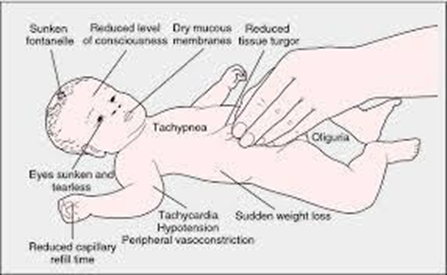
A nurse is caring for a 6-month-old infant who has gastroenteritis. Which of the following findings should the nurse identify as a manifestation of severe dehydration?
A. Capillary refill time 3 seconds
Capillary refill time of 3 seconds is within the normal range (less than 3 seconds) and does not indicate severe dehydration.
B. Sunken anterior fontanel
A sunken anterior fontanel is a significant sign of dehydration in infants and suggests severe dehydration.
C. Weight loss of 5%
While a weight loss of 5% can indicate dehydration, it may not necessarily represent severe dehydration. The extent of dehydration is better assessed by clinical signs such as fontanel status, skin turgor, and mucous membrane moisture.
D. Produces tears when crying
Producing tears when crying is a reassuring sign and suggests adequate hydration, so it does not indicate severe dehydration.
Full Explanation
Rationale:
A. Capillary refill time of 3 seconds is within the normal range (less than 3 seconds) and does not indicate severe dehydration.
B. A sunken anterior fontanel is a significant sign of dehydration in infants and suggests severe dehydration.
C. While a weight loss of 5% can indicate dehydration, it may not necessarily represent severe dehydration. The extent of dehydration is better assessed by clinical signs such as fontanel status, skin turgor, and mucous membrane moisture.
D. Producing tears when crying is a reassuring sign and suggests adequate hydration, so it does not indicate severe dehydration.
A nurse is performing a cranial nerve assessment on a school-age child. Which of the following findings indicates proper functioning of the child's trigeminal nerve?
A. The child maintains balance when standing with eyes closed.
Balance when standing with eyes closed is primarily related to the vestibulocochlear nerve (cranial nerve VIII), not the trigeminal nerve.
B. The child exhibits a gag reflex when stimulated with a tongue blade.
The gag reflex is primarily mediated by the glossopharyngeal nerve (cranial nerve IX), not the trigeminal nerve.
C. The child correctly identifies specific scents.
Identifying specific scents is related to olfaction, which is primarily mediated by the olfactory nerve (cranial nerve I), not the trigeminal nerve.
D. The child has symmetrical jaw strength when biting down.
The trigeminal nerve (cranial nerve V) innervates the muscles of mastication, and symmetrical jaw strength when biting down indicates proper functioning of this nerve.
Full Explanation
Rationale:
A. Balance when standing with eyes closed is primarily related to the vestibulocochlear nerve (cranial nerve VIII), not the trigeminal nerve.
B. The gag reflex is primarily mediated by the glossopharyngeal nerve (cranial nerve IX), not the trigeminal nerve.
C. Identifying specific scents is related to olfaction, which is primarily mediated by the olfactory nerve (cranial nerve I), not the trigeminal nerve.
D. The trigeminal nerve (cranial nerve V) innervates the muscles of mastication, and symmetrical jaw strength when biting down indicates proper functioning of this nerve.