
Nursing practice questions with comprehensive rationales
NurseDive Free Nursing Practice Question
A nurse is providing teaching about breastfeeding to a client who is postpartum. Which of the following statements by the client indicates an understanding of the teaching?
A. "I need to supplement feedings with water once my baby is 4 months old."
"I need to supplement feedings with water once my baby is 4 months old": Breast milk provides all the necessary fluids for the baby, and additional water supplementation is generally not needed for exclusively breastfed infants.
B. "My baby will receive the most milk within the first 10 minutes of the feeding."
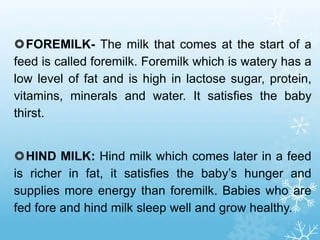
"My baby will receive the most milk within the first 10 minutes of the feeding": This statement is correct. During the first few minutes of breastfeeding, the baby receives the foremilk, which is more watery and quenches their thirst. The hindmilk, which is higher in fat and provides more calories, is obtained as the feeding progresses.
C. "The purpose of alternating breasts during feedings is to promote comfort."
"The purpose of alternating breasts during feedings is to promote comfort": The purpose of alternating breasts during feedings is to ensure that the baby receives both foremilk and hindmilk from each breast and to stimulate milk production in both breasts. It is not primarily for promoting comfort.
D. "During the first few weeks, I should nurse my baby every 4 hours."
"During the first few weeks, I should nurse my baby every 4 hours": Breastfed newborns typically feed more frequently than every 4 hours, especially during the early weeks. On-demand feeding is recommended, which means feeding the baby whenever they show hunger cues, which can be more frequent than every 4 hours.
This question is an excerpt from Nurse Dive's nursing test bank - ATI RN Nutrition 2019 Proctored Exam. Take the full exam now
Full Explanation
"My baby will receive the most milk within the first 10 minutes of the feeding": This statement is correct. During the first few minutes of breastfeeding, the baby receives the foremilk, which is more watery and quenches their thirst. The hindmilk, which is higher in fat and provides more calories, is obtained as the feeding progresses.
"I need to supplement feedings with water once my baby is 4 months old": Breast milk provides all the necessary fluids for the baby, and additional water supplementation is generally not needed for exclusively breastfed infants.
"The purpose of alternating breasts during feedings is to promote comfort": The purpose of alternating breasts during feedings is to ensure that the baby receives both foremilk and hindmilk from each breast and to stimulate milk production in both breasts. It is not primarily for promoting comfort.
"During the first few weeks, I should nurse my baby every 4 hours": Breastfed newborns typically feed more frequently than every 4 hours, especially during the early weeks.
On-demand feeding is recommended, which means feeding the baby whenever they show hunger cues, which can be more frequent than every 4 hours.
Similar Questions
A nurse is preparing to initiate enteral feedings for a client who has inflammatory bowel disease. The nurse should recognize that which of the following formulas is appropriate for this client?
A. Hydrolyzed
Hydrolyzed formulas are appropriate for clients who have inflammatory bowel disease. Hydrolyzed formulas are composed of partially or fully broken down nutrients that are easier to digest and absorb. They can also reduce inflammation in the intestinal lining, which can help with Crohn's disease symptoms.
B. High-fiber
High-fiber formulas are not recommended for clients who have inflammatory bowel disease, as they may worsen diarrhea, abdominal pain, and intestinal obstruction.
C. Low-protein
Low-protein formulas are also not suitable, as they may lead to protein malnutrition and impaired wound healing.
D. Low-calorie
Low-calorie formulas are not indicated, as they may cause weight loss and increased disease activity.
Full Explanation
Hydrolyzed formulas are appropriate for clients who have inflammatory bowel disease. Hydrolyzed formulas are composed of partially or fully broken down nutrients that are easier to digest and absorb. They can also reduce inflammation in the intestinal lining, which can help with Crohn's disease symptoms.
High-fiber formulas are not recommended for clients who have inflammatory bowel disease, as they may worsen diarrhea, abdominal pain, and intestinal obstruction.
Low-protein formulas are also not suitable, as they may lead to protein malnutrition and impaired wound healing.
Low-calorie formulas are not indicated, as they may cause weight loss and increased disease activity.
A nurse is reviewing a client's laboratory results for effectiveness of total parenteral nutrition (TPN). Which of the following laboratory values is the best indicator for the nurse to monitor for short-term effectiveness of the TPN?
A. Hemoglobin
Hemoglobin: Hemoglobin is a measure of the oxygen-carrying capacity of red blood cells and is typically used to assess anemia. While hemoglobin can be affected by nutritional status, it is not a specific marker for the short-term effectiveness of TPN.
B. Total albumin
Total albumin: Total albumin is a measure of protein status and can be affected by various factors, including inflammation and liver disease. However, it has a longer half-life and slower response to nutritional changes, so it may not be the best indicator for short-term effectiveness.
C. Transferrin
Transferrin: Transferrin is a protein involved in iron transport and can be used as an indicator of iron status. However, it may not reflect short-term changes in nutritional status and is not specific to TPN effectiveness. Monitoring prealbumin levels can help determine the short-term effectiveness of TPN and guide adjustments to the nutritional plan.
D. Prealbumin
Prealbumin (also known as transthyretin): Prealbumin is a protein synthesized in the liver and has a shorter half-life compared to albumin. It is considered a more sensitive marker for short-term nutritional changes and can reflect the effectiveness of TPN within a few days. Prealbumin levels can indicate the response to nutritional interventions and provide a more immediate assessment of nutritional adequacy.
Full Explanation
Prealbumin (also known as transthyretin): Prealbumin is a protein synthesized in the liver and has a shorter half-life compared to albumin. It is considered a more sensitive marker for
short-term nutritional changes and can reflect the effectiveness of TPN within a few days.
Prealbumin levels can indicate the response to nutritional interventions and provide a more immediate assessment of nutritional adequacy.
Hemoglobin: Hemoglobin is a measure of the oxygen-carrying capacity of red blood cells and is typically used to assess anemia. While hemoglobin can be affected by nutritional status, it is not a specific marker for the short-term effectiveness of TPN.
Total albumin: Total albumin is a measure of protein status and can be affected by various factors, including inflammation and liver disease. However, it has a longer half-life and slower response to nutritional changes, so it may not be the best indicator for short-term effectiveness.
Transferrin: Transferrin is a protein involved in iron transport and can be used as an indicator of iron status. However, it may not reflect short-term changes in nutritional status and is not specific to TPN effectiveness.
Monitoring prealbumin levels can help determine the short-term effectiveness of TPN and guide adjustments to the nutritional plan.
A nurse is providing breakfast for a client who has celiac disease. Which of the following meal items should the nurse select?
A. Rice cereal with sliced bananas
Rice cereal with sliced bananas: This is a suitable choice as long as the rice cereal is gluten-free and there is no cross-contamination with gluten-containing ingredients. Rice is naturally gluten-free, and fresh fruits like bananas are safe for individuals with celiac disease.
B. Rye toast with herbal tea
Rye toast with herbal tea: Rye is a gluten-containing grain, so rye toast is not suitable for someone with celiac disease. Herbal tea is typically gluten-free, but the toast is not appropriate.
C. Poached eggs with wheat bagel
Poached eggs with wheat bagel: Wheat is a gluten-containing grain, so a wheat bagel is not appropriate for someone with celiac disease. It is essential for individuals with celiac disease to carefully read food labels and select gluten-free options.
D. Graham crackers with peanut butter
Graham crackers with peanut butter: Graham crackers are usually made with wheat flour, which contains gluten. Therefore, they are not suitable for someone with celiac disease.
Full Explanation
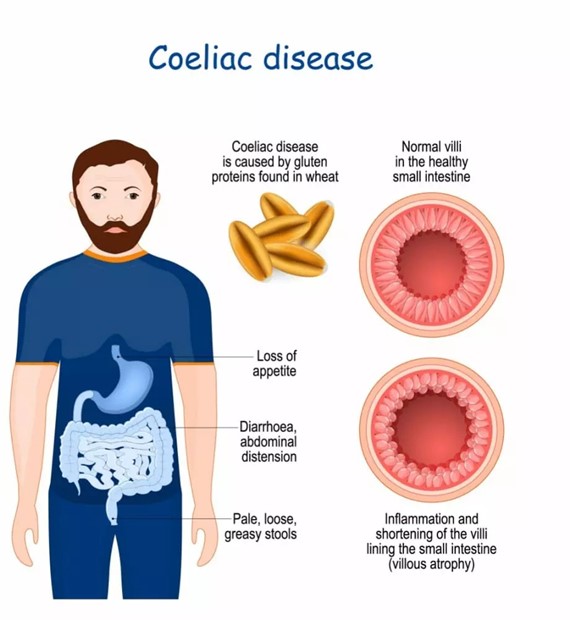
Celiac disease is an autoimmune disorder in which the ingestion of gluten, a protein found in wheat, rye, and barley, triggers an immune response and causes damage to the small intestine. Therefore, individuals with celiac disease need to follow a strict gluten-free diet.
Rice cereal with sliced bananas: This is a suitable choice as long as the rice cereal is gluten-free and there is no cross-contamination with gluten-containing ingredients. Rice is
naturally gluten-free, and fresh fruits like bananas are safe for individuals with celiac disease.
Rye toast with herbal tea: Rye is a gluten-containing grain, so rye toast is not suitable for someone with celiac disease. Herbal tea is typically gluten-free, but the toast is not appropriate.
Graham crackers with peanut butter: Graham crackers are usually made with wheat flour, which contains gluten. Therefore, they are not suitable for someone with celiac disease.
Poached eggs with wheat bagel: Wheat is a gluten-containing grain, so a wheat bagel is not appropriate for someone with celiac disease.
It is essential for individuals with celiac disease to carefully read food labels and select gluten-free options.