
Nursing practice questions with comprehensive rationales
NurseDive Free Nursing Practice Question
A nurse is providing teaching about the expected effects of magnesium sulfate to a client who is at 28 weeks of gestation and has preeclampsia.
Which of the following responses by the nurse is appropriate?
A. "This medication stabilizes the fetal heart rate."
Choice A is incorrect because magnesium sulfate does not stabilize the fetal heart rate.
B. "This medication improves tissue perfusion."
Choice B is incorrect because magnesium sulfate does not improve tissue perfusion.
C. "This medication prevents seizures."
“This medication prevents seizures.” Magnesium sulfate is a mineral that is given intravenously to women with preeclampsia to reduce the risk of seizures or eclampsia. Preeclampsia is a condition of high blood pressure and protein in the urine during pregnancy.
D. "This medication increases cardiac output.”
Choice D is incorrect because magnesium sulfate does not increase cardiac output.
This question is an excerpt from Nurse Dive's nursing test bank - ATI RN Maternal Newborn 2019 with NGN Proctored Exam. Take the full exam now
Full Explanation
“This medication prevents seizures.” Magnesium sulfate is a mineral that is given intravenously to women with preeclampsia to reduce the risk of seizures or eclampsia.
Preeclampsia is a condition of high blood pressure and protein in the urine during pregnancy.
Choice A is incorrect because magnesium sulfate does not stabilize the fetal heart rate.
Choice B is incorrect because magnesium sulfate does not improve tissue perfusion.
Choice D is incorrect because magnesium sulfate does not increase cardiac output.
Similar Questions
A nurse is providing teaching to a client who is 2 days postpartum and wants to continue using her diaphragm for contraception.
Which of the following instructions should the nurse include?
A. You should use an oil-based vaginal lubricant when inserting your diaphragm.
Choice A is incorrect because oil-based lubricants can damage the diaphragm and reduce its effectiveness. Water-based lubricants should be used instead.
B. You should store your diaphragm in sterile water after each use.
Choice B is incorrect because storing a diaphragm in sterile water is not necessary. The diaphragm should be washed with mild soap and water after each use and air-dried before being stored in its case.
C. You should keep the diaphragm in place for at least 4 hours after intercourse.
Choice C is incorrect because the diaphragm should be kept in place for at least 6 hours after intercourse, not 4 hours.
D. You should have your provider refit you for any diaphragm.
The nurse should instruct the client to have her provider refit her for a diaphragm. After childbirth, a woman’s body undergoes changes that may affect the fit of her diaphragm. It is recommended that a woman be refited for a diaphragm around 6 weeks postpartum, when the uterus and cervix have returned to normal size.
Full Explanation
The nurse should instruct the client to have her provider refit her for a diaphragm.
After childbirth, a woman’s body undergoes changes that may affect the fit of her diaphragm.
It is recommended that a woman be refited for a diaphragm around 6 weeks postpartum, when the uterus and cervix have returned to normal size.
Choice A is incorrect because oil-based lubricants can damage the diaphragm and reduce its effectiveness.
Water-based lubricants should be used instead.
Choice B is incorrect because storing a diaphragm in sterile water is not necessary.
The diaphragm should be washed with mild soap and water after each use and air-dried before being stored in its case.
Choice C is incorrect because the diaphragm should be kept in place for at least 6 hours after intercourse, not 4 hours.
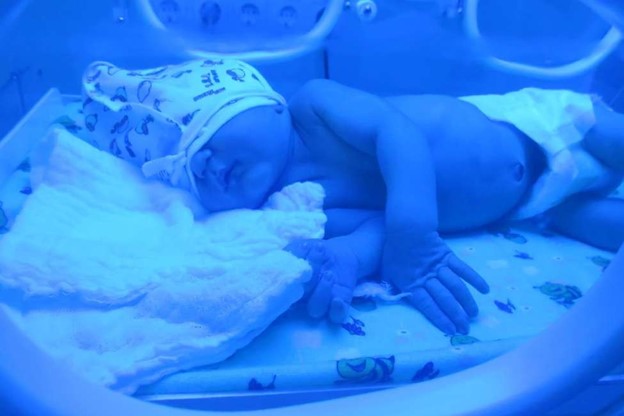
A nurse is planning care for a newborn who is scheduled to start phototherapy using a lamp.
Which of the following actions should the nurse include in the plan?
A. Give the newborn 1 oz of glucose water every 4 hr.
Choice A) is not correct because glucose water is not mentioned as necessary during phototherapy.
B. Dress the newborn in a thin layer of clothing during therapy.
Choice B) is not correct because the newborn should be undressed except for a diaper during therapy.
C. Ensure the newborn's eyes are closed beneath the shield.
During phototherapy, one or more lights will be placed above the newborn. The newborn will be undressed except for a diaper and placed on their back to absorb the most light. Eye covers will be used to protect their eyes from the light.
D. Apply a thin layer of lotion to the newborn's skin every 8 hr.
Choice D) is not correct because applying lotion to the newborn’s skin is not mentioned as necessary during phototherapy.
Full Explanation
During phototherapy, one or more lights will be placed above the newborn.
The newborn will be undressed except for a diaper and placed on their back to absorb the most light.
Eye covers will be used to protect their eyes from the light.
Choice A) is not correct because glucose water is not mentioned as necessary during phototherapy.
Choice B) is not correct because the newborn should be undressed except for a
diaper during therapy.
Choice D) is not correct because applying lotion to the newborn’s skin is not mentioned as necessary during phototherapy.
A nurse is performing an initial assessment of a newborn who was delivered with a nuchal cord.
Which of the following clinical findings should the nurse expect?
A. Facial petechiae.
A nuchal cord occurs when the umbilical cord wraps around the fetal neck completely or for 360 degrees. In some cases, a tight nuchal cord can cause conjunctival hemorrhage and petechiae.
B. Erythema toxicum.
Choice B) is not correct because erythema toxicum is a common rash seen in newborns and is not related to a nuchal cord.
C. Periauricular papillomas.
Choice C) is not correct because periauricular papillomas are benign skin growths near the ear and are not related to a nuchal cord.
D. Telangiectatic nevi.
Choice D) is not correct because telangiectatic nevi, also known as stork bites or salmon patches, are common birthmarks seen in newborns and are not related to a nuchal cord.
E. Telangiectatic nevi.
Full Explanation
A nuchal cord occurs when the umbilical cord wraps around the fetal neck completely or for 360 degrees.
In some cases, a tight nuchal cord can cause conjunctival hemorrhage and petechiae.
Choice B) is not correct because erythema toxicum is a common rash seen in newborns and is not related to a nuchal cord.
Choice C) is not correct because periauricular papillomas are benign skin growths near the ear and are not related to a nuchal cord.
Choice D) is not correct because telangiectatic nevi, also known as stork bites or salmon patches, are common birthmarks seen in newborns and are not related to a nuchal cord.