
Nursing practice questions with comprehensive rationales
NurseDive Free Nursing Practice Question
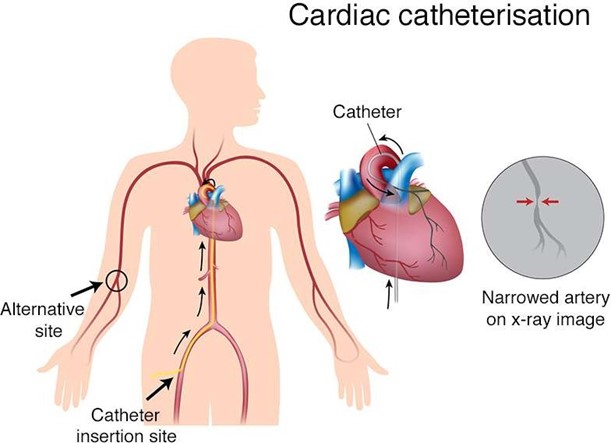
A nurse is providing teaching to a 10-year-old child who is scheduled for an arterial cardiac catheterization.
Which of the following information should the nurse include in the teaching?
A. "You will need to keep your leg straight for 8 hours following the procedure.”
After an arterial cardiac catheterization, the patient will need to keep their leg straight for several hours following the procedure to prevent bleeding from the catheter insertion site.
B. "You will have your dressing removed 12 hours after the procedure.”
Choice B is wrong because droplet isolation precautions are not necessary after an arterial cardiac catheterization.
C. "You will be on a clear liquid diet for 24 hours following the procedure.”
Choice C is wrong because assisting the child into a supine position may not be necessary and could be uncomfortable for the child.
D. "You will be on bed rest for 2 days after the procedure.”
Choice D is wrong because checking oxygen saturation every 4 hours may not be frequent enough for a child who has undergone an arterial cardiac catheterization and may require more frequent monitoring of oxygen saturation.
This question is an excerpt from Nurse Dive's nursing test bank - ATI RN Nursing Care of Children 2019 Proctored Exam. Take the full exam now
Full Explanation
After an arterial cardiac catheterization, the patient will need to keep their leg straight for several hours following the procedure to prevent bleeding from the catheter insertion site.
Choice B is wrong because droplet isolation precautions are not necessary after an arterial cardiac catheterization.
Choice C is wrong because assisting the child into a supine position may not be necessary and could be uncomfortable for the child.
Choice D is wrong because checking oxygen saturation every 4 hours may not be frequent enough for a child who has undergone an arterial cardiaccatheterization and may require more frequent monitoring of oxygen saturation.
Similar Questions
A nurse is reviewing the medical record of a 15-month-old child who is scheduled to receive the measles, mumps, and rubella (MMR) vaccine.
Which of the following findings should the nurse identify as a contraindication for receiving this vaccine?
A. Allergy to neomycin.
An allergy to neomycin is a contraindication for receiving the MMR vaccine.
B. Family history of seizures.
Choice Bis wrong because a family history of seizures is not a contraindication for receiving the MMR vaccine.
C. Upper respiratory infection 2 days ago.
Choice Cis wrong because an upper respiratory infection 2 days ago is not a contraindication for receiving the MMR vaccine.
D. Temperature of 37.2°C (99°F).
Choice Dis wrong because a temperature of 37.2°C (99°F) is not a contraindication for receiving the MMR vaccine.
Full Explanation
An allergy to neomycin is a contraindication for receiving the MMR vaccine.
Choice B is wrong because a family history of seizures is not a contraindication for receiving the MMR vaccine.
Choice C is wrong because an upper respiratory infection 2 days ago is not a contraindication for receiving the MMR vaccine.
Choice D is wrong because a temperature of 37.2°C (99°F) is not a contraindication for receiving the MMR vaccine.
A nurse is monitoring an infant who is receiving opioids for pain.
Which of the following findings should indicate to the nurse that the medication is having a therapeutic effect?
A. Bradycardia.
Choice A is wrong because bradycardia is not an indication that the medication is having a therapeutic effect.
B. Relaxed facial expression.
A relaxed facial expression can indicate that the medication is having a therapeutic effect and that the infant is experiencing pain relief.
C. Increased blood pressure.
Choice C is wrong because increased blood pressure is not an indication that the medication is having a therapeutic effect.
D. Limb withdrawal.
Choice D is wrong because limb withdrawal is not an indication that the medication is having a therapeutic effect.
Full Explanation
A relaxed facial expression can indicate that the medication is having a therapeutic effect and that the infant is experiencing pain relief.
Choice A is wrong because bradycardia is not an indication that the medication is having a therapeutic effect.
Choice C is wrong because increased blood pressure is not an indication that the medication is having a therapeutic effect.
Choice D is wrong because limb withdrawal is not an indication that the medication is having a therapeutic effect.
A nurse is assessing a 5-month-old infant.
Which of the following findings should the nurse report to the provider?
A. Unable to hold a bottle.
Unable to hold a bottle At around 6 months of age, some babies can hold their own bottle. This is not a concerning finding for a 5-month-old infant. Therefore, this is not the correct answer.
B. Unable to roll from back to abdomen.
Unable to roll from back to abdomen Rolling over often starts around 4-6 months, so it’s not unusual for a 5-month-old to still be developing this skill. Therefore, this is not the correct answer.
C. Absent grasp reflex.
Absent grasp reflex The grasp reflex is an involuntary movement that your baby starts making in utero and continues doing until around 6 months of age. The grasp reflex lasts until the baby is about 5 to 6 months old. Therefore, this is not the correct answer.
D. Exhibits head lag when pulled to a sitting position.
Exhibits head lag when pulled to a sitting position By the age of 5 months, most infants have developed enough strength in their neck and upper body to control their head movement. This means they should not exhibit a significant head lag when pulled to a sitting position1. If this is not the case, it could indicate a delay in motor development or a potential neurological issue, which should be reported to the healthcare provider for further evaluation. Therefore, this is the correct answer.
Full Explanation
The correct answer is d. Exhibits head lag when pulled to a sitting position.
Choice A: Unable to hold a bottle At around 6 months of age, some babies can hold their own bottle. This is not a concerning finding for a 5-month-old infant. Therefore, this is not the correct answer.
Choice B: Unable to roll from back to abdomen Rolling over often starts around 4-6 months, so it’s not unusual for a 5-month-old to still be developing this skill. Therefore, this is not the correct answer.
Choice C: Absent grasp reflex The grasp reflex is an involuntary movement that your baby starts making in utero and continues doing until around 6 months of age. The grasp reflex lasts until the baby is about 5 to 6 months old. Therefore, this is not the correct answer.
Choice D: Exhibits head lag when pulled to a sitting position By the age of 5 months, most infants have developed enough strength in their neck and upper body to control their head movement. This means they should not exhibit a significant head lag when pulled to a sitting position1. If this is not the case, it could indicate a delay in motor development or a potential neurological issue, which should be reported to the healthcare provider for further evaluation. Therefore, this is the correct answer.