
Nursing practice questions with comprehensive rationales
NurseDive Free Nursing Practice Question
A nurse is providing teaching to a client who is receiving opioids for pain management.
Which of the following information should the nurse include in the teaching?
A. "Itching indicates you are having an allergic reaction to the medication.".
Choice A is not correct because itching can be a side effect of opioids and does not necessarily indicate an allergic reaction.
B. "Monitor urinary output for retention.".
“Monitor urinary output for retention.” Urinary retention is a common side effect of opioid use and should be monitored.
C. "Restrict fluid intake if you experience constipation.".
Choice C is not correct because restricting fluid intake can worsen constipation.
D. "Avoid taking antiemetics with the medication.".
Choice D is not correct because antiemetics may be prescribed to manage nausea and vomiting, which are common side effects of opioids.
This question is an excerpt from Nurse Dive's nursing test bank - ATI Adult Medical Surgical 2019 Proctored Exam. Take the full exam now
Full Explanation
“Monitor urinary output for retention.” Urinary retention is a common side effect of opioid use and should be monitored.
Choice A is not correct because itching can be a side effect of opioids and does not necessarily indicate an allergic reaction.
Choice C is not correct because restricting fluid intake can worsen constipation.
Choice D is not correct because antiemetics may be prescribed to manage nausea and vomiting, which are common side effects of opioids.
Similar Questions
A nurse is preparing to administer piperacillin 3.375 g by intermittent IV bolus every 6 hr.
Available in piperacillin 3.375 g in dextrose 5% in water (DsW) 100 mL to infuse over 30 min.
The nurse should set the IV pump to deliver how many mL/hr?
A. 33 mL/hr.
Step 1: 100 mL ÷ 30 min Step 2: (100 mL ÷ 30 min) × 60 min/hr Step 3: 3.33 mL/min × 60 min/hr Answer: 200 mL/hr
B. 100 mL/hr.
Step 1: 100 mL ÷ 30 min Step 2: (100 mL ÷ 30 min) × 60 min/hr Step 3: 3.33 mL/min × 60 min/hr Answer: 200 mL/hr
C. 200 mL/hr.
Step 1: 100 mL ÷ 30 min Step 2: (100 mL ÷ 30 min) × 60 min/hr Step 3: 3.33 mL/min × 60 min/hr Answer: 200 mL/hr
D. 400 mL/hr.
Step 1: 100 mL ÷ 30 min Step 2: (100 mL ÷ 30 min) × 60 min/hr Step 3: 3.33 mL/min × 60 min/hr Answer: 200 mL/hr
Full Explanation
Step 1: 100 mL ÷ 30 min
Step 2: (100 mL ÷ 30 min) × 60 min/hr
Step 3: 3.33 mL/min × 60 min/hr
Answer: 200 mL/hr
A nurse is caring for an older adult client who is suspected of having septicemia.
Which of the following actions is the nurse's priority?
A. Obtain a WBC count with differential.
Choice A is incorrect because while a WBC count with differential can provide information about the presence of an infection, it does not identify the specific microorganism causing the infection.
B. Obtain a blood specimen for culture and sensitivity testing.
The priority action for a nurse caring for an older adult client who is suspected of having septicemia is to obtain a blood specimen for culture and sensitivity testing. This test will help identify the specific microorganism causing the infection and determine the most effective antibiotic treatment.
C. Obtain a history to determine recent injuries.
Choice C is incorrect because while obtaining a history to determine recent injuries can provide useful information, it is not the priority action.
D. Obtain a broad-spectrum antibiotic for rapid administration.
Choice D is incorrect because while administering a broad-spectrum antibiotic may be necessary, it should not be done before obtaining a blood specimen for culture and sensitivity testing.
Full Explanation

The priority action for a nurse caring for an older adult client who is suspected of having septicemia is to obtain a blood specimen for culture and sensitivity testing.
This test will help identify the specific microorganism causing the infection and determine the most effective antibiotic treatment.
Choice A is incorrect because while a WBC count with differential can provide information about the presence of an infection, it does not identify the specific microorganism causing the infection.
Choice C is incorrect because while obtaining a history to determine recent injuries can provide useful information, it is not the priority action.
Choice D is incorrect because while administering a broad-spectrum antibiotic may be necessary, it should not be done before obtaining a blood specimen for culture and sensitivity testing.
A nurse is planning care for a client who has status epilepticus.
Which of the following interventions is the nurse's priority to include?
A. Administer phenytoin IV bolus to the client.
Choice A is incorrect because while phenytoin can be used to treat seizures, it is not typically used as a first-line treatment for status epilepticus.
B. Administer diazepam intravenously to the client.
The priority intervention for a nurse planning care for a client who has status epilepticus is to administer diazepam intravenously to the client. Diazepam is a benzodiazepine medication that can help stop seizure activity and is often used as a first-line treatment for status epilepticus.
C. Provide the client oxygen at 6 L/min using a nasal cannula.
Choice C is incorrect because while providing oxygen can be an important intervention for clients experiencing seizures, it is not the priority intervention.
D. Turn the client to the lateral position during seizure activity.
Choice D is incorrect because while turning the client to the lateral position during seizure activity can help prevent aspiration, it is not the priority intervention.
Full Explanation
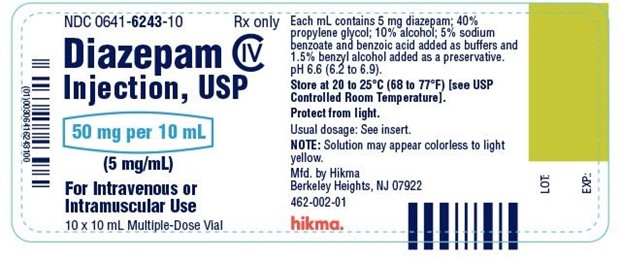
The priority intervention for a nurse planning care for a client who has status epilepticus is to administer diazepam intravenously to the client.
Diazepam is a benzodiazepine medication that can help stop seizure activity and is often used as a first-line treatment for status epilepticus.
Choice A is incorrect because while phenytoin can be used to treat seizures, it is not typically used as a first-line treatment for status epilepticus.
Choice C is incorrect because while providing oxygen can be an important intervention for clients experiencing seizures, it is not the priority intervention.
Choice D is incorrect because while turning the client to the lateral position during seizure activity can help prevent aspiration, it is not the priority intervention.