Nursing practice questions with comprehensive rationales
NurseDive Free Nursing Practice Question
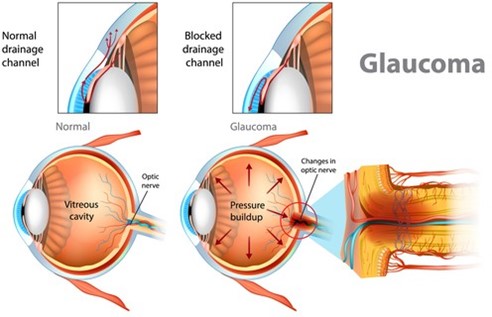
A nurse is reinforcing discharge teaching with a client who is postoperative following laser surgery for open- angle glaucoma. Which of the following statements by the client indicates an understanding of the instructions?
A. I will take a stool softener to prevent constipation
The statement that indicates an understanding of the instructions is "I will take a stool softener to prevent constipation."
B. I will ask to work the night shift, so I will not be driving in bright sunlight
This statement is incorrect. The need to work the night shift to avoid bright sunlight does not relate to the discharge instructions for a client postoperative following laser surgery for open-angle glaucoma. The primary focus of discharge teaching for this condition would be related to eye care, medication administration, and follow-up appointments.
C. I will need to use my eye drops for 1 year
This statement is incorrect. While eye drops are commonly prescribed for open-angle glaucoma, the duration of their use can vary based on the individual's condition and the healthcare provider's instructions. The client should follow the specific instructions given by their healthcare provider regarding the frequency and duration of eye drop use.
D. I will need to follow a low-protein diet
This statement is incorrect. A low-protein diet is not typically part of the discharge instructions for a client postoperative following laser surgery for open-angle glaucoma. The focus of dietary recommendations for open-angle glaucoma is on maintaining a healthy diet and managing other health conditions that may affect intraocular pressure, such as high blood pressure or diabetes.
This question is an excerpt from Nurse Dive's nursing test bank - VATI PN Comprehensive Predictor 2020 Proctored Exam. Take the full exam now
Full Explanation
a ."I will take a stool softener to prevent constipation."
Explanation:
The statement that indicates an understanding of the instructions is "I will take a stool softener to prevent constipation."
Explanation for the other options:
b. "I will ask to work the night shift, so I will not be driving in bright sunlight."
This statement is incorrect. The need to work the night shift to avoid bright sunlight does not relate to the discharge instructions for a client postoperative following laser surgery for open-angle glaucoma. The primary focus of discharge teaching for this condition would be related to eye care, medication administration, and follow-up appointments.
c. "I will need to use my eye drops for 1 year."
This statement is incorrect. While eye drops are commonly prescribed for open-angle glaucoma, the duration of their use can vary based on the individual's condition and the healthcare provider's instructions. The client should follow the specific instructions given by their healthcare provider regarding the frequency and duration of eye drop use.
d. "I will need to follow a low-protein diet."
This statement is incorrect. A low-protein diet is not typically part of the discharge instructions for a client postoperative following laser surgery for open-angle glaucoma. The focus of dietary recommendations for open-angle glaucoma is on maintaining a healthy diet and managing other health conditions that may affect intraocular pressure, such as high blood pressure or diabetes.
In summary, the statement that demonstrates an understanding of the discharge instructions for a client postoperative following laser surgery for open-angle glaucoma is "I will take a stool softener to prevent constipation." This indicates the client's awareness of the importance of preventing constipation, which can be a side effect of some medications prescribed after surgery.
Similar Questions
A client who has inoperable cancer tells the nurse that she does not want to pursue the recommended treatment. She asks if the provider can force her to have the treatment. Which of the following is an appropriate response by the nurse?
A. You have the right to refuse the recommended treatment plan
A. You have the right to refuse the recommended treatment plan. As a nurse, it’s essential to respect the autonomy and decision-making capacity of your patients. Patients have the right to make informed choices about their own healthcare, including whether to accept or decline treatment recommendations. By acknowledging the patient’s right to refuse treatment, you empower them to be active participants in their care
B. We will have to tell your provider right away that you are considering this
Option b is not the correct answer because it focuses on informing the provider without addressing the client's concerns or providing guidance.
C. You have to consider the medical consequences of not treating this cancer
Option c is not the correct answer because it emphasizes the medical consequences of not treating the cancer without acknowledging the client's personal beliefs or values.
D. In cases like yours, it is best to talk with your clergyperson before deciding this
D. In cases like yours, it is best to talk with your clergyperson before deciding this. While option D acknowledges the importance of seeking emotional and spiritual support during difficult decisions, it does not directly address the patient’s right to refuse treatment. As a nurse, your primary responsibility is to respect the patient’s autonomy and provide accurate information about their treatment options. Encouraging open communication with a clergyperson or any other trusted individual can be beneficial, but it should not override the patient’s right to make their own decisions regarding their healthcare.
Full Explanation
A. You have the right to refuse the recommended treatment plan.
As a nurse, it’s essential to respect the autonomy and decision-making capacity of your patients. Patients have the right to make informed choices about their own healthcare, including whether to accept or decline treatment recommendations. By acknowledging the patient’s right to refuse treatment, you empower them to be active participants in their care.
B. Option b is not the correct answer because it focuses on informing the provider without addressing the client's concerns or providing guidance.
C. Option c is not the correct answer because it emphasizes the medical consequences of not treating the cancer without acknowledging the client's personal beliefs or values.
D. In cases like yours, it is best to talk with your clergyperson before deciding this.
While option D acknowledges the importance of seeking emotional and spiritual support during difficult decisions, it does not directly address the patient’s right to refuse treatment. As a nurse, your primary responsibility is to respect the patient’s autonomy and provide accurate information about their treatment options. Encouraging open communication with a clergyperson or any other trusted individual can be beneficial, but it should not override the patient’s right to make their own decisions regarding their healthcare.
A nurse in the newborn nursery is collecting data about a newborn's Moro reflex. Which of the following actions should the nurse take to elicit this reflex?
A. Turn the newborn's head quickly to one side while they are sleeping.
Turning the newborn's head quickly to one side while they are sleeping may not elicit the Moro reflex.
B. Place a finger in the newborn's palm.
Placing a finger in the newborn's palm may elicit the grasp reflex, not the Moro reflex.
C. Clap hands after laying the newborn on a flat surface.
To elicit the Moro reflex, the nurse should clap hands after laying the newborn on a flat surface. The Moro reflex, also known as the startle reflex, is an involuntary motor response that infants develop shortly after birth ². Loud noises and sudden movements can trigger a baby’s Moro reflex.
D. Hold the newborn upright with one foot touching the crib surface.
Holding the newborn upright with one foot touching the crib surface may not elicit the Moro reflex.
Full Explanation
To elicit the Moro reflex, the nurse should clap hands after laying the newborn on a flat surface. The Moro reflex, also known as the startle reflex, is an involuntary motor response that infants develop shortly after birth. Loud noises and sudden movements can trigger a baby’s Moro reflex.
Option a is incorrect because turning the newborn's head quickly to one side while they are sleeping may not elicit the Moro reflex.
Option b is incorrect because placing a finger in the newborn's palm may elicit the grasp reflex, not the Moro reflex.
Option d is incorrect because holding the newborn upright with one foot touching the crib surface may not elicit the Moro reflex.

A nurse is collecting data from a 3-month-old infant who is 6 hr postoperative following a cleft palate repair.
Which of the following pain rating tools should the nurse use?
A. FACES Scale
The FACES Scale, also known as the Wong-Baker FACES Pain Rating Scale, is a tool commonly used for children who can understand and self-report their pain. It consists of a series of faces with different expressions representing varying degrees of pain.
B. FLACC Scale
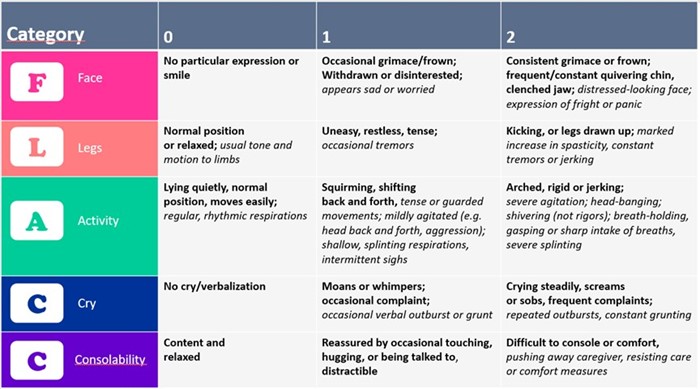
The FLACC (Face, Legs, Activity, Cry, Consolability) Scale is a pain assessment tool commonly used for infants and young children who are unable to self-report their pain. It assesses five categories of behavior: facial expression, leg movement, activity level, cry, and consolability. Each category is scored from 0 to 2 or 0 to 3, depending on the specific scale used. The scores are then totaled to provide an overall pain assessment.
C. Color tool
The Color tool is not a recognized pain rating tool. It may refer to an assessment of skin color, which can be used to assess oxygenation or circulation but not specifically for pain.
D. Numeric scale
The Numeric scale is a pain rating tool that involves asking the individual to rate their pain on a scale from 0 to 10, with 0 being no pain and 10 being the worst pain imaginable. However, this scale may not be suitable for a 3-month-old infant who is unable to comprehend numbers or communicate effectively.
Full Explanation
b. FLACC Scale.
Explanation: The FLACC (Face, Legs, Activity, Cry, Consolability) Scale is a pain assessment tool commonly used for infants and young children who are unable to self-report their pain. It assesses five categories of behavior: facial expression, leg movement, activity level, cry, and consolability. Each category is scored from 0 to 2 or 0 to 3, depending on the specific scale used. The scores are then totaled to provide an overall pain assessment.
The FACES Scale, also known as the Wong-Baker FACES Pain Rating Scale, is a tool commonly used for children who can understand and self-report their pain. It consists of a series of faces with different expressions representing varying degrees of pain.
The Color tool is not a recognized pain rating tool. It may refer to an assessment of skin color, which can be used to assess oxygenation or circulation but not specifically for pain.
The Numeric scale is a pain rating tool that involves asking the individual to rate their pain on a scale from 0 to 10, with 0 being no pain and 10 being the worst pain imaginable. However, this scale may not be suitable for a 3-month-old infant who is unable to comprehend numbers or communicate effectively.