
Nursing practice questions with comprehensive rationales
NurseDive Free Nursing Practice Question
A nurse is reinforcing teaching a client who has peptic ulcer disease and is starting therapy with sucralfate. Which of the following instructions should the nurse include in the teaching?
A. Take the medication with an antacid
B. Take the medication 1 hr before meals
C. Take as needed for pain relief
D. Store the medication in the refrigerator
This question is an excerpt from Nurse Dive's nursing test bank - Gastro Urinary Systems Medication Proctored Exam. Take the full exam now
Full Explanation
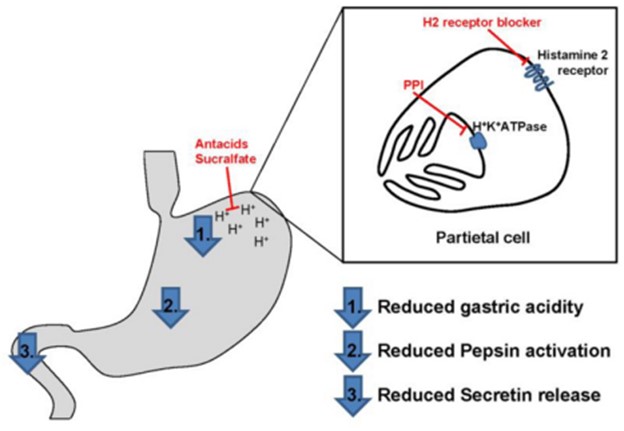
Sucralfate is a medication commonly used in the treatment of peptic ulcer disease. It works by forming a protective barrier over the ulcer site, providing a physical barrier against gastric acid, and promoting the healing process. When teaching a client about sucralfate, it is important to provide instructions regarding its proper administration.
One of the key instructions is to take sucralfate 1 hour before meals. This timing allows the medication to form a protective coating in the stomach before food is ingested. Taking sucralfate on an empty stomach enhances its effectiveness in protecting the ulcer and promoting healing.
"Take the medication with an antacid" - Sucralfate should not be taken with an antacid. Antacids can interfere with the protective mechanism of sucralfate by neutralizing stomach acid, which is necessary for sucralfate to bind and form a protective coating. It is recommended to wait at least 30 minutes to 1 hour after taking sucralfate before taking an antacid.
"Take as needed for pain relief" - Sucralfate is not typically used for immediate pain relief in peptic ulcer disease. It is primarily used for its protective and healing properties. Pain relief is
usually addressed with other medications, such as antacids, acid-reducing medications, or pain medications as prescribed by a healthcare provider.
"Store the medication in the refrigerator" - Sucralfate does not require refrigeration. It should be stored at room temperature, away from excessive heat or moisture, as per the specific instructions provided by the manufacturer or healthcare provider.
Similar Questions
A nurse is collecting data from a client who has peptic ulcer disease. Which of the following findings is a manifestation of gastrointestinal perforation?
A. Severe upper abdominal pain
The manifestation of gastrointestinal perforation includes severe upper abdominal pain. This can be a significant symptom indicating a potential perforation in the gastrointestinal tract. It is important to note that gastrointestinal perforation is a medical emergency that requires immediate attention and intervention. Hyperactive bowel sounds: This finding is more commonly associated with conditions like bowel obstruction or gastroenteritis rather than gastrointestinal perforation. Bradycardia: Bradycardia (slower than normal heart rate) is not a typical manifestation of gastrointestinal perforation. It may be associated with other conditions or factors. Report of epigastric fullness: Epigastric fullness can be a symptom of various gastrointestinal conditions, including peptic ulcer disease itself. However, it is not a specific manifestation of gastrointestinal perforation.
B. Hyperactive bowel sounds
C. Bradycardia
D. Report of epigastric fullness
Full Explanation
The manifestation of gastrointestinal perforation includes severe upper abdominal pain. This can be a significant symptom indicating a potential perforation in the gastrointestinal tract. It is important to note that gastrointestinal perforation is a medical emergency that requires immediate attention and intervention.
Hyperactive bowel sounds: This finding is more commonly associated with conditions like bowel obstruction or gastroenteritis rather than gastrointestinal perforation.
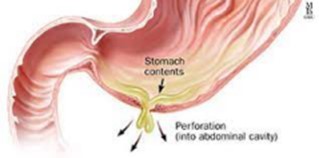
Bradycardia: Bradycardia (slower than normal heart rate) is not a typical manifestation of gastrointestinal perforation. It may be associated with other conditions or factors.
Report of epigastric fullness: Epigastric fullness can be a symptom of various gastrointestinal conditions, including peptic ulcer disease itself. However, it is not a specific manifestation of gastrointestinal perforation.
A nurse is caring for a client who has cirrhosis and a prescription for lactulose. Following administration, the nurse should monitor the client for which of the following adverse effects?
A. Peripheral edema
B. Diarrhea
C. Dry mouth
D. Headache
Full Explanation
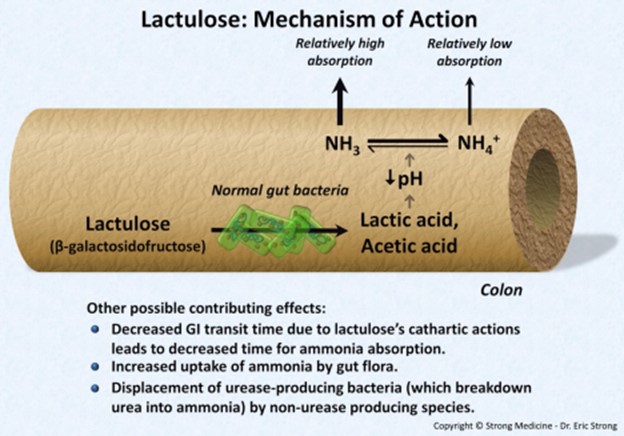
After administering lactulose to a client with cirrhosis, the nurse should monitor for the adverse effects of diarrhea. Lactulose is a laxative commonly used in the treatment of hepatic encephalopathy, which can occur in individuals with cirrhosis. One of the intended effects of lactulose is to promote bowel movements and reduce the absorption of ammonia in the gut, thus helping to manage hepatic encephalopathy.
While lactulose can cause adverse effects such as diarrhea, it is not typically associated with peripheral edema. Peripheral edema is often seen in cirrhosis due to fluid retention caused by liver dysfunction.
Dry mouth and headache are less commonly associated with lactulose use and are not typically the primary adverse effects to monitor for in this scenario.
A nurse is planning care for a client who has a peptic ulcer and a new prescription for sucralfate 2 gm administered twice daily. Which of the following times should the nurse plan to administer the medication?
A. One hour before breakfast and the evening meal
Sucralfate is a medication used to treat peptic ulcers by forming a protective coating on the stomach lining. It should be taken on an empty stomach, as food can interfere with its absorption and effectiveness. One hour before breakfast and the evening meal is the correct timing for administering sucralfate, allowing for an empty stomach before meals. At the time the client takes a proton pump inhibitor: Proton pump inhibitors are a different class of medications used to reduce stomach acid production. It is recommended to administer sucralfate separately, as it works differently and has different administration requirements. Thirty minutes after breakfast and the evening meal: Administering sucralfate after meals is not ideal, as it may not provide the desired therapeutic effect on an empty stomach. The time the client takes an antacid: Antacids are also different from sucralfate, and they can interfere with its absorption. It is generally recommended to administer sucralfate separately from antacids.
B. At the time the client takes a proton pump inhibitor
C. Thirty minutes after breakfast and the evening meal
D. The time the client takes an antacid
Full Explanation
Sucralfate is a medication used to treat peptic ulcers by forming a protective coating on the stomach lining. It should be taken on an empty stomach, as food can interfere with its absorption and effectiveness. One hour before breakfast and the evening meal is the correct timing for administering sucralfate, allowing for an empty stomach before meals.
At the time the client takes a proton pump inhibitor: Proton pump inhibitors are a different class of medications used to reduce stomach acid production. It is recommended to administer sucralfate separately, as it works differently and has different administration requirements.
Thirty minutes after breakfast and the evening meal: Administering sucralfate after meals is not ideal, as it may not provide the desired therapeutic effect on an empty stomach.
The time the client takes an antacid: Antacids are also different from sucralfate, and they can interfere with its absorption. It is generally recommended to administer sucralfate separately from antacids.