Nursing practice questions with comprehensive rationales
NurseDive Free Nursing Practice Question
A nurse is reinforcing teaching about signs preceding the onset of labor with a client who is at 39 weeks of gestation. Which of the following statements should the nurse include?
A. "You will experience urinary retention."
Choice A reason: "You will experience urinary retention." is incorrect, as this statement does not describe a sign preceding the onset of labor. Urinary retention can occur during labor due to pressure from the fetal head or epidural anesthesia, but it is not a sign that labor is imminent. The nurse should encourage the client to void frequently and monitor their bladder status.
B. "You will have a decrease in vaginal discharge."
Choice B reason: "You will have a decrease in vaginal discharge." is incorrect, as this statement does not describe a sign preceding the onset of labor. Vaginal discharge can increase before labor due to cervical ripening and dilation, which can cause bloody show or mucus plug loss. The nurse should educate the client about normal and abnormal vaginal discharge and when to report it.
C. "You will experience a surge of energy."
Choice C reason: "You will experience a surge of energy." is correct, as this statement describes a sign preceding the onset of labor. A surge of energy, also known as nesting instinct, can occur before labor due to hormonal changes or psychological factors. The nurse should advise the client to conserve their energy and rest as much as possible before labor.
D. "You will have a weight gain of 0.5 to 1.5 kilograms."
Choice D reason: "You will have a weight gain of 0.5 to 1.5 kilograms." is incorrect, as this statement does not describe a sign preceding the onset of labor. Weight gain can occur during pregnancy due to fetal growth, fluid retention, or increased caloric intake, but it is not a sign that labor is imminent. The nurse should monitor the client's weight and fluid balance and report any sudden or excessive weight gain that may indicate preeclampsia or other complications.
This question is an excerpt from Nurse Dive's nursing test bank - ATI Maternity Proctored Exam. Take the full exam now
Full Explanation
Choice A reason: "You will experience urinary retention." is incorrect, as this statement does not describe a sign preceding the onset of labor. Urinary retention can occur during labor due to pressure from the fetal head or epidural anesthesia, but it is not a sign that labor is imminent. The nurse should encourage the client to void frequently and monitor their bladder status.
Choice B reason: "You will have a decrease in vaginal discharge." is incorrect, as this statement does not describe a sign preceding the onset of labor. Vaginal discharge can increase before labor due to cervical ripening and dilation, which can cause bloody show or mucus plug loss. The nurse should educate the client about normal and abnormal vaginal discharge and when to report it.
Choice C reason: "You will experience a surge of energy." is correct, as this statement describes a sign preceding the onset of labor. A surge of energy, also known as nesting instinct, can occur before labor due to hormonal changes or psychological factors. The nurse should advise the client to conserve their energy and rest as much as possible before labor.
Choice D reason: "You will have a weight gain of 0.5 to 1.5 kilograms." is incorrect, as this statement does not describe a sign preceding the onset of labor. Weight gain can occur during pregnancy due to fetal growth, fluid retention, or increased caloric intake, but it is not a sign that labor is imminent. The nurse should monitor the client's weight and fluid balance and report any sudden or excessive weight gain that may indicate preeclampsia or other complications.
Similar Questions
A nurse is assisting with the care of a client who is receiving oxytocin via IV infusion following a vaginal delivery. Which of the following findings should the nurse monitor to evaluate effectiveness of this medication?
A. Fundal consistency
Choice A reason: Fundal consistency is correct, as this finding can indicate the effectiveness of oxytocin in stimulating uterine contraction and preventing postpartum hemorrhage. Oxytocin is a uterotonic agent that can enhance or augment uterine contractility and involution. The nurse should monitor the fundal height, consistency, and position and report any signs of uterine atony or excessive bleeding.
B. Fetal heart rate
Choice B reason: Fetal heart rate is incorrect, as this finding is not relevant for a client who has already delivered the baby. Fetal heart rate can indicate the fetal well-being and response to labor, but it is not affected by oxytocin administration after birth. The nurse should monitor the newborn's vital signs and appearance and report any signs of distress or infection.
C. Pulse rate
Choice C reason: Pulse rate is incorrect, as this finding is not specific for evaluating the effectiveness of oxytocin. Pulse rate can indicate the client's hemodynamic status and response to blood loss, but it can be influenced by many other factors, such as pain, anxiety, fever, or dehydration. The nurse should monitor the client's vital signs and fluid balance and report any signs of shock or infection.
D. Urinary output
Choice D reason: Urinary output is incorrect, as this finding is not specific for evaluating the effectiveness of oxytocin. Urinary output can indicate the client's renal function and fluid balance, but it can be influenced by many other factors, such as fluid intake, bladder distension, or epidural anesthesia. The nurse should monitor the client's intake and output and report any signs of oliguria or retention.
E. Blood pressure
Choice E reason: Blood pressure is incorrect, as this finding is not specific for evaluating the effectiveness of oxytocin. Blood pressure can indicate the client's hemodynamic status and response to blood loss, but it can be influenced by many other factors, such as pain, anxiety, preeclampsia, or medication. The nurse should monitor the client's vital signs and fluid balance and report any signs of hypotension or hypertension.
Full Explanation
Choice A reason: Fundal consistency is correct, as this finding can indicate the effectiveness of oxytocin in stimulating uterine contraction and preventing postpartum hemorrhage. Oxytocin is a uterotonic agent that can enhance or augment uterine contractility and involution. The nurse should monitor the fundal height, consistency, and position and report any signs of uterine atony or excessive bleeding.
Choice B reason: Fetal heart rate is incorrect, as this finding is not relevant for a client who has already delivered the baby. Fetal heart rate can indicate the fetal well-being and response to labor, but it is not affected by oxytocin administration after birth. The nurse should monitor the newborn's vital signs and appearance and report any signs of distress or infection.
Choice C reason: Pulse rate is incorrect, as this finding is not specific for evaluating the effectiveness of oxytocin. Pulse rate can indicate the client's hemodynamic status and response to blood loss, but it can be influenced by many other factors, such as pain, anxiety, fever, or dehydration. The nurse should monitor the client's vital signs and fluid balance and report any signs of shock or infection.
Choice D reason: Urinary output is incorrect, as this finding is not specific for evaluating the effectiveness of oxytocin. Urinary output can indicate the client's renal function and fluid balance, but it can be influenced by many other factors, such as fluid intake, bladder distension, or epidural anesthesia. The nurse should monitor the client's intake and output and report any signs of oliguria or retention.
Choice E reason: Blood pressure is incorrect, as this finding is not specific for evaluating the effectiveness of oxytocin. Blood pressure can indicate the client's hemodynamic status and response to blood loss, but it can be influenced by many other factors, such as pain, anxiety, preeclampsia, or medication. The nurse should monitor the client's vital signs and fluid balance and report any signs of hypotension or hypertension.
A nurse is assisting with the care of a client who is receiving oxytocin via IV infusion following a vaginal delivery. Which of the following findings should the nurse monitor to evaluate effectiveness of this medication?
A. Fundal consistency
Choice A reason: Fundal consistency is correct, as this finding can indicate the effectiveness of oxytocin in stimulating uterine contraction and preventing postpartum hemorrhage. Oxytocin is a uterotonic agent that can enhance or augment uterine contractility and involution. The nurse should monitor the fundal height, consistency, and position and report any signs of uterine atony or excessive bleeding.
B. Fetal heart rate
Choice B reason: Fetal heart rate is incorrect, as this finding is not relevant for a client who has already delivered the baby. Fetal heart rate can indicate the fetal well-being and response to labor, but it is not affected by oxytocin administration after birth. The nurse should monitor the newborn's vital signs and appearance and report any signs of distress or infection.
C. Urinary output
Choice c reason: Urinary output is incorrect, as this finding is not specific for evaluating the effectiveness of oxytocin. Urinary output can indicate the client's renal function and fluid balance, but it can be influenced by many other factors, such as fluid intake, bladder distension, or epidural anesthesia. The nurse should monitor the client's intake and output and report any signs of oliguria or retention.
D. Blood pressure
Choice D reason: Blood pressure is incorrect, as this finding is not specific for evaluating the effectiveness of oxytocin. Blood pressure can indicate the client's hemodynamic status and response to blood loss, but it can be influenced by many other factors, such as pain, anxiety, preeclampsia, or medication. The nurse should monitor the client's vital signs and fluid balance and report any signs of hypotension or hypertension
Full Explanation
Choice A reason: Fundal consistency is correct, as this finding can indicate the effectiveness of oxytocin in stimulating uterine contraction and preventing postpartum hemorrhage. Oxytocin is a uterotonic agent that can enhance or augment uterine contractility and involution. The nurse should monitor the fundal height, consistency, and position and report any signs of uterine atony or excessive bleeding.
Choice B reason: Fetal heart rate is incorrect, as this finding is not relevant for a client who has already delivered the baby. Fetal heart rate can indicate the fetal well-being and response to labor, but it is not affected by oxytocin administration after birth. The nurse should monitor the newborn's vital signs and appearance and report any signs of distress or infection.
Choice c reason: Urinary output is incorrect, as this finding is not specific for evaluating the effectiveness of oxytocin. Urinary output can indicate the client's renal function and fluid balance, but it can be influenced by many other factors, such as fluid intake, bladder distension, or epidural anesthesia. The nurse should monitor the client's intake and output and report any signs of oliguria or retention.
Choice D reason: Blood pressure is incorrect, as this finding is not specific for evaluating the effectiveness of oxytocin. Blood pressure can indicate the client's hemodynamic status and response to blood loss, but it can be influenced by many other factors, such as pain, anxiety, preeclampsia, or medication. The nurse should monitor the client's vital signs and fluid balance and report any signs of hypotension or hypertension
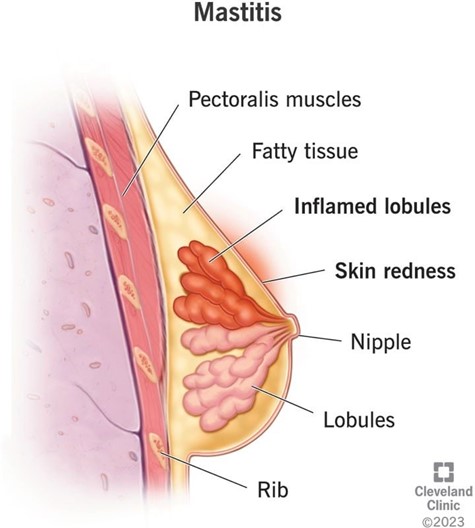
A nurse is caring for a client who is postpartum and is breastfeeding her infant. Which of the following findings indicates mastitis?
A. Swelling in both breasts
Choice A reason: Swelling in both breasts is incorrect, as this finding does not indicate mastitis. Swelling in both breasts can occur due to engorgement, which is a normal and expected phenomenon in the first few days after birth or when milk production increases. Engorgement can cause breast fullness, tenderness, and warmth, but it does not cause infection or inflammation.
B. Cracked and bleeding nipples
Choice B reason: Cracked and bleeding nipples is incorrect, as this finding does not indicate mastitis. Cracked and bleeding nipples can occur due to poor latch, improper positioning, or excessive suction of the baby. Cracked and bleeding nipples can cause pain, discomfort, and risk of infection, but they do not cause mastitis by themselves.
C. Increase in breast milk
Choice C reason: Increase in breast milk is incorrect, as this finding does not indicate mastitis. Increase in breast milk can occur due to hormonal changes, frequent breastfeeding, or stimulation of the breasts. Increase in breast milk can cause engorgement, but it does not cause infection or inflammation.
D. Red and painful area in one breast
Choice D reason: Red and painful area in one breast is correct, as this finding indicates mastitis. Mastitis is an infection and inflammation of the breast tissue that usually affects one breast at a time. Mastitis can cause redness, pain, swelling, warmth, and fever in the affected breast. Mastitis can occur due to blocked milk ducts, bacterial invasion, or poor hygiene. The nurse should advise the client to continue breastfeeding or pumping, apply warm compresses, massage the breast gently, and take antibiotics as prescribed.
Full Explanation
Choice A reason: Swelling in both breasts is incorrect, as this finding does not indicate mastitis. Swelling in both breasts can occur due to engorgement, which is a normal and expected phenomenon in the first few days after birth or when milk production increases. Engorgement can cause breast fullness, tenderness, and warmth, but it does not cause infection or inflammation.
Choice B reason: Cracked and bleeding nipples is incorrect, as this finding does not indicate mastitis. Cracked and bleeding nipples can occur due to poor latch, improper positioning, or excessive suction of the baby. Cracked and bleeding nipples can cause pain, discomfort, and risk of infection, but they do not cause mastitis by themselves.
Choice C reason: Increase in breast milk is incorrect, as this finding does not indicate mastitis. Increase in breast milk can occur due to hormonal changes, frequent breastfeeding, or stimulation of the breasts. Increase in breast milk can cause engorgement, but it does not cause infection or inflammation.
Choice D reason: Red and painful area in one breast is correct, as this finding indicates mastitis. Mastitis is an infection and inflammation of the breast tissue that usually affects one breast at a time. Mastitis can cause redness, pain, swelling, warmth, and fever in the affected breast. Mastitis can occur due to blocked milk ducts, bacterial invasion, or poor hygiene. The nurse should advise the client to continue breastfeeding or pumping, apply warm compresses, massage the breast gently, and take antibiotics as prescribed.