
Nursing practice questions with comprehensive rationales
NurseDive Free Nursing Practice Question
A nurse is reinforcing teaching with a client about advanced directives. Which of the following information should the nurse include?
A. "You will need an attorney to appoint a health care surrogate."
"Your health care surrogate will make decisions on your behalf if you are unable": This statement is correct. A health care surrogate, also known as a health care proxy or durable power of attorney for health care, is an individual designated by the client to make medical decisions on their behalf if they become unable to make decisions for themselves. It is important for the client to choose someone they trust and who understands their values and wishes.
B. "Your health care surrogate will make decisions on your behalf if you are unable."
"You will need an attorney to appoint a health care surrogate": This statement is not necessarily true. While involving an attorney can be helpful, it is not always required to appoint a health care surrogate. In many jurisdictions, a legally valid health care surrogate designation can be made through a simple document or form provided by the hospital or a local government office. It is important to check the specific legal requirements in the client's jurisdiction.
C. "You should appoint a family member as your health care surrogate."
"You should appoint a family member as your health care surrogate": This statement is a subjective recommendation and may not be applicable to all individuals. The decision of whom to appoint as a health care surrogate should be based on the client's personal preferences and the individual's ability to make informed decisions according to the client's wishes. While a family member is often chosen, it is not a requirement, and the client may choose a close friend, partner, or anyone else they trust to fulfill this role.
D. "Once you have completed a living will, it cannot be changed."
"Once you have completed a living will, it cannot be changed": This statement is incorrect. A living will, which is a type of advanced directive, can be changed or revoked at any time by the client as long as they are competent to do so. It is important for the client to review and update their living will periodically to ensure that it reflects their current wishes regarding medical care and treatment.
This question is an excerpt from Nurse Dive's nursing test bank - ATI PN Comprehensive Predictor 2023 - Proctored Exam 1. Take the full exam now
Full Explanation
- "Your health care surrogate will make decisions on your behalf if you are unable": This statement is correct. A health care surrogate, also known as a health care proxy or durable power of attorney for health care, is an individual designated by the client to make medical decisions on their behalf if they become unable to make decisions for themselves. It is important for the client to choose someone they trust and who understands their values and wishes.
- "You will need an attorney to appoint a health care surrogate": This statement is not necessarily true. While involving an attorney can be helpful, it is not always required to appoint a health care surrogate. In many jurisdictions, a legally valid health care surrogate designation can be made through a simple document or form provided by the hospital or a local government office. It is important to check the specific legal requirements in the client's jurisdiction.
- "You should appoint a family member as your health care surrogate": This statement is a subjective recommendation and may not be applicable to all individuals. The decision of whom to appoint as a health care surrogate should be based on the client's personal preferences and the individual's ability to make informed decisions according to the client's wishes. While a family member is often chosen, it is not a requirement, and the client may choose a close friend, partner, or anyone else they trust to fulfill this role.
- "Once you have completed a living will, it cannot be changed": This statement is incorrect. A living will, which is a type of advanced directive, can be changed or revoked at any time by the client as long as they are competent to do so. It is important for the client to review and update their living will periodically to ensure that it reflects their current wishes regarding medical care and treatment.
Similar Questions
A charge nurse is discussing confidentiality requirements with a newly licensed nurse when sharing a client's medical information.
Which of the following individuals should the charge nurse identify as appropriate with whom to share client information?
A. A social worker who is a. assigned to an involuntarily committed school-age client
Social worker on the care team: In this scenario, the social worker is likely involved in the client's care plan and needs the medical information to provide appropriate support services. Involuntary commitment: In cases of involuntary commitment, there might be a court order allowing for information sharing to ensure the client's well-being.
B. A client's employer who is concerned about safety due to substance use
Sharing client information with a client's employer is generally not appropriate without the client's explicit consent. Confidentiality must be maintained, and any concerns about safety due to substance use should be discussed with the client and appropriate healthcare professionals.
C. A nurse from another unit after a client commits suicide
Sharing information with a nurse from another unit after a client commits suicide is generally not appropriate unless: there is a specific reason for sharing, such as identifying potential risks to other clients, the minimum amount of information necessary is shared and the sharing complies with HIPAA (Health Insurance Portability and Accountability Act) regulations.
D. A client's partner after the client reports intimate partner abuse
Sharing client information with a client's partner after the client reports intimate partner abuse could potentially compromise the client's safety. It is crucial to follow specific protocols and laws related to reporting abuse while ensuring the client's confidentiality and well-being.
Full Explanation
Correct answer: A
Option A is correct. In this scenario, the social worker is likely involved in the client's care plan and needs the medical information to provide appropriate support services. Involuntary commitment: In cases of involuntary commitment, there might be a court order allowing for information sharing to ensure the client's well-being..
Option B is incorrect because sharing client information with a client's employer is generally not appropriate without the client's explicit consent. Confidentiality must be maintained, and any concerns about safety due to substance use should be discussed with the client and appropriate healthcare professionals.
Option C is incorrect. Sharing information with a nurse from another unit after a client commits suicide is generally not appropriate unless: there is a specific reason for sharing, such as identifying potential risks to other clients, the minimum amount of information necessary is shared and the sharing complies with HIPAA (Health Insurance Portability and Accountability Act) regulations.
Option D is incorrect because sharing client information with a client's partner after the client reports intimate partner abuse could potentially compromise the client's safety. It is crucial to follow specific protocols and laws related to reporting abuse while ensuring the client's confidentiality and well-being.
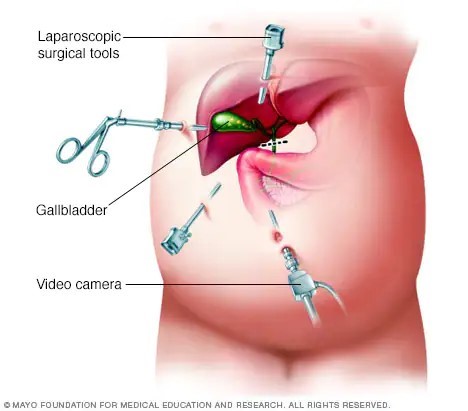
A nurse is reinforcing teaching with a client who is postoperative following a laparoscopic cholecystectomy. Which of the following statements by the client indicates an understanding of the teaching?
A. “I should eat a high-fat diet for several weeks."
"I should eat a high-fat diet for several weeks": After a laparoscopic cholecystectomy, it is important for the client to follow a low-fat diet initially to allow the body time to adjust to the absence of the gallbladder. High-fat foods can be more difficult to digest and may cause digestive discomfort. Gradually introducing small amounts of fat back into the diet is recommended, but a high-fat diet is not appropriate.
B. "I should expect to have diarrhea until my diet changes."
"I should expect to have diarrhea until my diet changes": While changes in bowel movements can occur after a cholecystectomy, such as looser stools or changes in frequency, persistent diarrhea is not expected or normal. If the client experiences persistent diarrhea, they should contact their healthcare provider for further evaluation.
C. "I should expect to have nausea for several days."
"I should expect to have nausea for several days": While some clients may experience mild nausea or discomfort after the surgery, it should generally improve within a few days. If the client experiences persistent or severe nausea, they should contact their healthcare provider.
D. "I should leave my steri-strips on until they fall off."
After a laparoscopic cholecystectomy, steri-strips or adhesive strips are commonly placed over the small incisions. The client should keep the steri-strips in place until they fall off on their own or until they are removed by the healthcare provider during a follow-up visit. Removing the steri-strips prematurely can increase the risk of infection or disrupt the healing process.
Full Explanation
After a laparoscopic cholecystectomy, steri-strips or adhesive strips are commonly placed over the small incisions. The client should keep the steri-strips in place until they fall off on their own or until they are removed by the healthcare provider during a follow-up visit. Removing the steri-strips prematurely can increase the risk of infection or disrupt the healing process.
"I should eat a high-fat diet for several weeks": After a laparoscopic cholecystectomy, it is important for the client to follow a low-fat diet initially to allow the body time to adjust to the absence of the gallbladder. High-fat foods can be more difficult to digest and may cause digestive discomfort. Gradually introducing small amounts of fat back into the diet is recommended, but a high-fat diet is not appropriate.
"I should expect to have diarrhea until my diet changes": While changes in bowel movements can occur after a cholecystectomy, such as looser stools or changes in frequency, persistent diarrhea is not expected or normal. If the client experiences persistent diarrhea, they should contact their healthcare provider for further evaluation.
"I should expect to have nausea for several days": While some clients may experience mild nausea or discomfort after the surgery, it should generally improve within a few days. If the client experiences persistent or severe nausea, they should contact their healthcare provider.
A nurse is caring for a client who is taking multiple medications and asks about possible interactions. To which of the following members of the interdisciplinary team should the nurse make a referral?
A. Social worker
Social workers focus on addressing psychosocial aspects of care, such as emotional support, counseling, and resource coordination. While they may provide valuable assistance in various areas of the client's care, they typically do not have specialized knowledge in medication interactions.
B. Patient care technician
Patient care technicians, also known as nursing assistants or certified nursing assistants, provide direct patient care under the supervision of nurses. They do not typically have the training or authority to address medication interactions.
C. Psychologist
Psychologists specialize in the assessment, diagnosis, and treatment of mental and emotional health concerns. While they may be involved in the client's overall care, including medication management for mental health conditions, their expertise lies primarily in psychological assessment and therapy rather than medication interactions.
D. Advanced practice nurse
The APN, also known as a nurse practitioner or clinical nurse specialist, has advanced knowledge and expertise in pharmacology and medication management. They are trained to assess medication interactions, evaluate potential risks, and provide guidance to ensure safe and effective medication use.
Full Explanation
The APN, also known as a nurse practitioner or clinical nurse specialist, has advanced knowledge and expertise in pharmacology and medication management. They are trained to assess medication interactions, evaluate potential risks, and provide guidance to ensure safe and effective medication use.
The other members of the interdisciplinary team listed are not specifically trained to address medication interactions:
- Social worker: Social workers focus on addressing psychosocial aspects of care, such as emotional support, counseling, and resource coordination. While they may provide valuable assistance in various areas of the client's care, they typically do not have specialized knowledge in medication interactions.
- Patient care technician: Patient care technicians, also known as nursing assistants or certified nursing assistants, provide direct patient care under the supervision of nurses. They do not typically have the training or authority to address medication interactions.
- Psychologist: Psychologists specialize in the assessment, diagnosis, and treatment of mental and emotional health concerns. While they may be involved in the client's overall care, including medication management for mental health conditions, their expertise lies primarily in psychological assessment and therapy rather than medication interactions.