Nursing practice questions with comprehensive rationales
NurseDive Free Nursing Practice Question
A nurse is reinforcing teaching with a client who is about to undergo an upper gastrointestinal series with fluoroscopy. Which of the following information should the nurse provide?
A. You will receive an injection of contrast dye during the test
B. Consume a clear liquid breakfast on the day of the procedure
C. Someone should drive you home after the procedure
D. You will have to drink a contrast medium before the test
The nurse should inform the client that they will have to drink a contrast medium before the upper gastrointestinal series with fluoroscopy. This contrast medium helps visualize the gastrointestinal tract during the procedure. Option a is incorrect because the contrast dye is typically administered orally, not through injection. Option b is incorrect because the client is usually required to have a restricted diet, such as fasting or consuming only clear liquids, prior to the procedure. Option c is incorrect because the client can typically drive themselves home after the procedure as it does not involve sedation or anesthesia
This question is an excerpt from Nurse Dive's nursing test bank - VATI PN Comprehensive Predictor 2020 Proctored Exam. Take the full exam now
Similar Questions
A nurse is collecting data from a client who received IV morphine for postoperative pain. The nurse should identify that which of the following findings indicates a therapeutic response to the medication?
A. The client's blood pressure has been reduced.
While morphine can lower blood pressure due to its vasodilatory effects, a reduction in blood pressure is not necessarily a primary indicator of a therapeutic response to pain relief. It is more important to assess pain relief directly through the client's subjective experience and behavior rather than focusing on vital signs alone.
B. The client exhibits diaphoresis
Diaphoresis, or sweating, can occur as a side effect of morphine administration but does not indicate that the medication is effectively relieving pain. In fact, diaphoresis might signal an adverse reaction or discomfort rather than a therapeutic effect.
C. The client is not grimacing
The absence of grimacing suggests that the client's pain has decreased, which is a direct indicator of a therapeutic response to morphine. Observing a reduction in pain-related behaviors, such as grimacing, is a key assessment for determining the effectiveness of pain management in postoperative clients.
D. The client has an elevated heart rate
An elevated heart rate may be a sign of unresolved pain or a side effect of morphine but is not a clear indicator of pain relief. Effective pain management with morphine typically results in a decrease in sympathetic nervous system responses, such as a high heart rate, rather than an increase.
Full Explanation
Answer: (C) The client is not grimacing
Rationale:
A) The client's blood pressure has been reduced:
While morphine can lower blood pressure due to its vasodilatory effects, a reduction in blood pressure is not necessarily a primary indicator of a therapeutic response to pain relief. It is more important to assess pain relief directly through the client's subjective experience and behavior rather than focusing on vital signs alone.
B) The client exhibits diaphoresis:
Diaphoresis, or sweating, can occur as a side effect of morphine administration but does not indicate that the medication is effectively relieving pain. In fact, diaphoresis might signal an adverse reaction or discomfort rather than a therapeutic effect.
C) The client is not grimacing:
The absence of grimacing suggests that the client's pain has decreased, which is a direct indicator of a therapeutic response to morphine. Observing a reduction in pain-related behaviors, such as grimacing, is a key assessment for determining the effectiveness of pain management in postoperative clients.
D) The client has an elevated heart rate:
An elevated heart rate may be a sign of unresolved pain or a side effect of morphine but is not a clear indicator of pain relief. Effective pain management with morphine typically results in a decrease in sympathetic nervous system responses, such as a high heart rate, rather than an increase.
A nurse is caring for a newborn following a circumcision. Which of the following manifestations indicates
the newborn is experiencing pain?
A. Diaphoresis
None
B. Hypoglycemia
None
C. Lip smacking
Lip smacking in a newborn following circumcision can indicate pain. It is a nonverbal cue that suggests discomfort or distress. Diaphoresis (option a) refers to excessive sweating and can be a sign of pain or other physiological responses. Hypoglycemia (option b) is low blood sugar and is not directly related to pain. Transient strabismus (option d) refers to temporary misalignment of the eyes and is not specifically indicative of pain.
D. Transient strabismus
None
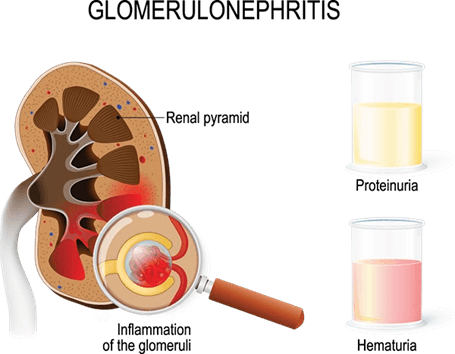
A nurse is collecting data from a child who has acute glomerulonephritis.
Which of the following findings should the nurse expect?
A. Decreased blood pressure
Is not typically seen in acute glomerulonephritis. Instead, hypertension is a common finding due to fluid retention and increased blood volume.
B. Pale yellow urine
Is not expected in acute glomerulonephritis. Instead, urine may appear dark or tea-colored due to the presence of blood (hematuria).
C. Periorbital edema
Acute glomerulonephritis is an inflammatory condition affecting the glomeruli of the kidneys. It is commonly characterized by periorbital edema, which is swelling around the eyes. This occurs due to fluid retention and impaired kidney function. Other common manifestations of acute glomerulonephritis include hypertension (increased blood pressure), dark or tea-colored urine (hematuria), decreased urine output, and signs of fluid overload such as edema in the hands, feet, and face.
D. Increased urination
Is not a characteristic finding in acute glomerulonephritis. Instead, there is often a decrease in urine output or oliguria.
Full Explanation
c. Periorbital edema.
Explanation: Acute glomerulonephritis is an inflammatory condition affecting the glomeruli of the kidneys. It is commonly characterized by periorbital edema, which is swelling around the eyes. This occurs due to fluid retention and impaired kidney function. Other common manifestations of acute glomerulonephritis include hypertension (increased blood pressure), dark or tea-colored urine (hematuria), decreased urine output, and signs of fluid overload such as edema in the hands, feet, and face.
Option a, decreased blood pressure, is not typically seen in acute glomerulonephritis. Instead, hypertension is a common finding due to fluid retention and increased blood volume.
Option b, pale yellow urine, is not expected in acute glomerulonephritis. Instead, urine may appear dark or
tea-colored due to the presence of blood (hematuria).
Option d, increased urination, is not a characteristic finding in acute glomerulonephritis. Instead, there is often a decrease in urine output or oliguria.
It is important to note that individual presentations may vary, and the nurse should consider the complete clinical picture and the child's specific symptoms when assessing for acute glomerulonephritis.